
Your Ford F350 suddenly drops to a 50 mph speed limit with a DEF warning. You are not alone as a DEF fault can trigger this strict speed limiter on Ford diesel trucks even if the engine runs fine. This is not a random glitch but a built-in emissions compliance feature designed to force repairs.
This guide breaks down exactly what causes DEF issues in the Ford F350 and why the 50 mph limiter activates. You will learn how to diagnose, clear, and prevent DEF-related faults without costly tow bills or dealership panic based on real-world experience.
Decode the DEF Warning Signs Triggering Speed Limits
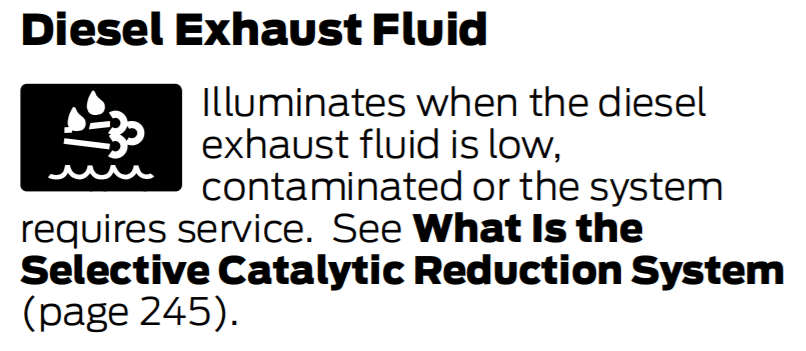
Ford diesel trucks use Selective Catalytic Reduction to meet emissions standards. The system relies on Diesel Exhaust Fluid, a urea-based solution injected into the exhaust to break down harmful NOx gases. When the system detects low fluid or faulty components, it logs a diagnostic trouble code.
This process eventually locks your truck to a 50 mph maximum regardless of throttle input. This is not an engine failure but a software-enforced compliance measure. Understanding these signs helps you act before the restriction becomes permanent.
What Triggers the 50 MPH Limiter?
The system activates a progressive speed restriction when it detects specific failures. You must address these issues immediately to restore full power.
- Low or empty DEF tank
- Faulty DEF pump or sensor
- Clogged lines or nozzle
- Electrical connection issues
- Temperature-related fluid gelling
Common DEF Fault Messages to Watch For
Warnings escalate over time and ignoring them leads directly to the speed limiter. Refilling DEF does not always stop the message immediately because the system needs time to relearn.
- Low Diesel Exhaust Fluid
- DEF System Fault
- Emissions System Problem
- Service DEF System
- Engine Power Reduced
Immediate Fixes for Active DEF Limiter

Low fluid is the number one cause of these restrictions. Even if your gauge shows some fluid, the sensor may be inaccurate or the tank near empty. You must take specific steps to resolve this quickly.
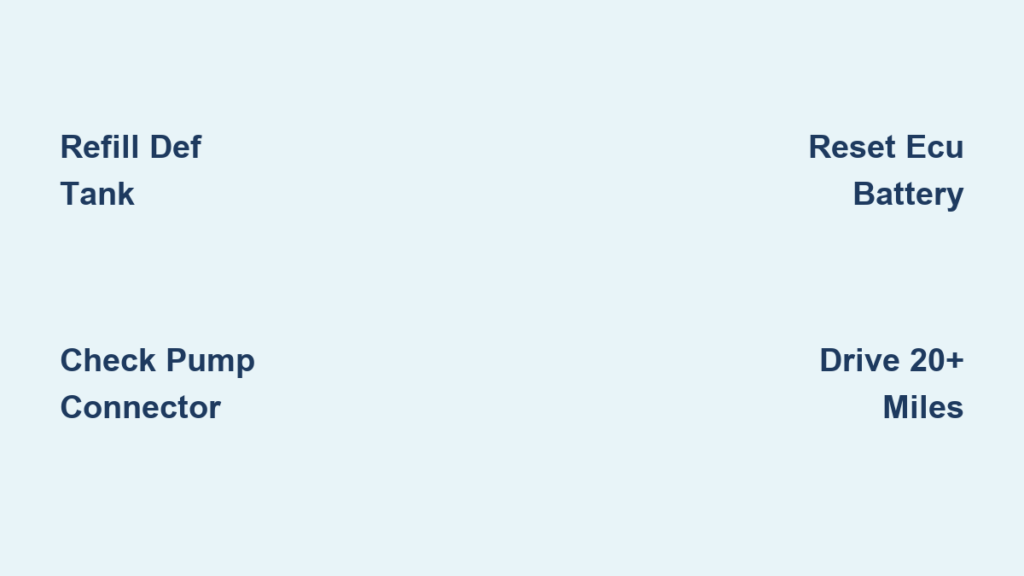
Refill the DEF Tank Fully
You should use API-certified DEF only and avoid off-brand fluids. Fill the tank to the neck, which usually holds 5 to 6 gallons total capacity. Wait 30 seconds after filling for sensor stabilization before starting the engine.
Do not rely on the dashboard DEF gauge as it can lag or misread. If you have not refilled in 5,000 miles or more, assume it is low. Monitoring the message after startup confirms if the level was the issue.
Check the DEF Pump Connector
The DEF pump sits near the rear fuel tank on the driver side. Its electrical connector is prone to corrosion or loosening due to road debris and weather.
- Park on level ground and turn off the ignition
- Slide under the driver side rear of the truck
- Locate the pump with the black plastic housing and wiring harness
- Unplug and reconnect the connector firmly
- Look for moisture, corrosion, or bent pins
Reseating the connection often clears intermittent faults even if the parts look fine. This simple check saves time before attempting complex repairs.
Reset the ECU with Battery Disconnect
A full ECU reset can clear soft codes that trigger the limiter. You must follow the proper procedure to ensure the modules reset completely.
- Turn off the truck and remove the key
- Disconnect both batteries since F350s have a dual battery setup
- Hold the brake pedal for 30 seconds to drain residual power
- Wait 15 minutes for a critical module reset
- Reconnect batteries with the positive terminal first
- Start the engine and let it idle for 2 minutes
Do not skip the 15-minute wait as shorter resets often fail. This step forces the computer to re-evaluate all sensors from a clean state.
Why Driving Clears the Fault Code
Ford’s Powertrain Control Module requires real-world driving data to confirm an issue is resolved. It does not reset instantly after a refill or battery disconnect. The system needs specific conditions to verify proper operation.
The System Needs Relearning Cycles
You must drive the vehicle under specific conditions to help the system relearn. Highway speeds above 60 mph for at least 15 minutes work best. Engine load from climbing hills or towing also helps the process.
- Maintain engine oil temperature above 195°F
- Complete multiple drive cycles by starting, driving, and shutting off
- Drive 20 to 30 miles of mixed conditions
In many cases, this driving clears the fault automatically without a code reader. The PCM monitors DEF injection rate and sensor data during this time.
What Happens During Relearning?
The PCM monitors the DEF injection rate while you drive. Sensors verify fluid flow and exhaust chemistry to ensure everything works. If everything checks out, the stored fault clears and the speed limiter lifts on the next ignition cycle.
One owner reported the limiter lifted after a 25-mile hilly and rainy drive. No tools or scan guns were needed, just time and motion.
Diagnose Hidden DEF System Problems
If the fault persists after refilling and driving, you must pull the codes. Stored diagnostic trouble codes reveal the specific component causing the issue.
Check for Stored DTCs
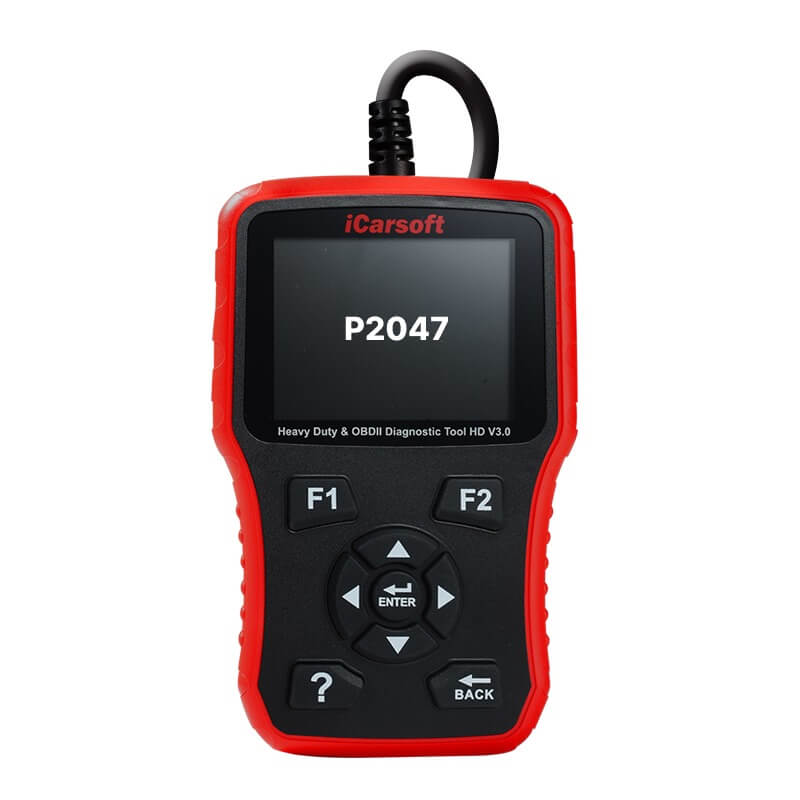
You can use an OBD2 scanner like Autel or BlueDriver to read these codes. Visit Advance Auto Parts or O’Reilly Auto to read codes for free if you lack a scanner. Look for specific codes indicating the root cause.
- U0140 for lost communication with DEF module
- P2047 for DEF dosing system no flow
- P204A for DEF pump heater performance
- P20EE for DEF fluid quality
Avoid cheap code clearers if your truck is under warranty. Some resets can void emissions coverage so proceed with caution.
Test the DEF Pump Operation
The pump pressurizes fluid and injects it into the exhaust. A failed pump will not deliver DEF even with a full tank. You can test this by listening for the prime cycle.
Turn the key to the ON position without starting the engine. You should hear a 3 to 5 second hum from the rear driver side. No sound indicates a possible pump failure or electrical fault. Check fuse number 30 in the cabin fuse box and the relay in the battery junction box if silent.
Ford DEF Pump Recall: Is Your F350 Affected?

Ford issued a safety recall for DEF pumps on certain 2017 to 2020 F-250 and F-350 6.7L Power Stroke models. The pump heater can overheat and cause cracked housing or fluid leaks.
Recall Details You Need to Know
This fix replaces the pump free of charge even if you are out of warranty in some cases. Many repeated DEF issues stem from this specific manufacturing defect.
- Go to the Ford Recall Lookup website
- Enter your VIN to check status
- Look for NHTSA Recall 19V844 or Ford Recall 19S47
If you have had repeated DEF issues, this recall is likely the root cause. Get it checked immediately as there is no cost to you.
Prevent Future DEF Faults
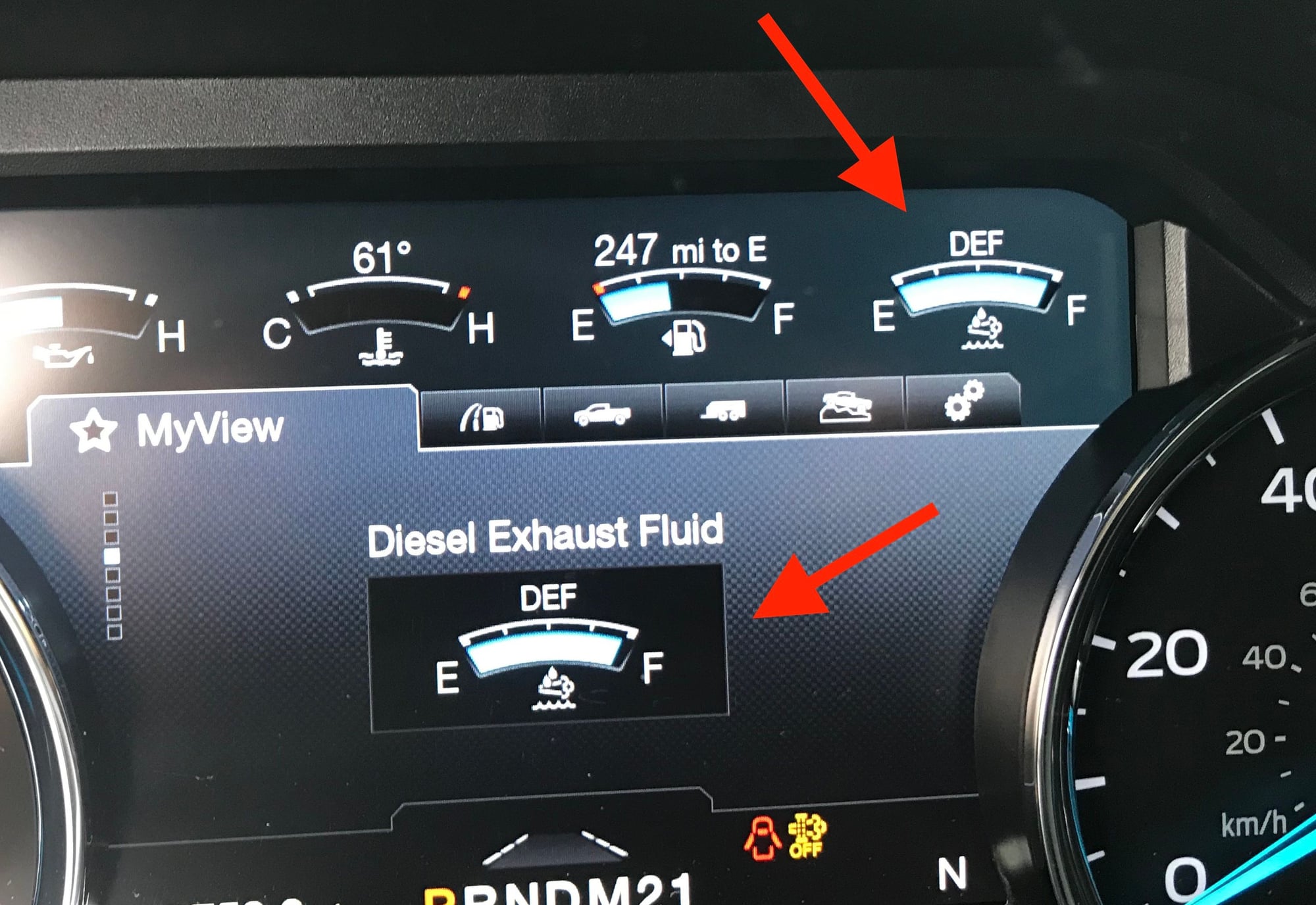
Letting the tank drop too low increases the risk of air in the lines and pump cavitation. Keeping DEF above 25 percent at all times prevents false low-level readings.
Keep DEF Above 25% at All Times
Refill every 5,000 to 6,000 miles to maintain safe levels. Use DEF at every oil change to keep the system full. Keep a 1-gallon DEF jug in the truck for emergencies.
Use High-Quality DEF Only
Low-grade or contaminated DEF can clog the injector nozzle and damage the pump. Trusted brands include Prestone, PEAK, Valvoline, and Ford OEM. Avoid bulk tanks at gas stations unless they are sealed and reputable.
Protect Against Cold Weather
DEF freezes at 12°F but the system has heaters to manage this. Repeated freeze-thaw cycles can damage sensors so protection is key. Park in a garage if possible and allow extra warm-up time before driving. The truck will still start as DEF thaws using exhaust heat.
When to See a Dealer
You should visit a Ford dealer if the fault returns after refilling and driving 30 miles. Hearing no pump prime sound or seeing leaks near the DEF tank also requires professional attention.
Don’t Waste Time—Know the Threshold
Dealerships have Ford IDS software that can force reset the DEF system. They can perform DEF relearning procedures and reprogram the PCM if needed.
- Fault returns after refill and 30+ miles of driving
- No pump prime sound is heard
- Leaks appear near the DEF tank
- Your VIN shows an open recall
- Scan tool reveals hard codes
If you are under warranty, do not use third-party code clearers. Ford can detect them and deny emissions-related claims.
Frequently Asked Questions About Ford F350 DEF Issues
How do I get my Ford F350 out of 50 mph mode?
Refill the DEF tank completely and drive for 20 to 30 miles at highway speeds. The system needs this distance to relearn and clear the fault code automatically.
Why does my F350 say DEF fault but the tank is full?
Sensors can give false readings or the pump connector may be loose. Try reseating the electrical connector on the DEF pump and resetting the ECU by disconnecting batteries.
Can I drive my truck with a DEF fault?
Yes, but speed will be limited to 50 mph. The engine will not shut down, but you cannot exceed this limit until the system clears the fault.
Does disconnecting the battery reset the DEF system?
It can clear soft codes, but you must wait 15 minutes with batteries disconnected. Driving is still required afterward for the system to verify the fix.
Is there a recall on Ford F350 DEF pumps?
Yes, recall 19S47 covers DEF pumps on 2017 to 2020 models. Check your VIN on the Ford website to see if your truck qualifies for a free replacement.
Key Takeaways for Fixing Ford F350 DEF Issues
Most DEF issues on the Ford F350 stem from low fluid or soft codes rather than broken parts. The 50 mph limiter is temporary and lifts once the system relearns through driving. Checking for the DEF pump recall can save you significant money on repairs.
You often do not need a new pump to fix this problem. Refill the tank, reset the system, and drive 20 miles to clear the fault. Keep a small DEF refill kit in your truck to prevent future occurrences.
Stay calm and follow these steps to get back on the road fast. Your truck will reset with patience and the right actions.


