

If your F-150 air conditioner not blowing cold air or not blowing any air at all, you are not alone. Thousands of Ford F-150 owners across model years report sudden A/C failure, especially during summer drives or in humid climates. The issue might seem simple, but the root cause could range from a frozen evaporator to a refrigerant leak or failing blend door. What is worse? Many mechanics jump straight to recharging the system, which rarely fixes the real problem.
This guide cuts through the confusion. We will walk you through the most common causes backed by real user reports, Ford TSBs, and professional diagnostics. You will learn how to diagnose evaporator freeze-up, check for leaks, test compressor engagement, and advocate for warranty-covered repairs under TSB 22-2089 if you drive a 2021-2022 model.
Diagnose No Airflow First
When your F-150 air conditioner not blowing from any vents, start by confirming whether the blower motor is running. Open the glove box, turn the climate control to max fan, and listen. If you hear the motor spinning but feel no air, the problem is likely inside the HVAC housing, not the compressor or refrigerant.
Check for Evaporator Freeze-Up
In 2021-2022 F-150s, especially PowerBoost hybrids, evaporator freeze-up is a leading cause of no airflow. Ice builds on the evaporator core after 30 or more minutes of A/C use, blocking airflow even if the blower runs.
Symptoms include:
- Blower sounds normal but no air comes out
- Airflow returns after shutting off engine for 10 minutes
- You may hear dripping under the dash as ice melts
Quick test: Turn off A/C but keep fan on high for 5-10 minutes. If airflow returns, ice was the culprit.
Pro Tip: If you own a 2021-2022 model, bring TSB 22-2089 to your dealer. It covers evaporator replacement and an ACM software update, often under warranty.
Inspect Cabin Air Filter
A clogged cabin air filter restricts airflow into the HVAC system, mimicking blower or evaporator issues. The filter is located behind the glove box on the passenger side. Replacement interval is every 15,000-30,000 miles. Check for dirt, moisture, or mold buildup.
Some older F-150s did not come with a factory filter. If yours is missing, consider installing an aftermarket one to improve airflow and air quality.
Air Blows But Not Cold? Check Refrigerant
If your F-150 air conditioner not blowing cold but airflow is normal, the issue is likely refrigerant-related. Compressor engagement does not mean the system is charged. Many owners report the compressor cycling on and off with no cooling effect.
Test Low-Side Pressure Correctly

Never rely on static pressure readings with the engine off. You must test with the compressor running.
Normal low-side pressure is 25-40 psi, varying with ambient temperature. An abnormal high reading, such as 74 psi, may indicate overcharge, static test error, or a faulty gauge.
One 2018 F-150 owner found 510 kPa, roughly 74 psi, yet the A/C blew warm air. The real issue was a leak at the dryer assembly causing low charge despite misleading pressure.
Critical Rule: Never recharge without confirming a leak is sealed. Topping off a leaking system is a waste of money.
Find and Fix Refrigerant Leaks
Common leak points in F-150s include:
- Dryer assembly, confirmed in 2018 model
- Schrader valve cores
- O-rings at compressor or lines
- Condenser fins from road debris damage
- Evaporator core behind the dash, hard to access
- Compressor shaft seal
Leak detection methods:
- UV dye: Add dye during recharge and inspect with UV light after 10-20 minutes of operation
- Electronic leak detector: Sensitive to R-134a or R-1234yf, check model year compatibility
- Visual inspection: Look for oily residue near connections
Blower Motor Not Working? Test the System
If no sound comes from the blower, the issue is electrical or mechanical. In 2010-2016 F-150s, fretting corrosion in the blower motor connector is a known failure mode.
Identify Blower Motor Failure

Symptoms include:
- No fan noise at any speed
- Weak airflow even on high setting
- Discolored or browned wiring near firewall
Test steps:
- Check the fuse in the cabin fuse box
- Inspect blower motor resistor for continuity
- Examine connector pins for corrosion or heat damage
The root cause is often internal terminal fretting, where micro-movement causes oxidation, increasing resistance and leading to overheating.
Replace Blower Motor and Controller Together
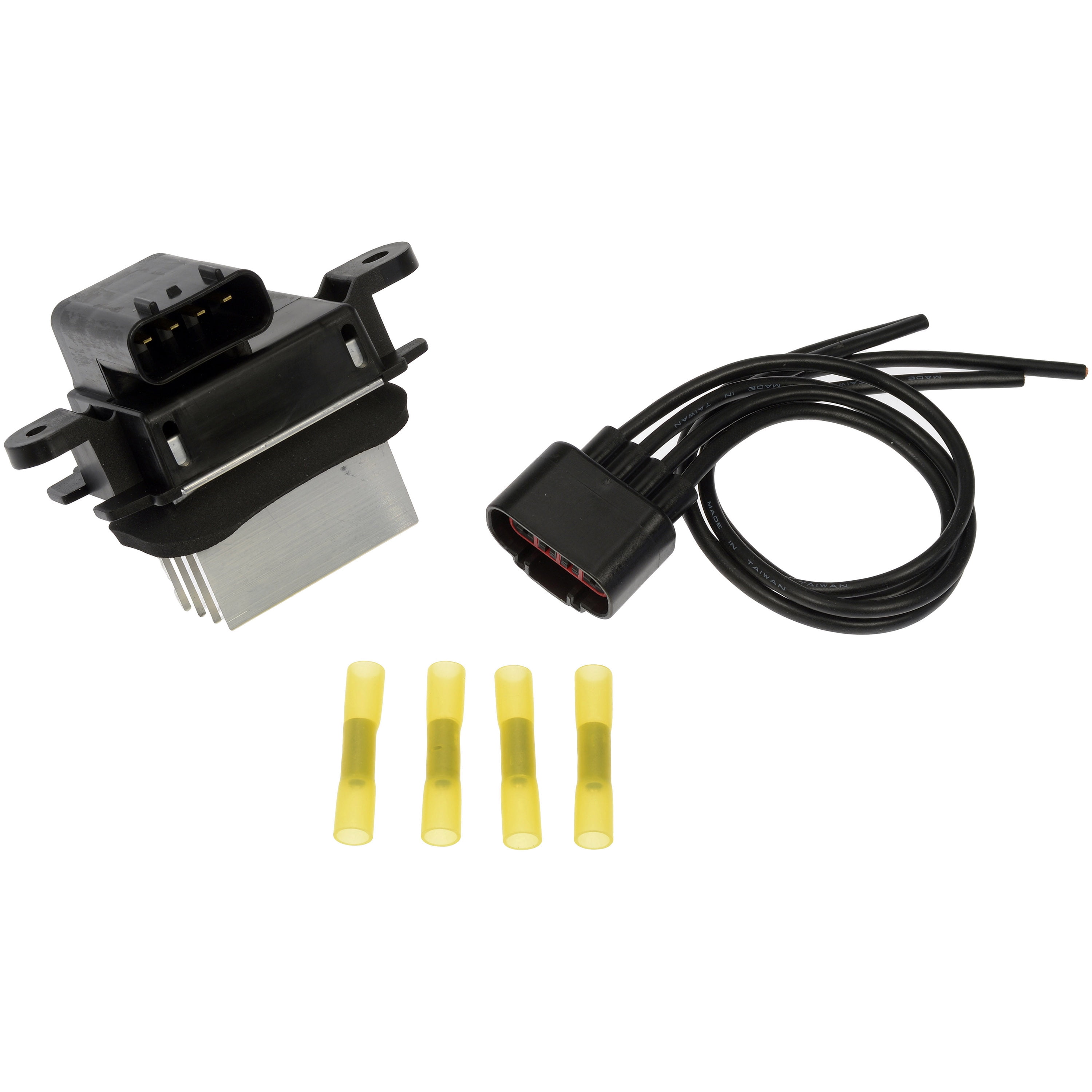
Replacing just the resistor or motor often leads to repeat failures. The degraded connector or windings cause the new part to fail quickly.
Recommended fix: Replace blower motor, resistor controller, and connector as a kit. Cost is $120-$200 for OEM or quality aftermarket. DIY time is 1-2 hours.
Expert Note: Long-term success comes from full system replacement, not piecemeal fixes.
Compressor Not Engaging? Bypass to Test
If the A/C button is on but the compressor clutch does not spin, the issue could be refrigerant, electrical, or control-related.
Jump the Compressor Clutch
This test bypasses sensors and switches to confirm the compressor works mechanically.
How to: Use a fused jumper wire from battery positive to the compressor clutch connector. If it engages, the compressor is functional and the problem is likely low refrigerant tripping the low-pressure switch, bad relay, faulty pressure switch, or wiring issue. If it does not engage, the clutch may be bad, the coil open, or there is a wiring fault.
Safety: Only jump briefly, 5-10 seconds, to avoid damage.
Check Relay and Low-Pressure Switch
Relay test: Swap with an identical relay in the fuse box, such as horn or fan relay. Switch test: Measure voltage at the switch and bypass temporarily with caution to see if the compressor runs.
A failed switch can mimic low-refrigerant symptoms even if charge is correct.
Blend Door Failure? Listen for Clicks
Blend doors control airflow direction and temperature mix. If stuck, they can block airflow or deliver warm air even when set to cold.
Spot the Signs
Watch for these indicators:
- No air from center vents but airflow at defrost or floor
- Dual-zone imbalance with driver side cold and passenger side hot
- Clicking or grinding noises from the dash when changing modes
One 2022 Platinum owner reported sequential failure of upper and lower blend doors.
Replace Actuator and Recalibrate
Access is through glove box removal. The actuator is on the HVAC housing. Post-replacement requires software calibration via scan tool. Cost is $80-$150 per actuator with labor adding $100-$200 if done professionally.
Pro Tip: Always recalibrate. Uncalibrated actuators may not reach full cold or hot.
Model-Year Specific Fixes
Different F-150 generations have unique A/C failure patterns. Know your model’s weak spots.
2010-2016: Blower Motor System Failures
Issue is fretting corrosion in the blower motor connector. Fix is to replace motor, resistor, and connector together. Prevention is to inspect wiring every 30,000 miles in hot climates.
2013: Refrigerant Leaks Common
Symptoms are air blows but not cold with compressor cycling. Leak points are O-rings, compressor seal, and evaporator. Test using UV dye and avoid repeated recharges.
2018-2022: Evaporator Freeze-Up
This is especially common in PowerBoost hybrids. Root cause is control logic, refrigerant level, and airflow. Official fix is TSB 22-2089, software update plus evaporator replacement.
Warranty Note: Repairs are covered under 5-year/60,000-mile limited warranty if applicable.
Prevent Future A/C Problems
Do not wait for failure. A few simple habits can keep your F-150’s A/C blowing cold for years.
Replace Cabin Air Filter Regularly
Replace every 15,000-30,000 miles, more often in dusty or high-pollen areas. This improves airflow and reduces strain on the evaporator.
Avoid Max A/C in Humid Conditions
Running A/C on max for hours in humidity increases ice risk. Instead, use recirculation mode to reduce moisture. Cycle A/C off for 5 minutes every hour on long drives.
Insulate the Low-Pressure Line
Heat soak from the engine bay warms the low-pressure A/C line, reducing cooling efficiency. Fix is to wrap the larger-diameter suction line with foam insulation. DIY cost is $10 for pipe insulation with noticeable improvement in extreme heat.
User Feedback: One owner called this a common problem with a simple mod.
Keep Software Updated
Ford releases PCM and ACM updates that improve A/C logic and prevent freeze-up. Check for updates during routine service.
When to Go to the Dealer
If you are out of your depth or under warranty, the dealer is your best bet if you know how to advocate.
Use TSB 22-2089 to Your Advantage
For 2021-2022 models, provide the TSB number. Dealers often do not know about it. Give your VIN. Ford may cover the repair under warranty. Document everything including service dates, symptoms, and communications.
Ford’s Response: “I can look into your F-150’s A/C concerns. Send us a private message with your VIN and dealership info.”
Get a Professional Leak Check
If DIY methods fail, pay for a professional A/C service. Services include leak detection with dye or electronic sensor, system evacuation and recharge, and pressure testing under load. Cost is $150-$300, worth it to avoid misdiagnosis.
Key Takeaways for Fixing Your F-150 Air Conditioner Not Blowing
The phrase F-150 air conditioner not blowing covers two distinct problems: no airflow and no cooling. Diagnose step by step using live data when possible. Never let anyone sell you a recharge without proving the system holds pressure. For 2021-2022 models, reference TSB 22-2089 to get official warranty-covered repairs. If your truck is older, focus on checking the blower motor system, refrigerant leaks, and blend door actuators in that order. With the right approach, you can restore full cooling or get Ford to fix it for free.
Frequently Asked Questions About F-150 Air Conditioner Not Blowing
Why does my F-150 A/C blow air but not get cold?
This is typically a refrigerant leak or low system charge. Test low-side pressure with the compressor running. Normal is 25-40 psi. If pressure is abnormal, use UV dye to locate the leak before recharging.
How do I know if my evaporator is frozen?
The blower runs but no air comes out. Airflow returns after turning off the engine for 10 minutes. You may hear dripping as ice melts. This is common in 2021-2022 models and PowerBoost hybrids.
Can I replace the blower motor myself?
Yes. The job takes 1-2 hours. You need to replace the motor, resistor, and connector as a kit for long-term success. Cost is $120-$200 for parts.
What is TSB 22-2089?
TSB 22-2089 is a Ford technical service bulletin for 2021-2022 F-150s experiencing evaporator freeze-up. It covers evaporator replacement and ACM software update, often under warranty.
Why does my compressor not engage?
The compressor clutch may not engage due to low refrigerant tripping the low-pressure switch, a bad relay, faulty pressure switch, or wiring issues. Jump the compressor clutch to test if the mechanical part works.


