

Your Ford F-150 cranks strongly, the engine turns over normally, and the tachometer moves but it just will not start. You have tried multiple times. Maybe it fires once and dies, or maybe it does nothing at all. This cranking but not starting issue is one of the most common and frustrating problems F-150 owners face across model years, especially in 5.0L Coyote, 5.4L V8, and EcoBoost engines.
The good news? Since the engine cranks, your starter and battery are likely fine. And if the tachometer shows RPM during cranking, the crankshaft position sensor is working, which rules out a major sensor failure. That narrows the problem to one of three core systems: fuel delivery, ignition and spark, or electronic control faults. This guide breaks down the exact diagnostic steps to pinpoint the cause fast.
Quick Fuel Test to Identify the Problem

The fastest way to determine if your no-start is fuel-related is the starting fluid test. This simple diagnostic takes less than five minutes and immediately points you toward the right system to repair.
Perform the Starting Fluid Test
Remove the intake tube to expose the throttle body. Spray two to three seconds of starting fluid into the intake. Try to start the engine.
If the engine fires briefly then dies, you have spark and compression. The issue is fuel delivery. If there is no response at all, the problem is likely no spark, a timing fault, or a severe ECU sensor failure.
What the Results Tell You
Engine runs on starting fluid. Focus 100% on the fuel system, including fuses, relays, FPDM, fuel pump, and pressure. Engine does not respond. Focus on spark, timing, ignition coils, CMP sensor, or PCM issues.
Pro Tip: If the engine runs on starting fluid, you have confirmed the fuel system is the culprit. This saves hours of diagnostic time.
Warning: Do not overuse starting fluid. Excessive amounts can wash oil from cylinder walls or damage the catalytic converter.
Check Critical Fuses First
Blown or melted fuses are among the top causes of no-start, especially in 2009-2014 F-150s. Before replacing any expensive parts, inspect these critical fuses.
Fuses to Inspect Immediately
Fuse F9 is located in the interior CJB and controls the fuel pump. Fuse 27 is a 20A fuse in the interior fuse box for the fuel pump. Fuse 107 or Fuse 70 is located in the BJB under the hood.
Fuse 27 Melting Issue in 5.0L Coyote
A known factory flaw causes Fuse 27 to overheat due to poor terminal contact, even with correct amperage. The plastic melts, the connection fails, and the fuel pump loses power. Ford issued TSB EL3Z-14293-A to fix this by relocating the circuit to Fuse 70, which has a higher-current terminal.
How to Check: Turn off the ignition. Pull Fuse 27 from the interior panel and Fuse 107 or 70 from under the hood. Look for discoloration, melting, corrosion, or a loose fit. If Fuse 27 is melted, install Ford relocation kit or verify the repair was already done.
Test the Fuel Pump Prime Sound
When you turn the key to ON, not start, the fuel pump should run for two to three seconds. This is a faint hum from the rear of the truck.
You hear the prime. Power is reaching the pump, possibly. No sound. Likely no power, a blown fuse, a bad relay, or FPDM failure.
Tip: Have someone cycle the key while you listen near the fuel tank. Cold start makes it easier to hear.
Diagnose the FPDM Module
The Fuel Pump Driver Module is mounted under the spare tire on the frame rail. It controls fuel pump speed based on signals from the PCM. This module is most prone to failure in 2004-2014 F-150s with 5.4L, 5.0L, and 3.7L engines, especially trucks in salt-heavy regions where corrosion is common.
FPDM Failure Symptoms
Cranks but will not start, no fuel pump prime, intermittent starting that works sometimes, and DTCs including U0100, P0087, and P2135. The tachometer moves, indicating the CKP sensor is good.
Perform the Tap Test
Locate the FPDM under the spare tire. Turn the key to ON. Gently tap the module with the back of a screwdriver. If the pump kicks on after tapping, the FPDM is failing. Replace it.
This simple test confirms internal solder joint or relay failure, which is very common in older units.
Multimeter Test: Check FPDM Pins
Use a multimeter to test the five-pin connector. Pin 1 is violet-green wire and provides battery voltage. It should read approximately 12V with key ON. Pin 4 is solid black wire and provides ground. It should read 0 ohms to chassis. Pin 5 is yellow-gray wire and is the control signal. It should switch from 0V to 12V when the pump is commanded.
Step-by-step: Disconnect the FPDM connector. Turn key ON. Test Pin 1. It should read approximately 12V. Test Pin 4. Verify solid ground. Command the fuel pump via scan tool or by cycling the key on and off three times. Monitor Pin 5. It should jump from 0V to 12V.
No voltage change on Pin 5 indicates the FPDM is bad.
User Case: A 2007 F-150 owner found corrosion, burnt PCB traces, and a blown F9 fuse. Replaced the FPDM and fuse, and the truck was fixed.
Verify Fuel Pressure
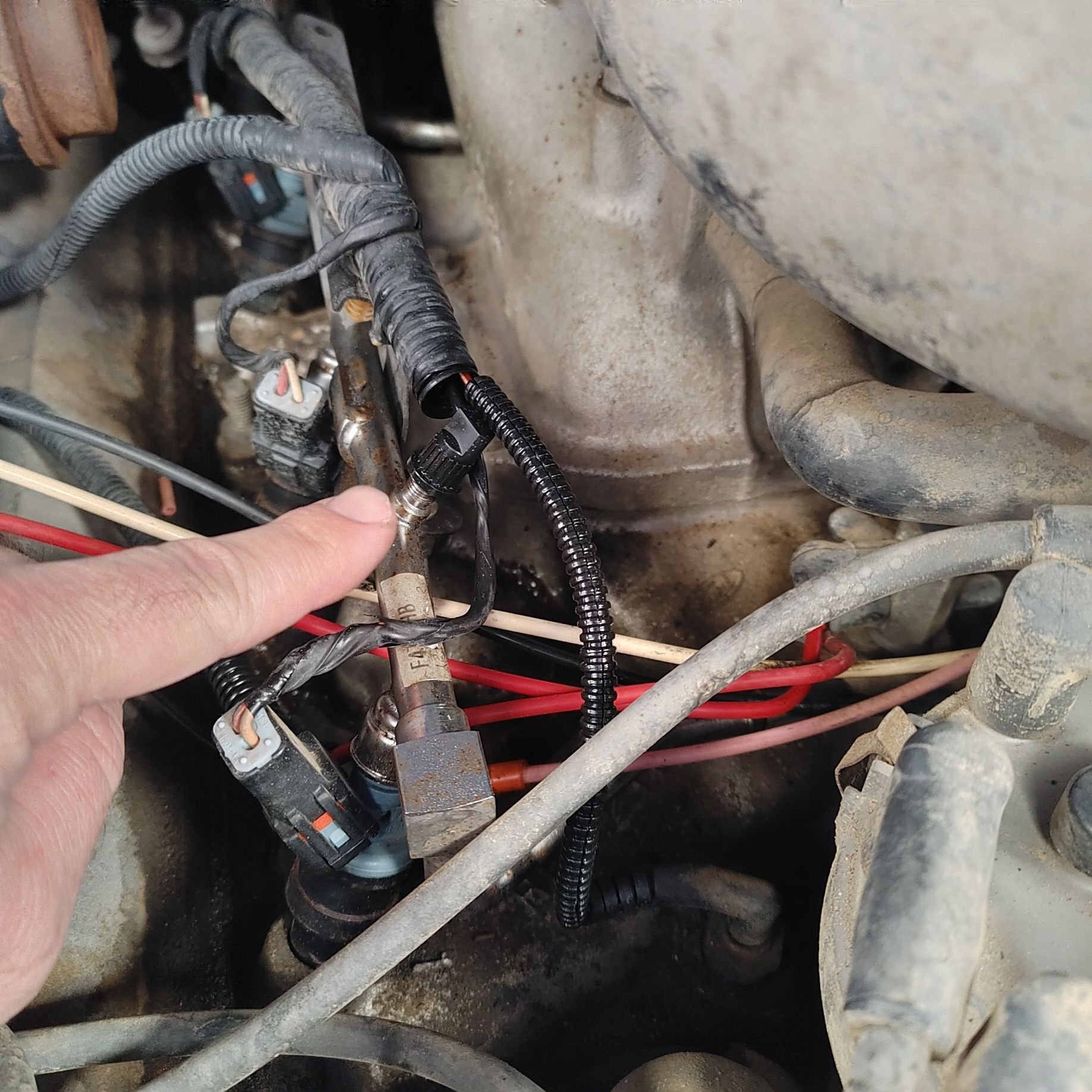
Even if the pump runs, it may not deliver enough pressure. Testing fuel pressure confirms whether the fuel system can maintain adequate delivery.
Normal Fuel Pressure Readings
For 5.0L, 5.4L, and 3.7L engines with port fuel injection, normal pressure is 60-66 psi at key-on prime. It should hold more than 50 psi after five minutes. EcoBoost engines with direct injection require a specialized high-pressure tool.
How to Test Fuel Pressure
Attach a fuel pressure gauge to the Schrader valve on the fuel rail under the hood. Turn the key to ON. Observe the pressure reading.
60+ psi indicates the fuel system is good. Check spark or timing. Zero psi indicates no fuel delivery. Recheck the FPDM, fuse, relay, and pump power. Pressure drops fast indicates a leaking injector, bad check valve, or failing pump.
Check for Spark and Ignition Issues

If the engine does not respond to starting fluid, spark or timing is likely the issue. Since the tachometer moves during cranking, the CKP sensor is working, so focus on the ignition system and related sensors.
Components to Inspect
Coil packs, spark plugs, wiring harnesses, and the camshaft position sensor all need inspection. The CMP sensor syncs fuel injectors with valve timing, and failure symptoms include cranks with no start, no spark, and DTCs including P0340 and P0345.
How to Test the Camshaft Sensor
Use a scan tool to check for CMP signal in live data, or test with an oscilloscope. Replace only if the signal is missing. Many owners replaced the CMP after confirming no signal, which fixed the no-start issue.
Avoid replacing sensors without testing. Throwing parts wastes money and time.
Inspect the Park Neutral Position Switch
Also called the PNP switch or transmission range sensor, this tells the PCM the truck is in Park or Neutral. Failure can cause intermittent no-start issues.
Failure Signs
Engine cranks but will not start. The P indicator on the dash does not light up. Battery drains after shutdown. The truck starts when you jiggle the shifter.
How to Test
Shift into Park. Check if the P light illuminates on the dash. Use FORScan to view the PNP sensor status in live data. No signal indicates the switch needs replacement.
User Fix: A 2013 F-150 owner replaced the park shift sensor and solved both the intermittent no-start and parasitic drain problems.
Rule Out Relay Problems
Relays fail due to heat, vibration, or worn contacts. The fuel pump relay is a common culprit in no-start conditions.
Common Relay Locations
The fuel pump relay is located in the junction box under the hood or dash. Relay number eight has been reported as problematic in 2014 models.
Swap Test
Locate the fuel pump relay. Swap it with the horn or A/C relay, which are the same type. Try to start the engine. If the engine starts, the original relay was bad.
Multiple owners fixed no-start issues by replacing or swapping relays.
Scan for Hidden Diagnostic Codes
Many no-start issues leave pending codes even if the check engine light is off. Using a scan tool reveals these hidden faults.
Recommended Tool: FORScan
FORScan is a Windows-based app that reads Ford-specific DTCs, shows live data, and runs actuator tests. It is free or paid and specifically designed for Ford vehicles.
What to Check
Fuel rail pressure, CKP and CMP signals, FPDM command status, battery voltage during crank, and PATS immobilizer status all provide critical diagnostic information.
Expert Advice: Have you scanned it with FORScan? There may be pending codes that reveal the root cause.
Check Security System and PATS
Ford Passive Anti-Theft System can block fuel and spark if the key is not recognized. This is a common cause of no-start that often gets overlooked.
PATS Failure Symptoms
Cranks but will not start. The security light flashes or stays on. The truck starts with a spare key. There is no fuel pump prime.
How to Diagnose
Use FORScan to check for PATS codes, including B1601 and B2420. Try using a spare key. Reprogram keys if needed. A shop reprogrammed a gauge cluster to fix a no-start issue, suggesting possible key chip failure in older models.
Inspect Battery and Ground Connections
A weak ground can disrupt FPDM, PCM, or fuel pump operation even when the battery tests good.
Critical Grounds to Check
Engine to chassis ground at the front of the block, fuel pump module to frame ground, and PCM ground behind the battery or fender all need inspection.
How to Test
Set a multimeter to continuity mode. Test from battery negative to the frame, engine block, and FPDM housing. Each should read 0 ohms, indicating a solid connection.
User Advice: Check all fuel system grounds before replacing parts.
Final Diagnostic Flow: Do This First
Follow this sequence to avoid unnecessary repairs and find the root cause fast.
Try starting fluid. If it fires, the problem is fuel-related. Check fuses F9, 27, 107, and 70 for melting or corrosion. Listen for fuel pump hum at key-on. Scan for DTCs using FORScan. Test FPDM pins one, four, and five with a multimeter. Tap the FPDM. If the pump runs, replace it. Check the park neutral switch. Verify the P light lights up. Test fuel pressure. Expect 60-66 psi. Swap the fuel pump relay to rule out contact failure. Inspect grounds and battery connections.
Golden Rule: Diagnose before replacing. Many users replaced pumps, modules, and sensors only to find a ten-dollar fuse or eighty-dollar FPDM was the real cause.
Prevent Future No-Start Issues
Regular maintenance prevents sudden failures and keeps your F-150 reliable.
Annual FPDM inspection in salt areas prevents corrosion and sudden failure. Replace the fuel filter every 60,000 miles to protect the pump and maintain pressure. Clean the MAF sensor every 30,000 miles to prevent mixture errors. Clean the throttle body every 50,000 miles to reduce idle and start issues. Check the fuse block during oil changes to catch melting before it causes a failure.
Pro Tips: Use FORScan regularly to monitor system health. Carry starting fluid for field diagnosis. Upgrade wiring if you have had fuse issues, and ensure the Fuse 27 relocation was done. Clean grounds annually, especially near the fuel tank.
When to Suspect the PCM
PCM failure is rare, but it happens when all other systems check out.
PCM Failure Symptoms
No fuel pump command, no communication with scan tool, multiple system failures, and DTCs including U0100 and P0603.
How to Diagnose
Use FORScan to check module communication, actuator commands, and internal faults. Reprogram or replace only after ruling out FPDM, fuses, and sensors.
Warning: Do not replace the PCM without confirming failure. Many bad PCM cases were actually FPDM or wiring issues.
Frequently Asked Questions About F150 Cranking But Not Starting
Why does my F-150 crank but not start even though the battery and starter are fine?
Since the engine cranks normally and the tachometer moves, the starter and crankshaft position sensor are working. The problem lies in fuel delivery, ignition spark, or electronic control. Start with the starting fluid test to determine which system is at fault.
Can a blown fuse cause my F-150 to crank but not start?
Yes. Blown fuses, especially Fuse 27 for the fuel pump in 2009-2014 5.0L Coyote models, are among the most common causes. Inspect fuses F9, 27, 107, and 70 for melting or corrosion before replacing expensive parts.
How do I know if my FPDM is bad?
The FPDM often fails intermittently. If tapping the module under the spare tire makes the fuel pump activate, the FPDM is faulty. Use a multimeter to check Pin 5 for voltage change when the pump is commanded. No change indicates a bad FPDM.
What is the fuse 27 melting issue on 5.0L F-150s?
Fuse 27 in the interior fuse box overheats due to poor terminal contact, causing the plastic to melt and the fuel pump to lose power. Ford issued TSB EL3Z-14293-A with a relocation kit to move the circuit to Fuse 70, which has a higher-current terminal.
Can a bad park neutral switch cause no-start?
Yes. If the PNP switch fails, the PCM may not recognize that the vehicle is in Park or Neutral, preventing startup. Check if the P indicator lights up on the dash. If not, replace the sensor.
How do I diagnose PATS security system issues?
If the security light flashes or stays on, the PATS system is not recognizing the key. Use FORScan to check for PATS codes like B1601 or B2420. Try a spare key. If that fails, the key chip may need reprogramming or the gauge cluster may need replacement.
Key Takeaways for Fixing F150 Cranking But Not Starting
The cranking but not starting issue in your Ford F-150 is almost always electrical or fuel-related, not mechanical. By following this guide, you will skip the guesswork and avoid unnecessary repairs. Always start with the starting fluid test to determine if the problem is fuel or spark. Check critical fuses F9, 27, 107, and 70 before replacing expensive components. The FPDM under the spare tire is a common failure point, especially in 2004-2014 models. Use a multimeter, scan tool like FORScan, and fuel pressure gauge to confirm the root cause before replacing any parts. With proper diagnosis, you can fix the real problem fast and get your truck running again.


