
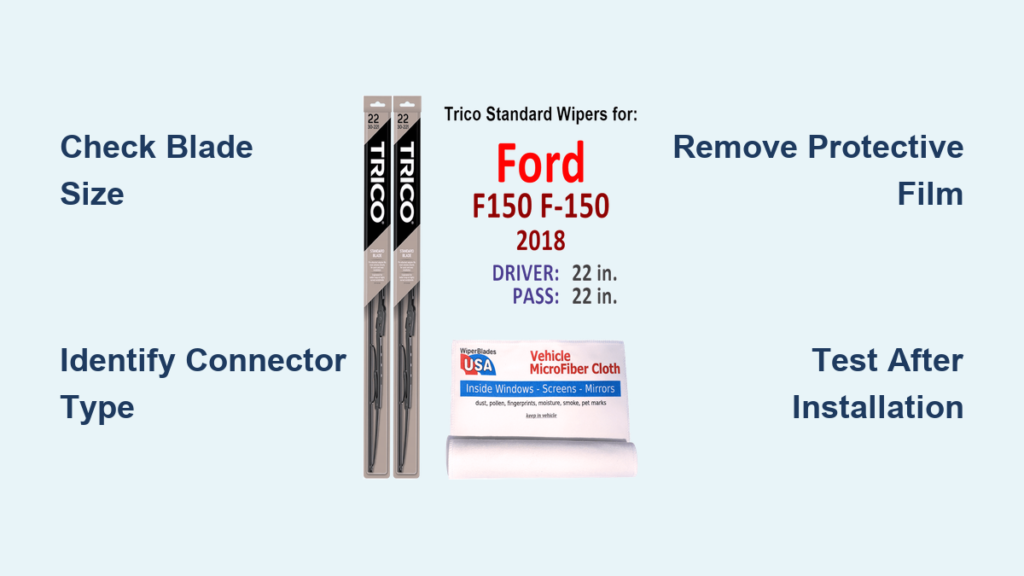
Changing the wiper blades on your Ford F-150 is a quick, tool-free maintenance task that dramatically improves visibility and safety in rain, snow, or dusty conditions. Over time, wiper blades degrade from UV exposure, extreme temperatures, and road grime, leading to streaking, chattering, or incomplete wiping. This guide covers exact blade sizes, attachment types, and step-by-step installation for F-150 models from 2015 to 2025. Whether you drive a 2017 King Ranch or a 2023 Lariat, you will be done in under 10 minutes with no special tools.
Why Replace F-150 Wiper Blades
Worn wiper blades compromise visibility and increase accident risk. Factory blades work well at first but often degrade faster than expected due to sun exposure, winter ice, and highway speed lift. You should replace wiper blades every 6 to 12 months for optimal performance. Upgrade to premium blades for smoother wiping, better rain and snow clearance, and longer lifespan up to 12 months or more. Replace immediately if you notice cracks or splits in the rubber, chattering across the glass, streaks that will not clear after multiple passes, or missing rubber sections at the edges.
Correct Blade Sizes for Your F-150 Model Year
2015-2020 F-150 Models
The driver side requires a 26-inch blade while the passenger side uses an 18-inch blade. This asymmetrical setup means different lengths for each side. Common attachment types include side-squeeze, push-tab, or recessed release mechanisms. Always verify your specific trim before purchasing replacement blades.
2021-2025 F-150 Models
Both the driver side and passenger side use a 22-inch blade. This symmetrical setup means identical lengths on both sides. The attachment type is a small J hook, also known as the 9×3 hook system. No adapter is needed for direct OEM fit with most beam blades. Always double-check size and connector type, as aftermarket windshields or special trims like Raptor or Tremor may differ slightly.
Tools You Will Need for Wiper Blade Replacement
This job requires zero tools in most cases, but a few items make the process easier.
Essential Items
New wiper blades in the correct size and connector type for your model year. A microfiber cloth for cleaning the windshield and new blade rubber.
Optional Helpers
A small flat-head screwdriver helps with stubborn recessed tabs. A step stool is useful if you are shorter and cannot reach the arms easily. Gloves protect hands from sharp edges and dirt. A smartphone lets you take a photo of the old blade connection for reference before removal.
Identifying Your Wiper Arm Connector Type
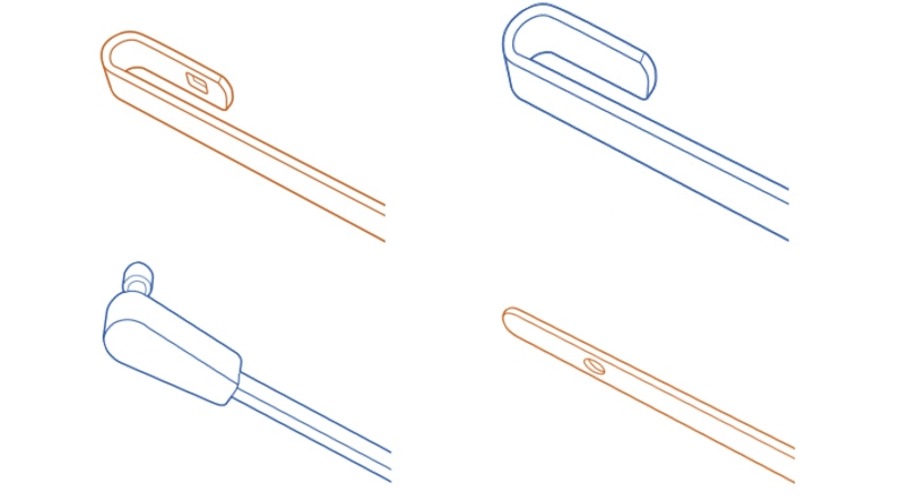
The key to a smooth swap is knowing your connector style. Ford F-150s use several hook-based systems that determine how the blade attaches and releases.
Side-Squeeze Release (2015-2020)
This type features two plastic tabs on the sides of the blade connector. Squeeze both tabs firmly to release the blade from the arm. You will hear two clicks as the bracket opens. This style is common with Champion and older metal-frame blades.
Top-Mounted Push Tab
A small button sits on top of the connector. Press upward to unlock, then slide the blade down off the hook. This may be recessed, so use your fingernail or a small screwdriver for access.
Slide-and-Lock J Hook (2021-2025)
The small J-shaped hook on the wiper arm uses a blade that slides on and locks into place. The release tab is on the underside. Pinch and slide down to release. This style is used with Rain-X, Bosch, and Michelin beam blades.
Step-by-Step F-150 Wiper Blade Installation
Step 1: Lift Wipers into Service Position
Turn the ignition to ON without starting the engine. Turn on the wipers using the stalk, then turn them OFF mid-cycle so the arms stop upright. This gives full access and prevents motor damage. Always support the arm with one hand. Letting it snap back can crack the windshield or damage the wiper transmission. Place a microfiber towel on the hood to cushion the arm if it slips.
Step 2: Remove the Old Driver-Side Blade
For side-squeeze blades, locate the release zone marked by three small lines on the arm. Squeeze both side tabs firmly. You will hear two clicks as the bracket opens. Pull the blade straight down off the arm, then lower the arm gently back to the windshield.
For top push-tab blades, find the small tab on top of the connector. Press upward with your thumb or screwdriver. While pressing, slide the blade down off the hook. Lower the arm carefully.
For J-hook blades, lift the arm and pinch the release tab on the underside. While squeezing, slide the blade down and off the J hook. Support the arm throughout the process.
Step 3: Install the New Wiper Blade
Hold the new blade with the rubber facing down. Align the top opening with the wiper arm hook. Slide the arm into the blade connector. Push forward until it clicks securely. Tug gently to confirm it is locked in place. Listen for the audible click. If it does not click, the blade is not locked.
For 2021-2025 models, use 22-inch blades with 9×3 hook compatibility. Rain-X WeatherBeater RXWB-22 is a top pick. No adapter is needed for direct OEM fit.
For 2015-2020 models, use a 26-inch blade on the driver side and an 18-inch blade on the passenger side. Confirm the connector type matches your vehicle.
Step 4: Remove Protective Film
Most new blades come with a plastic strip on the rubber that must be removed before use. Rain-X blades have a yellow protective cover. Bosch blades have a clear plastic sleeve. Failure to remove this film causes poor contact and streaking. Do not skip this step, as it is the most common reason for wiper complaints after installation.
Step 5: Repeat for Passenger-Side Blade
Follow the same removal and install steps for the opposite side. For 2021-2025 models, use another 22-inch blade. For 2015-2020 models, install the 18-inch blade on the passenger side. Double-check the orientation, as some blades are side-specific.
Step 6: Test the New Blades
Lower both arms gently onto the windshield. Start the engine. Activate the wipers with washer fluid. Run 3-5 full cycles. Check for smooth, quiet wiping motion with no chattering, skipping, or lifting. Verify full arc coverage and even pressure across the windshield. If there is a problem, recheck that blades are fully clicked in, confirm the protective film is removed, clean the windshield with glass cleaner and microfiber, and inspect for bent wiper arms.
Common Wiper Blade Problems and Solutions
Blade Will Not Come Off
The cause is using the wrong release method. Identify the correct connector type and use a screwdriver for recessed tabs if needed.
Blade Will Not Click Into Place
Misalignment or a dirty connector causes this issue. Clean the arm and blade, then realign and retry.
Chattering or Streaking
A dirty glass or remaining new blade film causes poor performance. Clean the windshield and rubber, then let the blades condition over a few cycles.
Wiper Skips or Jumps
A bent arm or worn hinge is usually the culprit. Visually inspect arm alignment. You may need professional repair.
Blade Falls Off While Driving
Not fully locked in place causes this dangerous situation. Reinstall and ensure you hear an audible click.
Uneven Wiping Arc
A misaligned blade or bent arm creates uneven coverage. Re-seat the blade or check for physical damage.
Best Wiper Blades for Ford F-150

Top Picks for 2015-2020 F-150
Champion Full Metal Frame blades offer durable construction with even pressure, great for high winds. This option works best with side-squeeze and push-tab arms. Bosch Icon blades feature beam-blade design with aerodynamic construction and quiet operation. They include adapters for multiple connectors.
Top Picks for 2021-2025 F-150
Rain-X WeatherBeater RXWB-22 provides OEM-style fit for J-hook arms with hydrophobic coating and excellent performance in rain and snow. Easy one-click installation makes it popular. Michelin Stealth offers flexible beam design with quiet operation and resistance to ice buildup. Bosch Icon delivers premium all-weather performance with adaptive rubber for smooth contact.
Maintaining Your New Wiper Blades
Monthly Checks
Inspect the rubber for cracks, stiffness, or missing sections. Look for sap, salt, or bug residue. Clean blades with isopropyl alcohol and a microfiber cloth.
Best Practices
Never run wipers on a dry windshield. Always use washer fluid. Lift arms during snowstorms to prevent ice bonding. Replace blades in pairs even if only one looks bad. Avoid leaving arms upright for extended periods, as this weakens spring tension. Clean your windshield monthly with citrus-based degreaser to remove film that causes streaking.
Safety Tips for Wiper Blade Replacement
Always support the wiper arm when lifting to prevent damage. Never operate wipers without fluid on dry glass. Use OEM or certified aftermarket blades for proper fit. Dispose of old blades responsibly by recycling metal and rubber components. Refer to your owner’s manual for diagrams and specifications. Test with washer fluid after installation.
Frequently Asked Questions About Changing Ford F-150 Wiper Blades
How Often Should I Replace My F-150 Wiper Blades?
Replace wiper blades every 6 to 12 months for optimal performance. Consider replacing twice yearly, before winter and monsoon season, for consistent visibility in all weather conditions.
What Size Wiper Blades Does a 2021 Ford F-150 Use?
The 2021-2025 Ford F-150 uses 22-inch blades on both the driver and passenger sides. Both sides are identical and use the small J hook (9×3) attachment system.
Can I Replace My F-150 Wiper Blades Myself Without Tools?
Yes, wiper blade replacement requires no tools in most cases. The process is designed for DIY completion and takes 5-10 minutes per blade. A flat-head screwdriver helps with stubborn recessed tabs but is rarely required.
Why Are My New Wiper Blades Streaking?
Streaking usually occurs if the protective film was not removed from the new blade. Clean the windshield and blade rubber with glass cleaner. Also check that the blade is fully clicked into place.
What Is the Best Brand for Ford F-150 Wiper Blades?
Rain-X WeatherBeater is highly rated for 2021-2025 models with J-hook compatibility. Bosch Icon and Michelin Stealth offer premium all-weather performance. Champion Full Metal Frame works well for 2015-2020 models with traditional attachment types.
Key Takeaways for Changing Your F-150 Wiper Blades
Replacing Ford F-150 wiper blades is one of the easiest and most impactful maintenance tasks you can perform. The process varies slightly between model years. The 2015-2020 F-150s use asymmetrical 26-inch driver and 18-inch passenger blades with multiple attachment types. The 2021-2025 F-150s use symmetrical 22-inch blades with a standardized J-hook system. Success depends on identifying your correct attachment type, using properly sized compatible blades, and ensuring full engagement with an audible click. Remove all protective films before testing, and always support the wiper arm during the process. With fresh blades, you will enjoy crystal-clear visibility and safer driving in any weather condition.


