
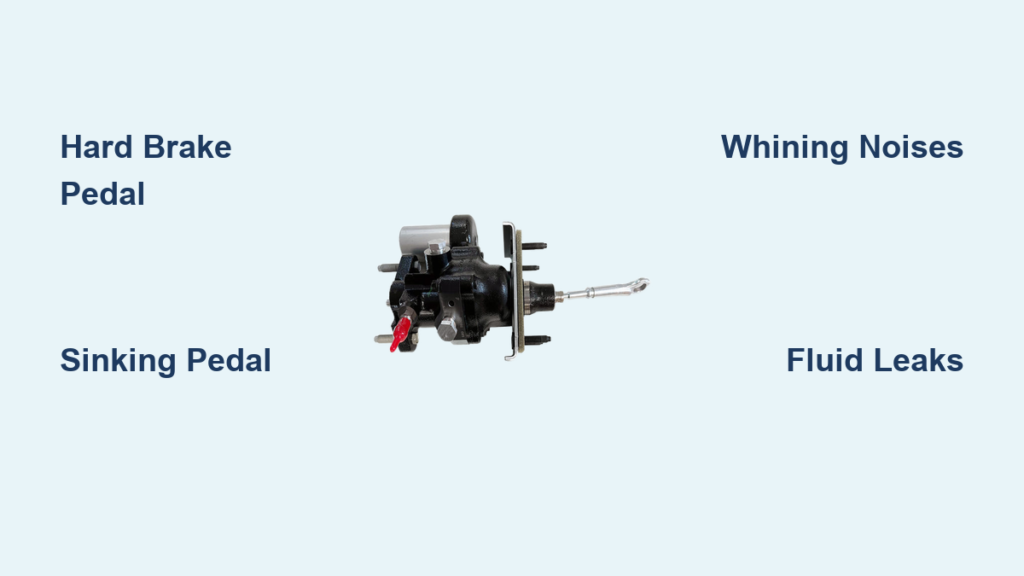
If your Ford F350 brake pedal feels stiff or sinks to the floor, you are likely facing serious Ford F350 hydroboost problems. These issues strip away hydraulic assist and make stopping your heavy truck difficult or dangerous.
This guide details every symptom from hard pedals to engine stalling while providing step-by-step testing and repair procedures. You will learn how to diagnose failures accurately and restore full braking power safely.
Diagnosing a Hard Brake Pedal

A sudden increase in pedal effort is the most common sign of hydroboost failure. The pedal feels incredibly stiff because the unit no longer multiplies your foot pressure.
Why the Pedal Feels Stiff
The hydroboost unit uses hydraulic pressure to amplify force applied to the master cylinder. When internal components fail, you rely entirely on leg strength to stop the vehicle. This condition is especially dangerous when towing or carrying heavy loads. Many owners mistake this for a master cylinder defect, but normal fluid levels point to the booster.
Check Power Steering System First
The hydroboost relies entirely on power steering pressure to function. You must verify the following before condemning the unit:
* Check the power steering fluid level in the reservoir
* Listen for whining noises from the pump during turns
* Inspect inlet and return lines for leaks or damage
Low fluid or a weak pump mimics internal booster failure. Always rule out these external factors first.
Fixing Delayed Brake Response
A noticeable lag between pressing the pedal and feeling resistance indicates a loss of hydraulic assist. This delay often points to internal valve failure or leaking seals.
Test for Assist Lag
Perform this simple test in a safe, open area to check system pressure retention:
1. Start the engine and turn the steering wheel fully left or right
2. Hold the wheel against the stop for 10 seconds to build pressure
3. Release the wheel and immediately press the brake pedal
If braking feels significantly stronger after this maneuver, the hydroboost is failing to maintain pressure. This suggests worn internal seals or a faulty accumulator.
Replace Worn Accumulator
The accumulator stores hydraulic pressure for immediate brake assist. Over time, it loses its ability to hold a charge.
* A dead accumulator allows one strong stop before the pedal goes hard
* Replacing the accumulator restores consistent assist
* Some rebuilt units include a new accumulator while others require separate service
Addressing Spongy or Soft Brake Pedal

A mushy pedal that travels too far toward the floor suggests air in the system or internal leakage. This condition reduces braking confidence and stopping power.
Bleed the Hydroboost Properly
Air is compressible and causes a soft pedal feel. Standard bleeding often fails to remove all air from the hydroboost unit. Use the pressure-bleeding method for best results:
1. Attach a pressure bleeder to the master cylinder
2. Pressurize the system to 35 psi
3. Bleed each caliper starting with the passenger rear
4. Cycle the brake pedal over 20 times to purge trapped air
Pro Tip: Have an assistant turn the steering wheel lock-to-lock while bleeding to circulate fluid through the hydroboost valve.
Inspect Internal Seals
If bleeding does not resolve the soft pedal, internal seals may be compromised. High-pressure fluid bypasses internally without visible external leaks. This condition requires unit replacement or a professional rebuild.
Repairing Brake Pedal Sinking to Floor

A pedal that slowly creeps down while you hold steady pressure indicates internal hydraulic failure. This is a critical safety issue requiring immediate attention.
Rule Out Master Cylinder First
Do not blame the hydroboost until you test the master cylinder. Follow these steps:
* Disconnect brake lines from the hydroboost unit
* Plug the master cylinder outlets securely
* Press the brake pedal firmly
If the pedal stays firm, the master cylinder is functional. If it sinks, replace the master cylinder before proceeding.
Hydroboost Internal Leak Test
If the master cylinder passes inspection, reconnect the lines and test the booster. Press and hold the brake pedal while watching for a slow drop in height. A sinking pedal with a good master cylinder confirms fluid is leaking past internal pistons. The unit must be replaced or rebuilt immediately.
Identifying Unusual Noises During Braking
Whining, groaning, or whistling sounds during braking often signal low fluid or air ingestion. These noises indicate the system is struggling to generate pressure.
Diagnose Whining Sounds
A high-pitched whine usually originates from the power steering pump. Common causes include:
* Low fluid levels causing cavitation
* Air entering through cracked hoses or loose fittings
* Pump failure due to excessive demand from a leaking booster
Check fluid condition and inspect all hoses for cracks. Clean fluid and tight fittings are essential for quiet operation.
Fix Whistling or Hissing
Hissing noises near the booster suggest air is entering the hydroboost housing. Faulty seals or leaking O-rings at the control valve are typical culprits. Bleed the system thoroughly to remove air. If noise persists after bleeding, replace the hydroboost unit.
Resolving Brake Warning Light Activation
The brake warning light on your dashboard can illuminate due to hydroboost failure or pressure imbalance. Do not ignore this indicator.
Check Dual-Circuit Balance
The hydroboost system utilizes a dual hydraulic circuit for safety. If one side loses pressure, the warning light activates. You may retain partial braking capability, but pedal effort increases significantly. Inspect for uneven fluid loss, leaks at output ports, or failure in the pressure differential valve.
Reset the Warning Light
After completing repairs, follow these steps to reset the system:
1. Turn the ignition to the ON position without starting the engine
2. Press the brake pedal three to five times
3. Observe if the light turns off
If the light remains on, scan for ABS or brake system codes. Some models require an electronic reset procedure.
Stopping Visible Fluid Leaks
Any sign of fluid around the hydroboost unit demands immediate investigation. Leaks lead to pressure loss and system failure.
Locate Common Leak Points
Inspect these specific areas for fluid accumulation:
* Front seal: Look for dripping near the master cylinder connection
* Mounting flange: Check between the booster and firewall
* Power steering lines: Examine fittings at the top of the unit
* Control valve: Inspect the side-mounted valve assembly
Note: Brake fluid and power steering fluid look similar. Confirm the source by smell or use test strips.
Replace Leaking Hydroboost
Hydroboost units are generally not repairable in the field once seals fail internally. Rebuilding requires specialized tools and expertise. Most technicians recommend replacing the unit with an OEM or high-quality remanufactured part.
Preventing Engine Stalls When Braking
A failing hydroboost can indirectly cause engine stalling, particularly on 7.3L Powerstroke models. This occurs due to vacuum contamination.
Understand the Link to Vacuum
Diesel engines produce little vacuum, necessitating the hydroboost system. However, failures can allow fluid to leak into the brake booster cavity. This creates a vacuum leak through the master cylinder, causing rough idle or stalling when braking.
Test for Vacuum Contamination
Perform this test to check for internal diaphragm failure:
1. Remove the master cylinder cap
2. Start the engine and let it idle
3. Press the brake pedal firmly
If you see fluid bubbling or foaming in the reservoir, brake fluid is being pulled into the system. Replace the hydroboost immediately to prevent engine damage.
Root Causes of Hydro Booster Failure
Understanding why failure occurs helps prevent recurrence. Several factors contribute to premature wear.
Contaminated Brake Fluid
Old or dirty fluid accelerates internal wear significantly. Moisture causes corrosion while debris clogs small passages. Flush the system every two years or 30,000 miles to maintain performance.
Worn Internal Seals
Rubber seals degrade over time due to heat and chemical breakdown. Frequent heavy braking speeds up this deterioration. Worn seals lead to internal bypass and total loss of pressure.
Air in the System
Air compresses easily while fluid does not. Even small amounts of air reduce assist dramatically. Air often enters during fluid changes or when leaks develop.
Poor Maintenance
Neglecting power steering fluid changes invites disaster. Ignoring small leaks leads to pump wear and low system pressure. Regular inspections prevent premature hydroboost failure.
Overheating from Heavy Use
Towing or mountain driving places extreme strain on the system. Fluid breaks down under high heat, causing seals to harden and crack. Use synthetic fluid for better heat resistance in demanding applications.
How to Test Hydroboost Function
Verify system performance before purchasing expensive parts. Simple tests can confirm failure.
No-Start Pressure Test
Deplete stored pressure by pressing the brake pedal five to six times with the engine off. Hold the pedal down and start the engine. If the pedal sinks slightly, the hydroboost is working. No movement indicates failure.
Engine-Off Brake Test
Press the brake pedal repeatedly with the engine off. It should feel hard after one or two presses. Start the engine and watch for the pedal to sink further as assist engages. Lack of movement confirms a problem.
Pressure Gauge Test
Advanced users can connect a gauge to the power steering high-pressure line. Idle pressure should read between 1,000 and 1,500 psi. Readings below 900 psi indicate a pump or booster issue.
Replace Hydroboost Unit
Replacement is necessary when repair is not viable. Gather your tools and follow the procedure carefully.
Gather Required Tools
You will need the following items for replacement:
* Wrench set (metric and standard)
* Brake bleeder kit
* Power steering fluid catch pan
* Torque wrench
* New mounting gasket and brake line washers
Step-by-Step Replacement
Follow this sequence for a successful installation:
1. Drain power steering fluid to prevent spills
2. Disconnect brake lines from master cylinder and hydroboost
3. Remove power steering lines from the top of the unit
4. Unbolt mounting nuts securing the unit to the firewall
5. Pull the unit away from the firewall carefully
6. Install new gasket and mount the replacement unit
7. Reconnect all lines and torque to specification
8. Refill fluid and bleed the entire system
This job typically takes 2 to 3 hours and requires intermediate mechanical skill.
Prevent Future Hydroboost Issues
Proactive maintenance extends the life of your braking system. Follow these tips to avoid repeat failures.
Use High-Quality Fluid
Always use MERCON V or Type F fluid unless specified otherwise. Avoid mixing fluid types. Synthetic fluids offer superior performance for towing or high-load conditions.
Maintain Proper Fluid Levels
Check fluid levels monthly on level ground with a warm engine. Top off the steering reservoir as needed with the correct fluid. Low levels introduce air and damage the pump.
Bleed After Any Brake Work
Always bleed the system whenever lines are opened. Start with the master cylinder, then the hydroboost, and finally the calipers. A pressure bleeder ensures complete air removal.
Upgrade to Remanufactured Unit
Quality remanufactured units offer a cost-effective solution. They come with new seals, valves, and a recharged accumulator. Ensure the unit is rated specifically for F350 and 7.3L applications.
Frequently Asked Questions About Ford F350 Hydroboost Problems
Can I drive my Ford F350 with a bad hydroboost?
Driving with a failed hydroboost is dangerous and not recommended. You will lose hydraulic assist, making the brake pedal extremely hard to press. Stopping distances increase dramatically, especially under load.
How much does it cost to replace a hydroboost on an F350?
Parts typically range from $300 to $600 depending on brand and warranty. Labor costs vary by shop but expect 2 to 3 hours of work. Remanufactured units are cheaper than OEM parts.
Does hydroboost use brake fluid or power steering fluid?
The hydroboost unit itself uses power steering fluid to generate pressure. However, it pushes brake fluid within the master cylinder. Leaks can sometimes mix these fluids if internal seals fail.
Why does my engine stall when I press the brake?
A failing hydroboost diaphragm can allow brake fluid to enter the vacuum system. This contamination creates a vacuum leak that disrupts engine idle. Immediate replacement is required to fix this.
How long does a hydroboost last on a 7.3L Powerstroke?
With proper maintenance, these units can last 150,000 miles or more. Contaminated fluid and neglected leaks are the primary causes of early failure. Regular fluid changes extend service life significantly.
Key Takeaways for Fixing Ford F350 Hydroboost Problems
Ford F350 hydroboost problems manifest as hard pedals, delayed response, or fluid leaks that compromise safety. Regular maintenance and prompt diagnosis prevent catastrophic brake failure on these heavy-duty trucks. Always test the power steering system first before replacing the booster unit.
Address symptoms like spongy pedals or engine stalling immediately to avoid accidents. Use high-quality fluids and follow proper bleeding procedures during any repair work. If you suspect failure, perform the no-start pressure test today to confirm your diagnosis.


