If your Ford F250 brake lights aren’t working, you’re not just risking a traffic ticket. You’re putting yourself and others in real danger on the road. Brake lights are a critical safety feature, and when they fail, fast diagnosis matters. The good news is that most Ford F250 brake light problems come down to a handful of common components, and you can often fix them without an expensive shop visit.
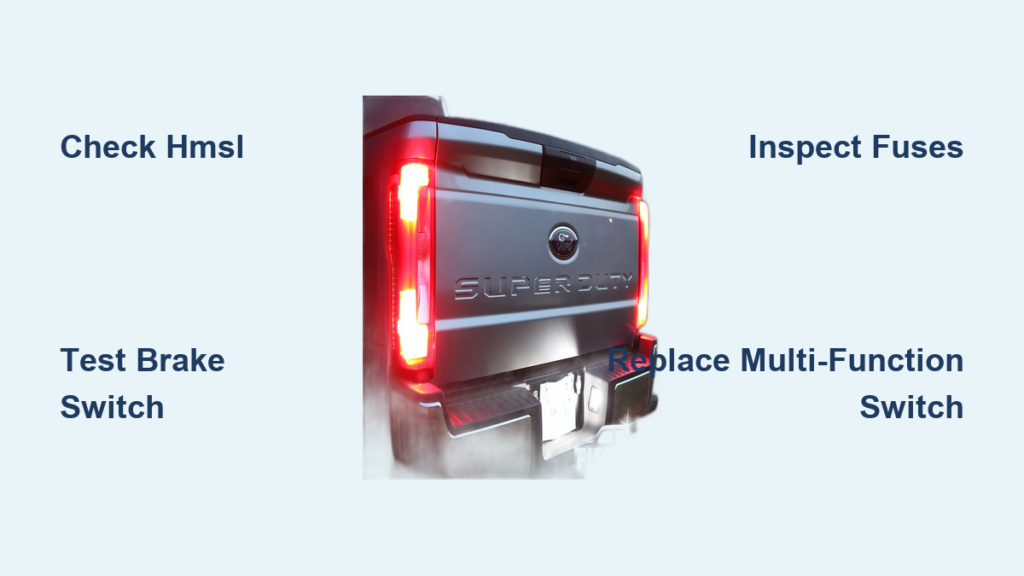
The main causes of brake light failure on Ford F250 Super Duty trucks (1999 to 2011+) are the brake pedal switch, the multi-function switch on the turn signal lever, blown fuses, or faulty relays. A key diagnostic clue is the High-Mounted Stop Light (HMSL), which is the third brake light above the rear window. If the HMSL works but the rear lights don’t, the fault is likely in the turn signal switch. If all brake lights are out, the problem is upstream, usually the brake pedal switch or a power supply issue. This guide walks you through testing each component and avoiding costly misdiagnoses.
Check the Third Brake Light First
Does the HMSL Work?
Start your diagnosis by testing the High-Mounted Stop Light. Have someone press the brake pedal while you watch the cab-mounted brake light from behind the truck.
- If the HMSL works but rear brake lights don’t: The brake pedal switch and fuse are likely good. Power is reaching the switch, but not the rear lights. This points to the multi-function switch, which routes the brake signal to the left and right tail lights.
- If the HMSL does not work: The problem is upstream. The fault lies in the brake pedal switch, a blown fuse, a bad relay, or a wiring break before the circuit splits. Focus your testing here first.
This simple check can save you hours of unnecessary disassembly.
Why the HMSL Matters
The HMSL circuit typically bypasses the turn signal switch and connects directly from the brake pedal switch to the light. That means if the HMSL works, the initial part of the circuit (power feed, fuse, and brake switch) is functional. Any failure in the rear lights under these conditions must occur after that split, most commonly in the multi-function switch.
Test the Brake Pedal Switch

Locate and Inspect the Switch
The brake pedal switch sits on the brake pedal arm, just above the foot pedal near the firewall. It’s a small plastic unit with a plunger that depresses when the brake is released.
Common symptoms of failure include:
– No brake lights at all, including the HMSL
– Intermittent brake light operation
– Need to press the pedal hard to activate lights
– Shifter interlock issues where you can’t shift from Park
Even if your trailer brakes work, do not assume the brake light switch is good. The switch has multiple internal contacts. One set can fail while another works perfectly.
Test with a Multimeter
- Unplug the switch connector.
- Set your multimeter to DC voltage.
- Probe the Light Green with Red stripe (LT GRN/RED) wire. This should show 12V at all times. It’s powered directly from the battery via a fuse. If no voltage, check fuses first.
- Press the brake pedal and test the Light Green (LT GRN) wire. This is the output signal. It should show 12V only when the pedal is pressed.
– No voltage on LT GRN? Replace the brake pedal switch.
Replace the Brake Pedal Switch
The common part number for 2006 to 2011 models is F87Z-13480-AA, which typically costs around $30.
Follow these steps:
1. Depress the brake pedal to relieve pressure on the switch.
2. Remove the green safety tab if equipped.
3. Slide out the retaining clip.
4. Pull the switch off the mounting bracket.
5. Install the new switch with the plunger compressed (pedal pressed).
6. Reinsert the clip and tab.
Pro Tip: If the switch fails again quickly, check for misalignment or excessive pedal travel that prevents full plunger retraction.
Inspect Fuses and Relays
Check the Under-Hood Fuse Box
The brake light circuit is protected by fuses, usually located in the under-hood fuse box on the driver’s side fender well.
- Look for labels like “STOP,” “BRAKE,” or “STOP LPS” in the fuse diagram.
- Use a test light or multimeter to verify continuity. A blown fuse will have no continuity.
Typical fuse ratings are 15A or 20A. Verify with your owner’s manual or fuse box cover.
Test the Brake Light Relay
Some F250 models use a dedicated brake light relay in the under-hood box. Not all years have this, so consult your wiring diagram.
Quick relay test:
1. Locate a similar relay (such as horn, A/C, or lights).
2. Swap it with the brake light relay.
3. Test the brake lights.
If they work, the original relay was faulty. Replace it with an identical unit, usually a Bosch-style 5-pin relay.
Warning: If your model doesn’t list a brake light relay, the circuit is likely direct-switched. Don’t waste time here.
Diagnose the Multi-Function Switch

When to Suspect the Turn Signal Lever
If the HMSL works but the left and right brake lights don’t, the multi-function switch is almost certainly the culprit. This switch routes the brake signal to the rear assemblies and integrates turn signals and hazards.
Over time, internal copper contacts corrode or wear out, breaking the brake light path while leaving turn signals functional.
Test and Replace the Switch
Accessing the switch:
1. Remove the steering column shrouds (upper and lower covers).
2. Disconnect the multi-pin electrical connector.
3. Unbolt the switch from the column.
Without specialized equipment, testing is limited. If all other components check out and the HMSL works, replacement is the most reliable fix.
Replacement cost runs $100 to $200 for the part, plus labor if done professionally. Consider this only after ruling out the brake switch and fuses.
Pro Tip: Apply dielectric grease to the connector before reassembly to prevent future corrosion.
Debunk the GEM Module Myth
GEM Doesn’t Control Brake Lights (Pre-2008)
Many owners are told their GEM (Generic Electronic Module) is faulty when brake lights fail. This is often a misdiagnosis, especially on models before 2008.
The brake light circuit on 1999 to 2008 Ford F250s is hard-wired and analog. It does not go through the GEM module. The GEM handles interior lighting, wipers, and accessories, but not brake lights.
If your 1999 to 2008 F250 has no brake lights, the GEM is not the cause. Focus on the brake switch, fuses, wiring, or multi-function switch.
2008+ Models: Proceed with Caution
Later models may integrate more electronics, but the brake pedal switch and multi-function switch are still the most likely failure points. Only consider GEM or smart fuse issues if:
– All fuses and relays are good
– Brake switch outputs 12V on the LT GRN wire
– Multi-function switch has been replaced
– No signal reaches the rear lights
Used GEM modules from salvage yards cost around $100. Dealer replacements can exceed $800. Avoid this unless absolutely necessary.
Quick Fixes and Field Workarounds
Hazard Switch Trick
Some users report that rapidly toggling the hazard lights on and off can temporarily restore brake light function. This may clean corrosion on internal switch contacts or reset a latched condition.
It’s not a permanent fix, but it can help you get home or to a repair shop safely.
Adjust the Brake Switch
If the brake lights work only when the pedal is pressed hard, try repositioning the brake pedal switch slightly closer to the pedal stop. This ensures full plunger depression when the pedal is released.
Use needle-nose pliers to gently slide the switch on its bracket after loosening the retaining clip.
Follow This Repair Flowchart
Step-by-Step Diagnosis
- Check the HMSL:
– HMSL works → Go to multi-function switch
– HMSL fails → Go to brake switch/fuse - Check fuses and relays: Test STOP fuse and swap brake relay if equipped
- Test brake pedal switch: Verify 12V on LT GRN/RED (constant) and 12V on LT GRN when pedal pressed
- Replace brake switch if faulty (Part # F87Z-13480-AA)
- If HMSL works but rear lights don’t: Replace multi-function switch
- If all else fails: Inspect wiring harness for breaks and consider GEM only for 2008+ models
Prevent Future Failures
Regular Maintenance Tips
- Inspect the brake pedal switch during oil changes. Look for cracks, misalignment, or loose mounting.
- Clean the under-hood relay and fuse box periodically. Corrosion can cause intermittent failures.
- Use dielectric grease on electrical connectors during replacements to prevent moisture ingress.
- Listen for switch clicks. A change in sound can indicate wear.
Know Your Wiring Colors
Keep this wire guide handy for testing:
– LT GRN/RED: Power in (always hot)
– LT GRN: Brake signal out (hot when pedal pressed)
– ORG/LT BLU: Left rear brake light feed
– LT GRN/ORG: Right rear brake light feed
Use a test light or multimeter to verify voltage at each stage.
Frequently Asked Questions About Ford F250 Brake Lights
Why do my Ford F250 brake lights work but the third brake light doesn’t?
If the rear brake lights work but the High-Mounted Stop Light (HMSL) doesn’t, the fault is in the HMSL circuit itself. This could be a bad bulb, a wiring break between the brake pedal switch and the cab-mounted light, or a dedicated fuse for the third brake light. Check the HMSL bulb first, then trace the wiring back to the brake pedal switch.
Can a bad brake light switch cause my F250 to not shift out of Park?
Yes. The brake pedal switch has multiple internal contacts. One set controls the brake lights, while another controls the shift interlock mechanism. If the switch fails completely, you may not be able to shift from Park even if only the lighting contacts are affected. Replacing the switch typically resolves both issues.
Where is the brake light fuse on a Ford F250?
The brake light fuse is located in the under-hood fuse box on the driver’s side fender well. Look for labels like “STOP,” “BRAKE,” or “STOP LPS” in the fuse diagram on the box cover. Typical ratings are 15A or 20A.
How much does it cost to fix brake lights on a Ford F250?
A brake pedal switch replacement typically costs around $30 for the part. A multi-function switch runs $100 to $200 for the part, plus labor if professionally installed. DIY repairs on the brake switch can be completed for under $50 total. Dealer GEM module replacements can exceed $800, though this is rarely the actual cause on pre-2008 models.
Do I need to replace the GEM module if my brake lights are out?
On 1999 to 2008 Ford F250 models, no. The GEM module does not control brake lights on these trucks. The circuit is hard-wired and analog. Focus on the brake pedal switch, fuses, relays, and multi-function switch before considering any module replacement. For 2008+ models, module issues are possible but still less likely than switch or wiring failures.
Key Takeaways for Fixing Ford F250 Brake Lights
Start every diagnosis with the HMSL test. This single check tells you whether to focus on the multi-function switch or the upstream components. The brake pedal switch is the most common failure point and costs only about $30 to replace. Never assume the switch is good just because trailer brakes work, since the switch contains separate contacts for different functions.
Avoid the GEM module diagnosis on pre-2008 trucks. The brake light circuit is hard-wired and does not pass through the GEM on those model years. Finally, follow the logical flow from simple checks (fuses, HMSL) to complex repairs (multi-function switch) to save time and money. Most Ford F250 brake light problems resolve with a $30 switch and 30 minutes of work. Grab your multimeter, start with the third brake light, and get your truck road-safe today.