

Driving an unloaded Ford F350 often feels harsh because the factory tire pressure settings target maximum towing capacity. Many owners discover that adjusting their f350 tire pressure to lower levels significantly improves ride comfort and tire wear.
This guide details the optimal PSI ranges based on real driver feedback for 2011–2016 models. You will learn specific front and rear settings to balance handling with a smoother daily driving experience.
Top Unloaded Tire Pressure Configurations for F350
Most drivers agree that reducing pressure from the maximum towing specifications creates a much more pleasant driving experience. Real-world data from 6.7L Powerstroke owners suggests a sweet spot exists between 40 and 44 PSI.
The 40 Front and 44 Rear Split

This configuration is a favorite among drivers seeking a plush ride in the cab while keeping the rear end stable. The slightly higher pressure in the back compensates for the inherent weight of the rear axle and drivetrain components.
- Aligns closely with factory logic for light loads
- Delivers better comfort than the standard 50 PSI rear setting
- Promotes even wear across the rear tire shoulders
- Perfect for daily commuting with occasional light cargo
Users consistently report this split offers a noticeable upgrade in ride quality compared to running full towing pressures.
The Uniform 42 PSI Setup
Drivers who prefer simplicity often choose to set all four tires to exactly 42 PSI. This approach smooths out the ride quality while maintaining predictable handling characteristics for the heavy truck.
- Eliminates the need to track different front and rear numbers
- Reduces road noise and stiffness found in higher pressure setups
- Remains within a safe range for sudden passengers or light cargo
- Provides a slight but tangible improvement over 44 to 50 PSI settings
This method is ideal for solo drivers who want a hassle-free routine that stays close to recommended load specifications.
The Firm 44 PSI All-Around Approach
Some owners prioritize road feel and highway stability over maximum softness. Running 44 PSI in all four tires provides a firmer platform that feels planted without reaching extreme inflation levels.
- Enhances cornering response and straight-line tracking
- Minimizes body roll during aggressive lane changes
- Lowers rolling resistance which may help fuel economy
- Suits rougher roads where excessive sidewall flex is undesirable
Drivers who frequently travel at higher speeds or in windy conditions often prefer this setup for the confidence it inspires.
Factory Sticker Ratings Versus Real-World Performance

The doorjamb sticker on your Ford often recommends 50 PSI for the rear tires when at Gross Vehicle Weight Rating. This high pressure is designed for maximum loads and is rarely necessary for daily driving without a trailer.
Benefits of Reducing Pressure for Daily Use
- Improved Ride Quality: Overinflated tires transfer more road shock directly into the cabin.
- Even Tire Wear: Properly adjusted tires maintain full tread contact with the pavement surface.
- Better Traction: Slightly lower pressure increases the contact patch for improved grip.
- Less Noise: Reduced tire stiffness results in lower road noise and vibration levels.
Lowering your f350 tire pressure when the bed is empty optimizes performance for actual driving conditions rather than worst-case scenarios.
Situations Requiring Higher Pressure
- Carrying heavy tools or equipment in the truck bed
- Towing a trailer of any size
- Driving long highway distances with a full load of passengers
- Operating in extremely high ambient temperatures
If you approach your payload capacity you should revert to the factory-recommended 50 PSI in the rear tires immediately.
Steps to Dial in Your Ideal F350 Tire Pressure
Finding the perfect pressure involves more than just guessing. Your specific driving habits and local road conditions play a major role in what feels best.
Measure Cold Tire Pressure Accurately
Always check your tire pressure when the tires are cold before driving or after sitting for three hours.
- Use a high-quality digital gauge for precision
- Do not rely solely on TPMS readings as they can lag
- Check all four tires plus the spare if applicable
Adjust Based on Ride Feel
Start with 40 PSI in the front and 44 PSI in the rear then modify based on your experience.
- Reduce by 2 PSI if the ride feels too bouncy or harsh
- Increase by 2 PSI if you notice excessive body sway
- Recheck settings after 100 miles of driving
Inspect Tire Wear Patterns Regularly
Examine your tread wear after driving 1000 to 2000 miles on a new setting.
- Center wear indicates pressure is too high
- Edge wear suggests pressure is too low
- Uneven shoulder wear may signal an alignment issue
Make adjustments in small 2-PSI increments until the wear pattern becomes even across the entire tread.
Common Mistakes When Managing Truck Tire Pressure
Even seasoned truck owners sometimes make errors that lead to premature tire failure or poor handling. Avoiding these pitfalls ensures your f350 tire pressure remains optimal.
Believing Factory Settings Are Universal
The doorjamb sticker reflects maximum load requirements rather than daily comfort needs. Failing to adjust for unloaded conditions causes unnecessary wear and a harsh ride.
Neglecting Temperature Fluctuations
Tire pressure drops approximately 1 PSI for every 10-degree Fahrenheit drop in temperature. Winter drivers must check their pressure weekly to maintain safety.
Relying Entirely on TPMS Alerts
The TPMS light usually triggers only when pressure is 25 percent below normal. This level is dangerously low so do not wait for the warning light to act.
Mixing Pressures Without Testing
Running vastly different pressures front to rear without testing can create dangerous handling imbalances. Change your settings gradually and assess the driving dynamics carefully.
Recommended PSI by Driving Scenario
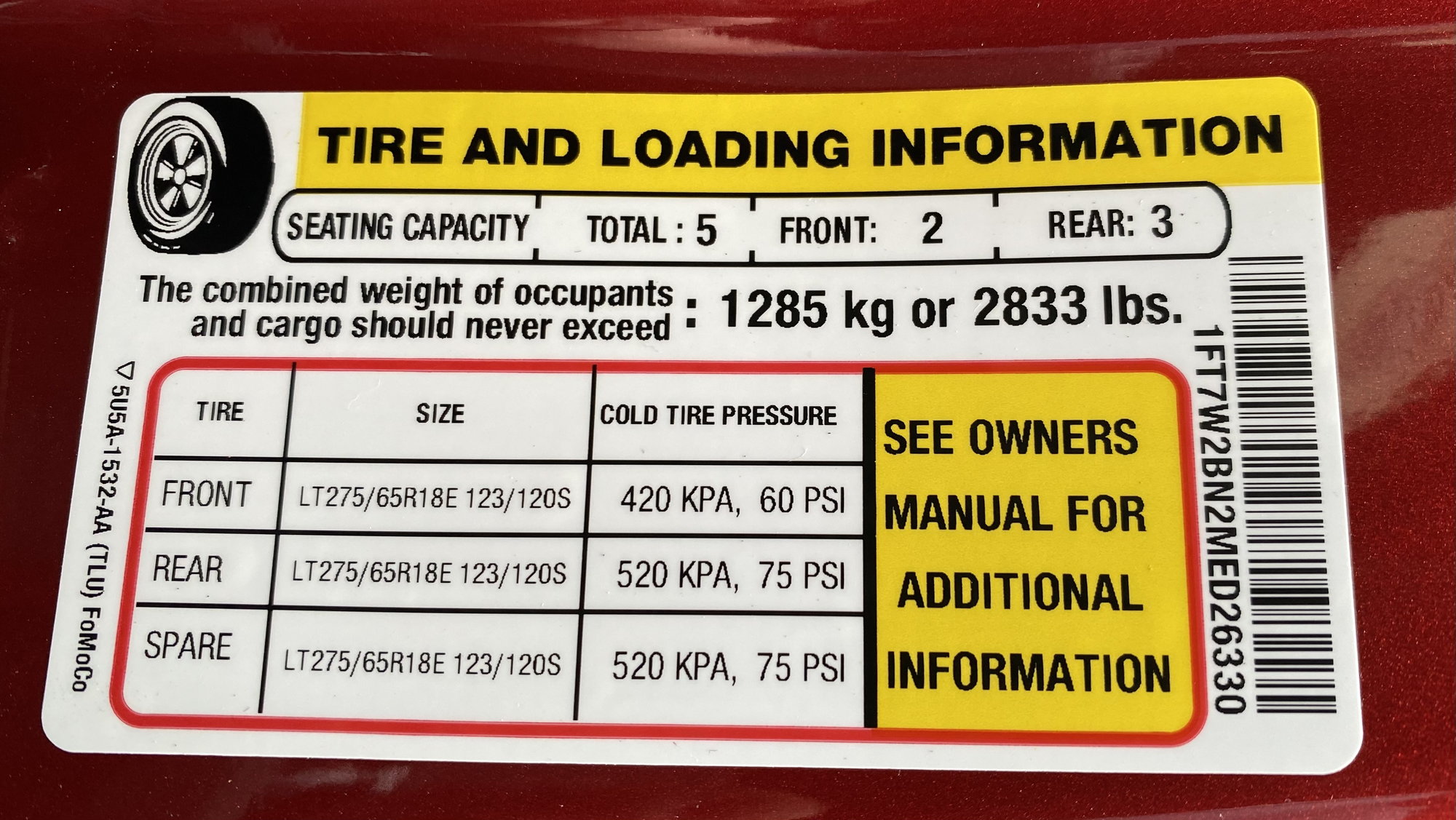
Your ideal pressure should shift based on your current activity. Use this quick reference to adjust your f350 tire pressure for the task at hand.
Daily Commuting Without Load
- Front: 40 PSI
- Rear: 42 to 44 PSI
- Provides a smooth ride with minimal wear and good economy
Light Cargo Hauling
- Front: 40 PSI
- Rear: 44 PSI
- Compensates for extra rear weight from tools or ladders
Long Distance Highway Driving
- Front: 42 PSI
- Rear: 44 PSI
- Balances stability and comfort during sustained high-speed travel
Cold Weather Operations
- Add 2 to 3 PSI above your normal setting
- Recheck once tires are fully cold
- Prevents underinflation caused by thermal contraction
Maintenance Tips for Extended Tire Life
Maximize the lifespan of your investment with these simple maintenance habits.
Rotate Tires Every 5000 to 7000 Miles
Regular rotation promotes even wear which is critical on trucks with biased weight distribution.
Use Sealed Valve Stem Caps
These caps keep moisture out and help maintain pressure integrity over long periods.
Invest in a Portable Air Compressor
A quality 12V compressor allows you to adjust pressure on the go. This is useful if you frequently switch between loaded and unloaded driving.
Document Your Preferred Settings
Keep a note in your glovebox with your ideal cold PSI for different conditions. This makes maintenance faster and ensures consistency.
Frequently Asked Questions About F350 Tire Pressure
What is the best tire pressure for an unloaded F350?
Most owners find 40 PSI in the front and 44 PSI in the rear offers the best balance. Some prefer a uniform 42 PSI across all four tires for simplicity and a smooth ride.
Is it safe to run lower than the doorjamb recommendation?
Yes provided the truck is not carrying a heavy load or towing. The doorjamb rating is for maximum capacity while lower pressures optimize comfort and wear for daily driving.
How often should I check my F350 tire pressure?
You should check your pressure at least once a month. Check it weekly during winter months since cold temperatures cause pressure to drop significantly.
Why does my F350 ride so harshly at factory pressure?
Factory settings target maximum load capacity which makes tires very stiff when empty. Lowering the pressure allows the sidewalls to flex more and absorb road imperfections.
Does tire pressure affect fuel economy on an F350?
Yes proper inflation reduces rolling resistance. While extremely high pressure lowers resistance it hurts traction so aim for the 40 to 44 PSI range for efficiency.
Key Takeaways for Optimizing Your F350 Tire Pressure
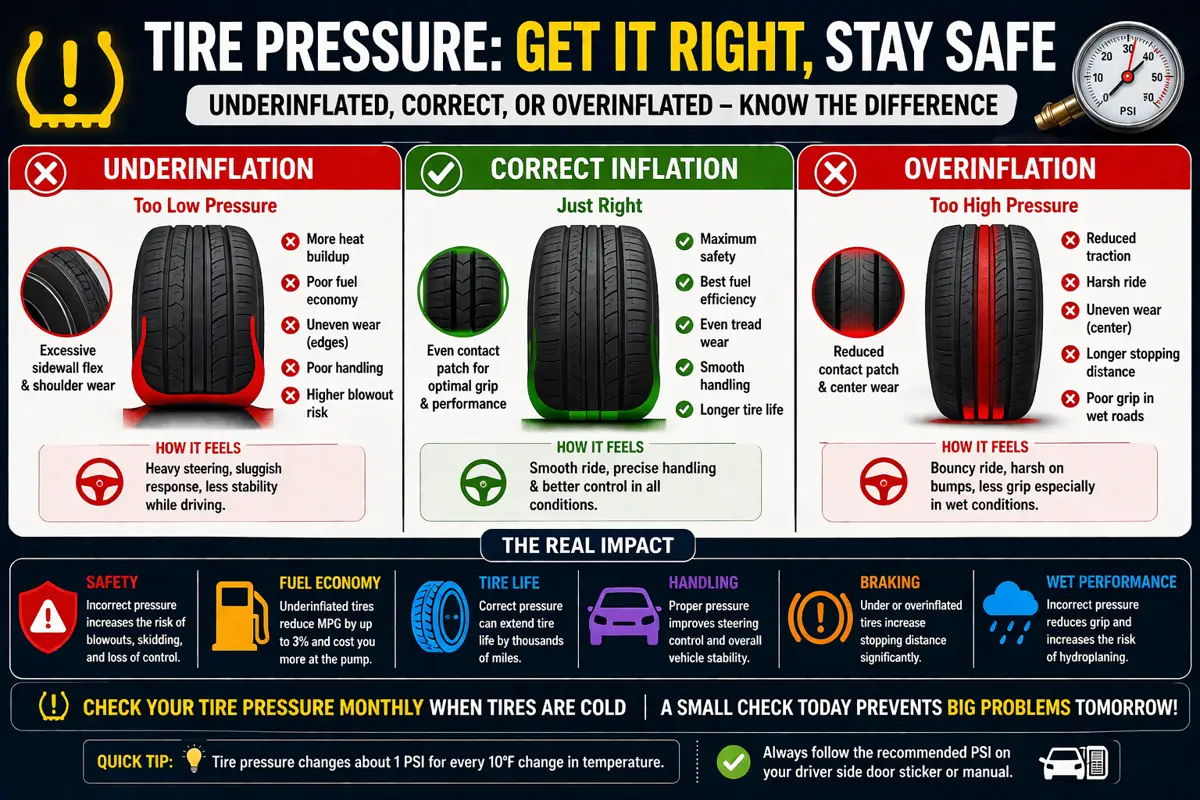
Adjusting your f350 tire pressure from the maximum towing spec to a lower daily range transforms the driving experience. Most drivers achieve the best results with 40 PSI in the front and 44 PSI in the rear or a uniform 42 PSI setup. These changes reduce road noise improve traction and ensure your tires wear evenly.
Always check your pressure when tires are cold and adjust seasonally for temperature changes. Start with these recommended settings today to enjoy a smoother and more efficient ride in your Ford F350.


