

You’re driving in winter slush or dusty heat, press the washer stalk, and nothing happens. No spray. Maybe a hum, maybe silence. If your Ford F150 washer fluid not working, you’re not alone. This issue affects thousands of owners across model years, especially 2015-2021 and newer trucks. The good news? Over 90% of cases aren’t due to pump failure. They’re caused by preventable blockages, frozen valves, or factory defects you can fix yourself in under an hour.
This guide cuts through the noise with proven diagnostic steps, model-specific fixes, and real owner insights from 2014-2023 F-150s. You’ll learn how to diagnose whether it’s a clog, electrical fault, or software glitch, and how to fix it without paying a dealership $200 for a $40 pump swap.
Diagnose the Core Symptom First
Before tearing anything apart, identify your specific failure pattern. The fix depends on what you do or don’t experience when pressing the washer button.
No Spray but Pump Runs
If you hear a hum or buzz from the driver’s side wheel well when activating the washer, the motor is powered, but something is blocking fluid flow. This is most often due to internal pump sludge buildup, clogged nozzles, check valve freeze, or a kinked fluid hose, especially on 2022+ models. This is not a fuse or electrical issue. The motor works. Fluid just isn’t moving.
No Pump Sound and No Spray
Silence means the pump isn’t receiving power. Likely causes include faulty control circuit (BCM or wiper stalk), wiring or connector damage, shared fuse failure (wiper/washer circuit), or software glitch on 2021+ models. Check if your wipers work. If they do, the fuse is likely okay. Focus downstream.
Intermittent or Delayed Spray
Spray works only after multiple presses, engine warm-up, or battery reset. This points to check valve freezing, airlock in lines, partial clog, or incomplete OTA update on 2021+ models. Cold-weather drivers report this often, even with -40°F fluid.
Test Power at the Pump Connector

The fastest way to rule out electrical issues is to test voltage at the pump. This diagnostic step takes about 20 minutes and tells you whether to focus on mechanical fixes or electrical problems.
Check for 12V DC When Activated
Tools needed include a multimeter, 5.5 mm socket (or 7/32″), and flashlight.
Steps to test:
1. Turn steering wheel fully right for access.
2. Remove driver’s side wheel well trim (3 screws plus clips).
3. Locate pump on reservoir base.
4. Disconnect electrical connector.
5. Set multimeter to DC voltage.
6. Have someone activate washer stalk.
7. Probe connector pins.
Results:
– 12V detected means power is reaching pump. Problem is mechanical (clog, valve, or hose).
– No voltage means electrical fault. Check control circuit next.
Pro Tip: If wipers work but washer doesn’t, the fuse is likely intact. Focus on the BCM, stalk switch, or wiring.
Clear Pump Sludge Buildup
The most common fix for trucks with a running pump but no spray is internal sludge. This thick gel forms from degraded fluid, especially after dealership services or seasonal changes.
Remove and Clean the Washer Pump
Tools needed:
– 5.5 mm socket
– Small screwdriver
– Gloves
– N95 mask (sludge can be toxic)
Removal steps:
1. Drain reservoir.
2. Remove wheel well liner.
3. Disconnect electrical connector and fluid hose.
4. Pull pump’s barbed fitting from reservoir.
5. Extract pump assembly.
Cleaning process:
1. Pry open housing (some models snap apart).
2. Scrape out blue or black sludge with a pick.
3. Flush housing with clean water.
4. Inspect strainer and impeller for damage.
5. Dry thoroughly before reassembly.
One owner reported: “Poking the gunk out with a screwdriver cleared the blockage. First press did nothing. Second gave delayed spray.”
Reinstall and test with fresh fluid. This works in over 90% of clogged pump cases.
Fix Frozen or Clogged Check Valve

Even with -40°F fluid, check valves freeze due to evaporation or residue. Located in the fluid line near the pump or hood latch area, this small plastic valve prevents backflow but becomes a freeze point in cold climates.
Drill Out the Plastic Valve
Popular DIY fix for cold climate owners.
Steps:
1. Locate the white or black plastic valve in the hose.
2. Disconnect hose.
3. Use a 1/8″ drill bit to remove the internal stopper.
4. Reconnect hose.
Results:
– Eliminates freezing point entirely.
– May cause 2-3 second delay in spray (fluid drains back).
– No long-term damage reported.
One user shared: “Mine used to freeze often until I drilled out the check valve. Works fine now at -40°F.”
Unclog Nozzles and Test Flow
Weak or one-sided spray usually means nozzles are clogged with road grime, plastic bits, or dried fluid.
Clear Nozzles With Compressed Air
Fix steps:
1. Activate washer to confirm pump runs.
2. Disconnect supply hose near firewall or headlight.
3. Blow compressed air backward through the line.
4. Reconnect and test.
This clears ice, sludge, or particulates without removing bumpers.
Alternative method: Use a pin or needle to clear nozzle tips. Avoid metal tools that can damage plastic.
One owner noted: “Pop the supply hoses off and blow air backwards. Cleared mine in 2 minutes.”
Inspect for Factory Hose Kink
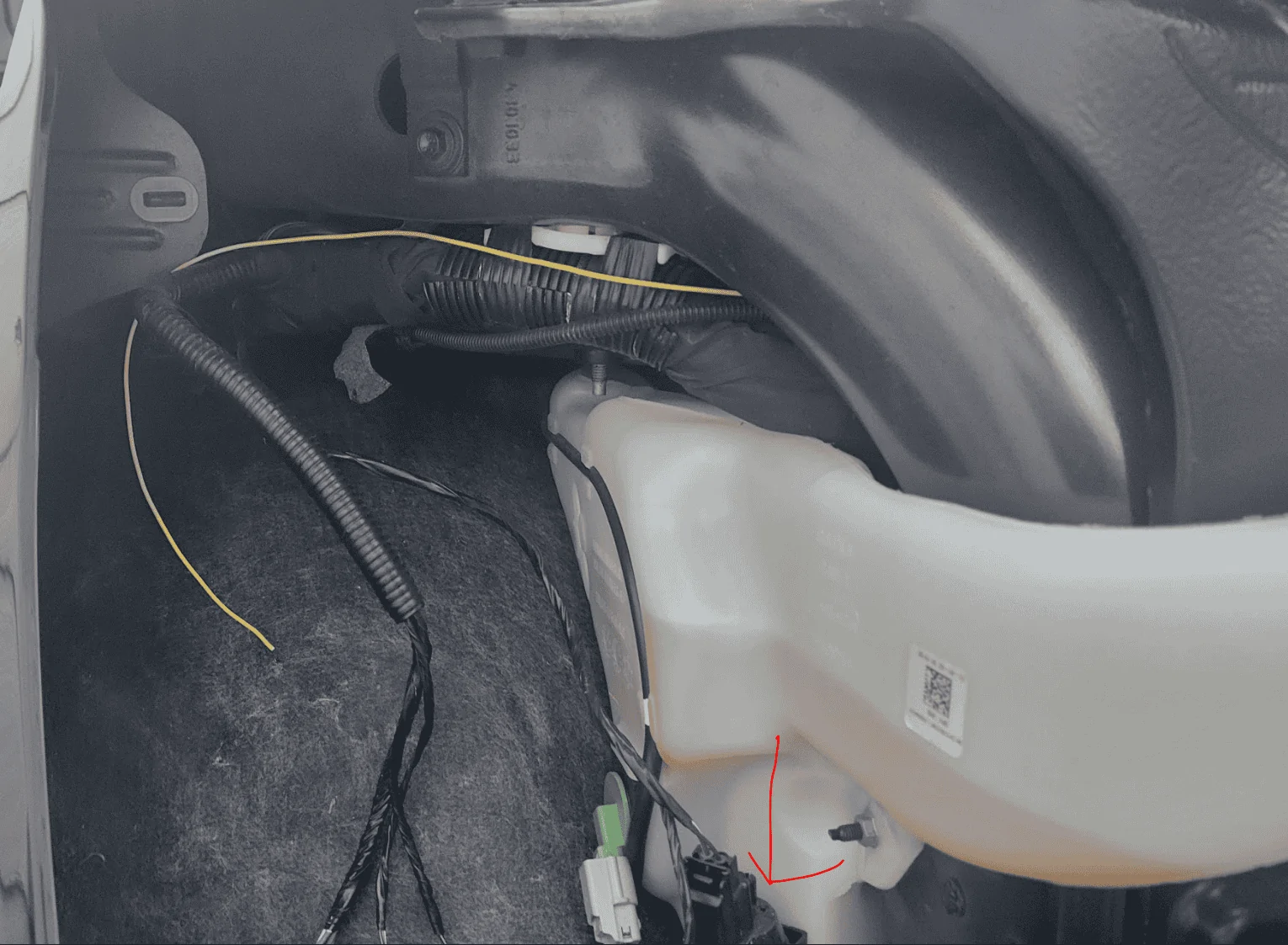
2022 F-150 owners report reduced flow due to a factory-installed kink in the washer hose. Installed during assembly, this pinch point restricts flow, mimicking pump failure.
Re-Route the Kinked Fluid Line
Diagnosis steps:
– Pump runs
– Reservoir drains slowly
– Low or one-sided spray
Fix steps:
1. Access hose along frame or near radiator.
2. Locate tight bend or pinch.
3. Re-route and secure with zip ties.
4. Test spray.
One 2022 owner reported: “Hose was kinked at the factory. Re-routing restored full pressure.”
This issue was resolved by dealers under warranty for some owners.
Rule Out Electrical and Software Faults
No pump sound? Test the control logic.
Test Control Circuit and BCM
Shared fuse information:
– No dedicated washer fuse on 2014+ models. Shares with wiper motor.
– If wipers work, fuse is good.
– Check relay and BCM if no power at pump.
Wiper stalk and BCM failure:
– Faulty push-button switch on stalk common in 13th-gen trucks.
– No DTCs on basic OBD2 scanners.
– Use FORScan or dealership tool to read wiper/washer codes, command-test the pump, and check for BCM software glitches.
One owner explained: “Pump works when commanded via FORScan, but not from stalk. Switch is bad.”
OTA update conflicts:
– Some 2021+ owners report washer failure after incomplete over-the-air updates.
– Try battery disconnect (10-minute reset).
– Verify update status in SYNC screen.
Prevent Future Failures
Avoid repeat issues with simple maintenance habits.
Follow These Maintenance Tips
- Flush system annually. Drain reservoir, rinse with clean water, prevents sludge and gelling.
- Use proper fluid. RainX All Season or equivalent with -27°F or lower rating. Never mix summer and winter fluids.
- Run washers weekly in winter. Prevents stagnation and freezing.
- Park in garage or cover nozzles. Reduces freeze risk even with -40°F fluid.
- Check for rodent damage. Chewed hoses or reservoir base. Inspect during oil changes.
- Consider drilling the check valve. Best cold-weather mod, eliminates freeze point with minimal downside.
When to Replace the Pump
Don’t swap it prematurely. Only replace the pump if you’ve tested power (12V at connector), cleared clogs and checked hoses, pump still runs but produces no pressure, and bench test confirms failure.
Bench Test Procedure
- Remove pump.
- Submerge in container of washer fluid.
- Apply 12V via jumper wires.
- Observe flow.
If it sprays, your original pump works. The issue was upstream.
OEM vs aftermarket: Use OEM Ford pump. Aftermarket units fail faster. Includes new gasket, critical for seal.
Cost breakdown:
– DIY: $40-$80
– Dealer: $150-$250 (labor included)
Check for Open Recalls
Even if your wipers work, an open recall could affect washer function.
Wiper Motor Recall
Affects 2021 F-150s with faulty wiper motor modules. Can disable washer circuit. No mileage or time limit. Repair is free at any Ford dealer.
Action steps:
1. Visit Ford Recall Lookup website.
2. Enter VIN.
3. Schedule service if recall is open.
One user reported: “Had the wiper recall done. Washer started working again.”
Frequently Asked Questions About Ford F150 Washer Fluid Not Working
Why does my F-150 make a humming sound but no fluid sprays?
This typically indicates pump sludge buildup. The motor runs, but internal blockage prevents pressure generation. Remove and clean the pump housing to resolve.
Can cold weather cause washer fluid to stop working?
Yes. Even with -40°F fluid, check valves and nozzles can freeze due to evaporation or residue. Consider drilling out the check valve if you live in freezing climates.
How do I know if the pump is bad or just clogged?
Test voltage at the pump connector first. If 12V is present when activated, the pump is receiving power. Clean the pump before replacing it. Most cases are clogs, not pump failure.
Is there a fuse specifically for the washer pump?
No. The washer pump shares a circuit with the wiper motor on 2014+ models. If wipers work, the fuse is fine. Focus on downstream components.
Can software updates affect washer function?
Yes. Some 2021+ owners report washer failure after incomplete OTA updates. Try a battery disconnect (10-minute reset) and verify update status in SYNC.
Should I use OEM or aftermarket washer pumps?
Use OEM Ford pumps. Aftermarket units fail faster and may not include the proper gasket. OEM replacement costs $40-$80 DIY.
Key Takeaways for Fixing Your Ford F150 Washer Fluid
The Ford F150 washer fluid not working issue is almost always mechanical, not electrical. Start with the simplest, most common fixes first.
Clean the pump. Sludge is the number one culprit across 2015-2021 models. Drill the check valve if you live in a cold climate. Blow air through the lines to clear hidden clogs. Test for power before buying a new pump. Check for hose kinks, especially on 2022+ models. Verify recall status for a free fix if eligible. Use proper fluid and flush seasonally.
With these steps, you’ll restore full washer function, often for $0 and under an hour. Keep your windshield clear, your drive safe, and your wallet full.


