
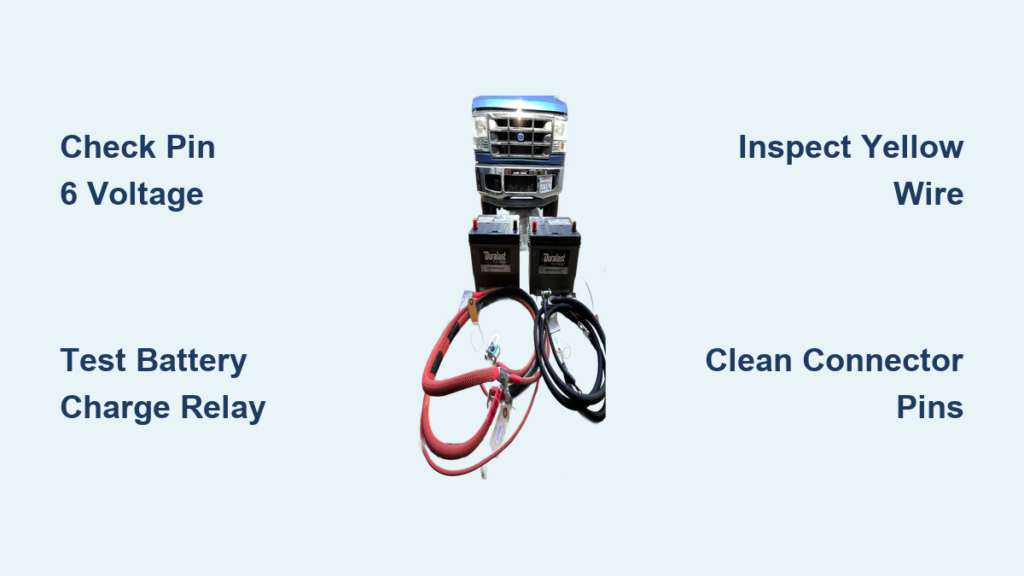
You are prepping your F350 for a long haul only to find your trailer battery is dead. A failed charge means no brakes or lights, creating a serious safety risk on the road. This issue often stems from wiring faults or relay failures in your Ford truck.
This guide shows you how to fix a trailer battery not charging F350 situation quickly. You will learn to test pins, check relays, and repair wiring using proven methods. We cover every step to ensure your towing setup works perfectly again.
Check the 7-Pin Trailer Connector for Power Loss
The 7-pin connector serves as the main power bridge between your F350 and the trailer battery. Damage or miswiring here stops all charging even if other systems function normally.
Inspect Pins for Corrosion and Physical Damage
Unplug the connector and examine every pin closely for signs of trouble. Look for green corrosion, bent metal pins, or moisture buildup inside the housing. Pay special attention to the yellow auxiliary wire and black 12V power wire. Corrosion breaks conductivity and stops charge transfer completely. Clean all pins with electrical contact cleaner and a small brush. Let the connector dry completely before reconnecting it to the truck.
Test Each Pin with a Multimeter
Set your multimeter to DC voltage to begin testing the connector. Plug the trailer into the truck and turn the ignition on before testing.
- Pin 1 (Black): Should read approximately 12 to 14 volts for constant power
- Pin 2 (Red): Ground connection showing 0 volts
- Pin 3 (Blue): Brake control active only when pressing brakes
- Pin 4 (White): Ground connection for the circuit
- Pin 5 (Green): Right turn and brake signal
- Pin 6 (Yellow): Auxiliary charging circuit for the battery
- Pin 7 (Brown): Left turn and brake signal
If Pin 6 shows no voltage then the auxiliary charging circuit is dead. This is the most likely reason your trailer battery is not charging from your F350.
Verify F350 Auxiliary Charging Circuit Activation

Your F350 must have the proper towing package to charge a trailer battery effectively. Not all truck models send power through the 7-pin auxiliary line by default.
Confirm Towing Package Installation
Check your F350 original window sticker or perform a VIN lookup online. You need to verify the Heavy-Duty Trailer Tow Package or Max Trailer Tow Package presence. These packages include a battery charge relay and specific 7-pin wiring harness. These components deliver power directly to trailer batteries. If your truck lacks this package then Pin 6 will not carry any charge.
Locate and Test the Battery Charge Relay
Open the fuse box under the hood of your Ford truck. Look for the battery charge relay often labeled “BAT CHARGE” or “TRAILER CHARGE”. Pull the relay out and inspect it for burn marks or loose contacts. Swap it with a known-good relay like a horn or fan relay to test function. If charging resumes after the swap then replace the faulty relay immediately.
Test Voltage at Relay Output Terminals
Use a multimeter to test the socket terminals while the truck is running. Remove the relay first to access the terminals safely. One terminal should show 12 volts as power input. Another should activate only when the key is in the on position. If no power reaches the relay then trace back to the fuse panel. Check for blown fuses that might block the circuit.
Inspect Trailer Charging Converter or Isolator
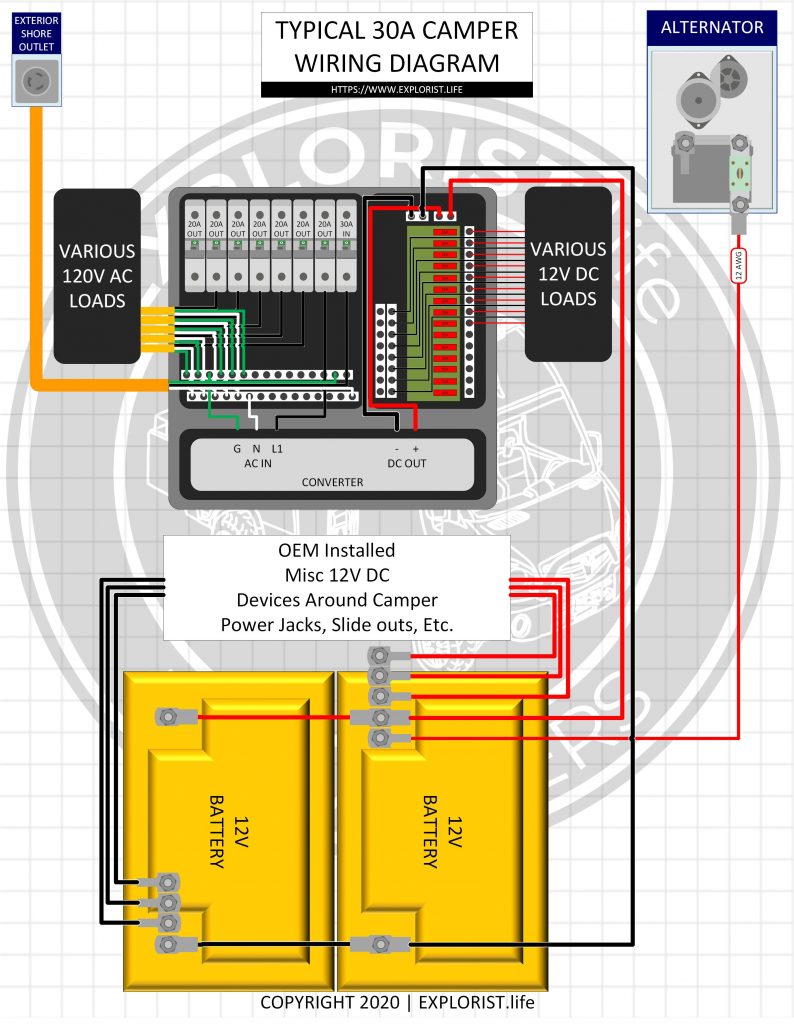
Many trailers use a converter for RVs or an isolator for utility trailers. These components manage battery charging and can fail silently over time.
Locate the Converter Unit on Your Trailer
Find the converter on RV trailers near the entry door or electrical panel. This unit converts 120V AC shore power to 12V DC to charge the battery. It may also accept 12V input from the tow vehicle while driving.
Bypass Converter to Test Direct Charging
Disconnect the trailer battery to begin your diagnostic testing. Run a temporary 12V feed from your F350 battery using jumper wires. Connect this directly to the trailer battery positive terminal with an inline fuse. Let it charge for 30 minutes and recheck the battery voltage. If the voltage rises then the converter is likely faulty and needs replacement.
Check Isolator Function on Utility Trailers
Some trailers use a battery isolator to prevent back-draining the truck battery. Use a multimeter in diode mode to test the component. Test both directions across the isolator carefully. Power should flow one way from truck to trailer only. If it fails this test then replace the isolator unit.
Trace the Auxiliary Charging Wire Path
A broken wire between the 7-pin connector and trailer battery kills charging completely. This happens even with a working truck system.
Follow the Yellow Wire Path Carefully
Locate the yellow wire from the 7-pin plug on your trailer. Trace it all the way to the battery or converter unit. Look for cuts, rodent damage, or loose connections at junction boxes.
Test Continuity with a Multimeter
Disconnect all power sources before testing continuity. Set your multimeter to continuity mode for this check. Place one probe on Pin 6 of the 7-pin plug. Place the other probe on the wire end at the battery terminal. If you hear no beep then the wire is broken internally. Repair or replace the damaged section immediately.
Upgrade to a Heavier Gauge Wire
Factory trailer wiring is often 16 to 18 gauge which is too thin. This causes inefficient charging over long distances. Upgrade to 10 to 12 gauge wire for runs over 15 feet. This reduces voltage drop and improves charge delivery significantly.
Test the Trailer Battery and Ground Connections
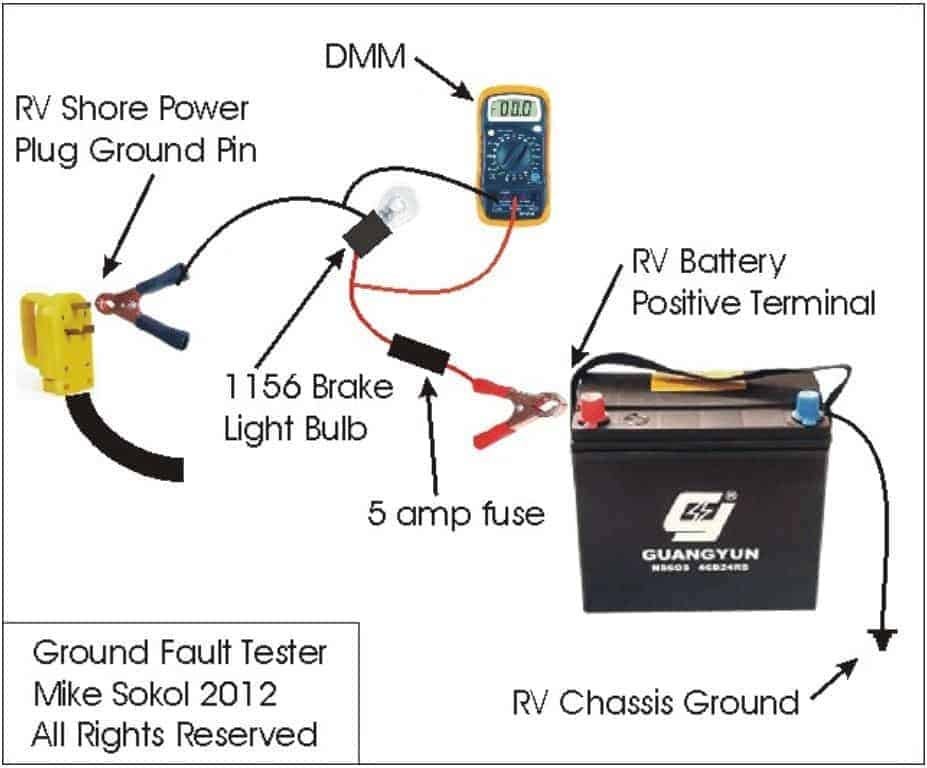
A bad battery or poor ground can mimic charging failure perfectly. The truck might be sending power but the battery cannot receive it.
Check Battery Voltage and Health Status
Use a multimeter on the trailer battery terminals to check status.
- Below 12.2V: Discharged and needs immediate charging
- 12.2 to 12.6V: Partially charged and functional
- Over 12.6V: Fully charged and healthy
Charge the battery externally with a smart charger first. If it will not hold a charge then replace the battery unit.
Inspect Ground Connection Quality
Locate the battery ground wire on the trailer frame. It should connect directly with a clean and tight bolt. Remove any rust or paint under the connector for best contact. Test continuity between battery negative and frame. It should read near 0 ohms for a good connection.
Avoid Frame-as-Ground Mistakes
Never assume the trailer frame is a reliable return path for electricity. Run a dedicated white ground wire from the 7-pin plug. Connect this all the way to the battery negative terminal. This ensures a complete and safe circuit for charging.
Diagnose Common Wiring Mistakes
Many trailer charging issues stem from improper setup rather than component failure. Avoid these common errors to ensure safety.
Avoid Backfeeding Through Brake Circuit
Some people wire the charging line into the brake circuit or blue wire. This is dangerous because brake signals are not designed for continuous load. They can overheat and cause fires. Always use the yellow auxiliary wire for charging purposes.
Do Not Share the 12V Power Wire
The black wire or Pin 1 provides constant 12V power. It is often fused at 10 to 15 amps and not intended for charging. Using it to charge a battery can blow fuses quickly. It can also drain your truck battery when parked.
Use a Relay to Prevent Battery Drain
Install a voltage-sensing relay or battery combiner on the trailer. It allows charging only when the truck alternator is running. It disconnects when the engine is off to protect both batteries.
Prevent Future Charging Failures
A one-time fix is not enough for reliable towing. Build a system that works every time you hit the road.
Install a Dual Battery System on F350
Add a second battery in your F350 with a smart isolator. This powers trailer charging without risking your starting battery. This is ideal for long towing trips or off-grid setups.
Use a Charge Monitoring System
Install a battery monitor like the Victron BMV-712 on the trailer. It shows real-time voltage and current data. You will know immediately when charging fails.
Perform Seasonal Wiring Checks
Check your system before each towing season starts.
- Inspect 7-pin plug and socket for damage
- Test all pin voltages with a multimeter
- Clean battery terminals thoroughly
- Check wire insulation for cracks or wear
Prevention takes 20 minutes but saves hours on the roadside.
When to Seek Professional Help
Not every issue is DIY-friendly for the average truck owner. Know when to call in a professional technician.
Suspect a Faulty Tow Command System
Your F350 may have Tow/Haul mode or an integrated trailer brake controller. Software glitches can disable charging circuits unexpectedly. A Ford dealership can scan for fault codes. They can reprogram the system to restore function.
Complex RV Electrical Systems
Modern RVs have power management systems and solar charge controllers. They also use inverter/chargers for power conversion. If your trailer battery charges from shore power but not the truck then the issue may be logic-based. An RV technician can diagnose these systems safely.
Persistent Voltage Drop Issues
Check voltage at the battery compared to the 7-pin plug. If voltage at the battery is more than 0.5V lower then there is excessive resistance. A professional can locate hidden junctions or undersized wires. They can find corroded connectors you might miss.
Frequently Asked Questions About Trailer Battery Charging
Why is my F350 trailer battery not charging while driving?
The most common cause is a blown fuse or faulty battery charge relay under the hood. Check the BAT CHARGE relay and inspect Pin 6 on your 7-pin connector for voltage.
Which pin on the 7-pin connector charges the trailer battery?
Pin 6 (yellow wire) is the auxiliary charging circuit on standard 7-pin connectors. Pin 1 (black wire) provides constant 12V but is not intended for charging large batteries.
Can I charge my trailer battery with the black wire instead?
No, the black wire is fused low and meant for lights or small accessories. Using it for charging can blow fuses or drain your truck battery when parked.
How do I know if my F350 has the towing package?
Check your original window sticker or look up your VIN online. You need the Heavy-Duty Trailer Tow Package to have the factory charging relay installed.
What wire gauge should I use for trailer battery charging?
Use 10 to 12 gauge wire for runs over 15 feet to reduce voltage drop. Factory 16 or 18 gauge wire is often too thin for efficient charging.
Key Takeaways for Fixing Your F350 Trailer Battery

Fixing a trailer battery not charging F350 issue requires checking the 7-pin connector and auxiliary relay first. Most problems stem from corrosion on Pin 6 or a failed battery charge relay under the hood. Upgrading to heavier gauge wiring and ensuring solid ground connections prevents future failures.
Start by testing voltage at the 7-pin connector with your engine running. Replace faulty relays and clean all corroded pins to restore reliable power flow. Your F350 is capable of keeping your trailer battery charged mile after mile with the right maintenance.


