
You’re cruising down the highway at 65 mph when you hit a small expansion joint, and suddenly your steering wheel jerks violently side to side. The front end shakes so hard it feels like your Ford F-250 is falling apart beneath you. This terrifying experience is death wobble, and it strikes fear into every Super Duty owner. The problem can hit stock trucks with under 20,000 miles and isn’t limited to lifted models.
The real fix for death wobble on a Ford F250 goes far beyond replacing the steering stabilizer. It requires a full inspection of worn components, correcting alignment geometry (especially +4 degrees of positive caster), and replacing the track bar bushings that allow dangerous lateral axle movement. This guide walks you through the exact diagnostic and repair process used by mechanics and long-term owners to eliminate the wobble permanently.
Identify Death Wobble Symptoms
Recognize the Trigger and Pattern
Death wobble doesn’t happen randomly. It strikes suddenly after a road impact, typically a bump, pothole, or expansion joint, at speeds between 55 and 100 mph. The steering wheel jerks violently from side to side, and the front end shakes uncontrollably. Many owners describe the sensation as driving a shopping cart with a wobbly wheel.
Unlike a constant vibration from tire imbalance, death wobble amplifies rapidly and usually only stops when you slow down significantly. If you can reproduce the shake at the same road spot and speed, it confirms a mechanical issue in your steering or suspension system.
Distinguish Death Wobble From Other Shakes
Not every front-end shake is death wobble. Here’s how to tell the difference:
• Tire imbalance causes a steady vibration that increases with speed, felt through the seat or floor.
• Warped rotors create pulsation in the brake pedal during stopping.
• Death wobble begins suddenly after an impact, involves violent side-to-side steering movement, and stops when you drop below 40 mph.
If your F-250’s steering wheel is flopping back and forth with force, you’re dealing with death wobble, not a tire or brake problem.
Diagnose the Root Cause First
Check for Play in Steering Components
Before buying parts, perform a hands-on inspection with the front end lifted and wheels off the ground.
- Grab the tires at 3 and 9 o’clock and shake side to side. Any movement indicates play in the tie rod ends or drag link.
- Have a helper turn the steering wheel slightly while you watch the steering linkage. Look for delayed movement in the joints. Even 1/16-inch of slop is enough to trigger wobble.
- Inspect ball joints by lifting the lower control arm and checking for upward movement in the wheel.
Even minor looseness in these parts can initiate oscillation when combined with road impacts.
Inspect the Track Bar Bushings
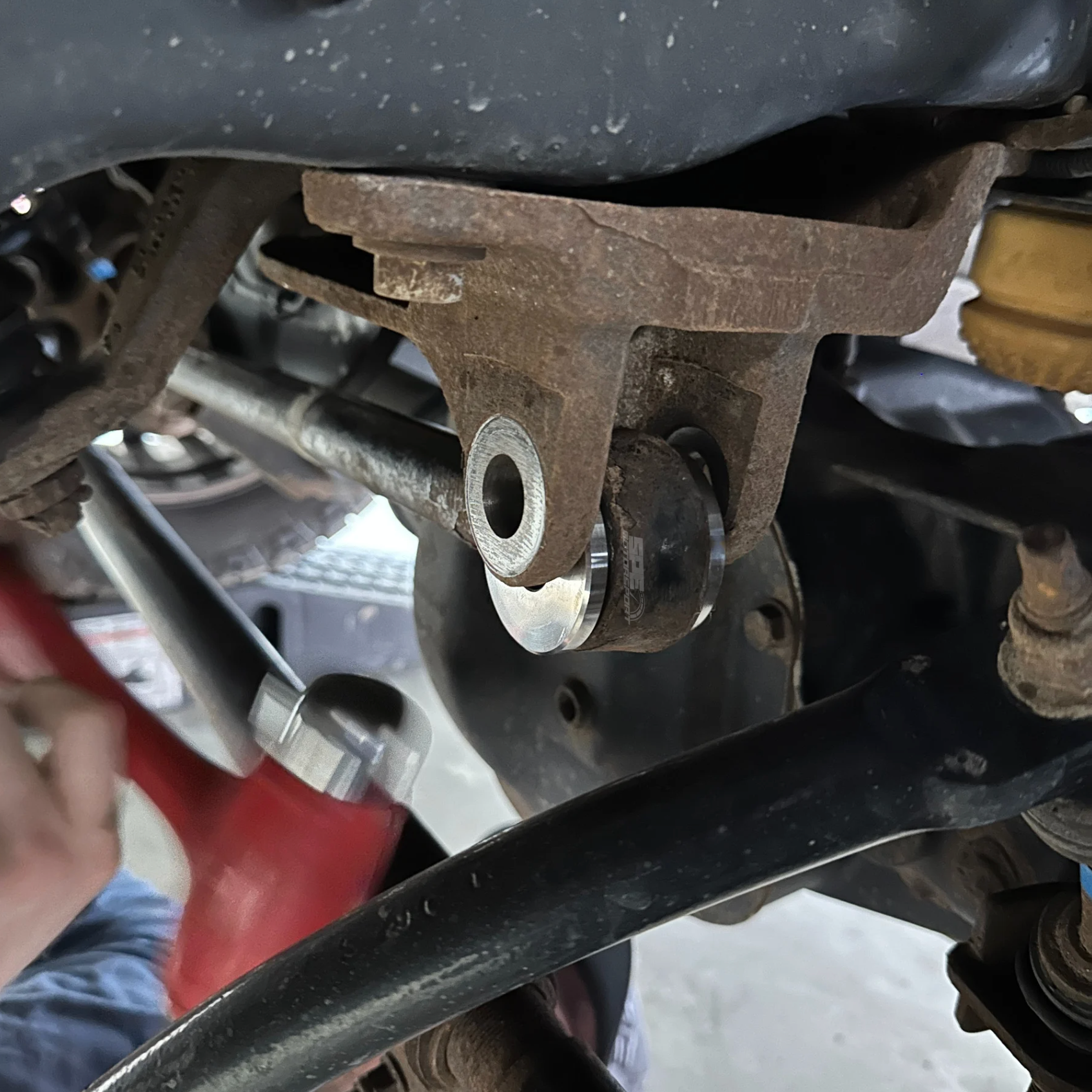
The track bar (panhard bar) is the number one culprit in F-250 death wobble. It locates the front axle side-to-side under the frame. Worn bushings allow the axle to shift laterally, creating instability.
• Shake the track bar where it mounts to the frame and axle.
• Look for cracked, split, or compressed rubber bushings.
• Many owners report factory bushings failing as early as 15,000 miles, especially under heavy loads or off-road use.
If there’s any movement in the track bar, replacement is essential.
Test Without the Steering Stabilizer
Remove the steering stabilizer and drive cautiously on a smooth road. If the truck drives normally without wobble, the stabilizer was masking an issue. If wobble still occurs, the real problem lies in the track bar, alignment, or steering joints.
This test confirms that the stabilizer is a damper, not a fix. Replacing it alone won’t solve death wobble.
Replace Critical Worn Components

Upgrade the Track Bar
The most effective long-term fix is replacing the factory track bar with a heavy-duty aftermarket unit like the PMF (Pure Motorworks) track bar.
• Factory bushings are soft and wear out quickly.
• Aftermarket bars use polyurethane or spherical bearings that eliminate lateral play.
• Users report no recurrence of wobble even after 200,000+ miles with upgraded bars.
Installation Tip: Use jack stands and a floor jack to support the axle during removal. Torque all bolts to spec once the truck is back on the ground to avoid binding.
Replace Drag Link and Tie Rod Ends
Even if they look fine, aged joints can have internal wear. Replace:
• Drag link joint (connects steering box to pitman arm)
• Tie rod ends (inner and outer)
Use OEM-grade or heavy-duty aftermarket parts like Moog or CarQuest. Avoid cheap auto parts store units, as they wear faster.
Inspect and Replace Ball Joints
Loose ball joints contribute to poor steering response and can feed into wobble. Replace both upper and lower ball joints if:
• There’s visible play when jacking up the wheel.
• The truck has over 100,000 miles.
• You’re already doing front-end work.
Press-in replacements may require a shop, but some kits allow DIY replacement.
Correct Alignment Geometry

Set Caster to +4 Degrees
This is the most critical step, and where most dealers fail.
• Factory alignment specs often allow caster as low as +2.5 to +3.0 degrees, which is insufficient for stability.
• +4.0 degrees of positive caster creates proper steering axis inclination, helping the wheels self-center and resist oscillation.
Demand this spec when getting an alignment. If the shop refuses or says it’s “out of spec,” find another shop that understands Super Duty geometry.
Use Caster Correction for Lifted Trucks
If your F-250 has a lift kit:
• The lift changes suspension angles, reducing caster.
• Install caster correction shims or a radius arm drop bracket (e.g., from Carli Suspension) to restore proper geometry.
Failure to correct caster after lifting is a leading cause of immediate post-lift death wobble.
Confirm Camber and Toe Settings
While caster is king, ensure these settings are within range:
• Camber: Within factory spec (usually ±0.5°)
• Toe: Set to 0.04 to 0.06 inches total toe-in
Improper toe can cause tire wear and contribute to instability, but won’t cause death wobble on its own.
Address Tire and Wheel Factors
Balance and Rotate Regularly
Unbalanced or unevenly worn tires can trigger wobble if other components have slight play.
• Rotate every 5,000 to 10,000 miles.
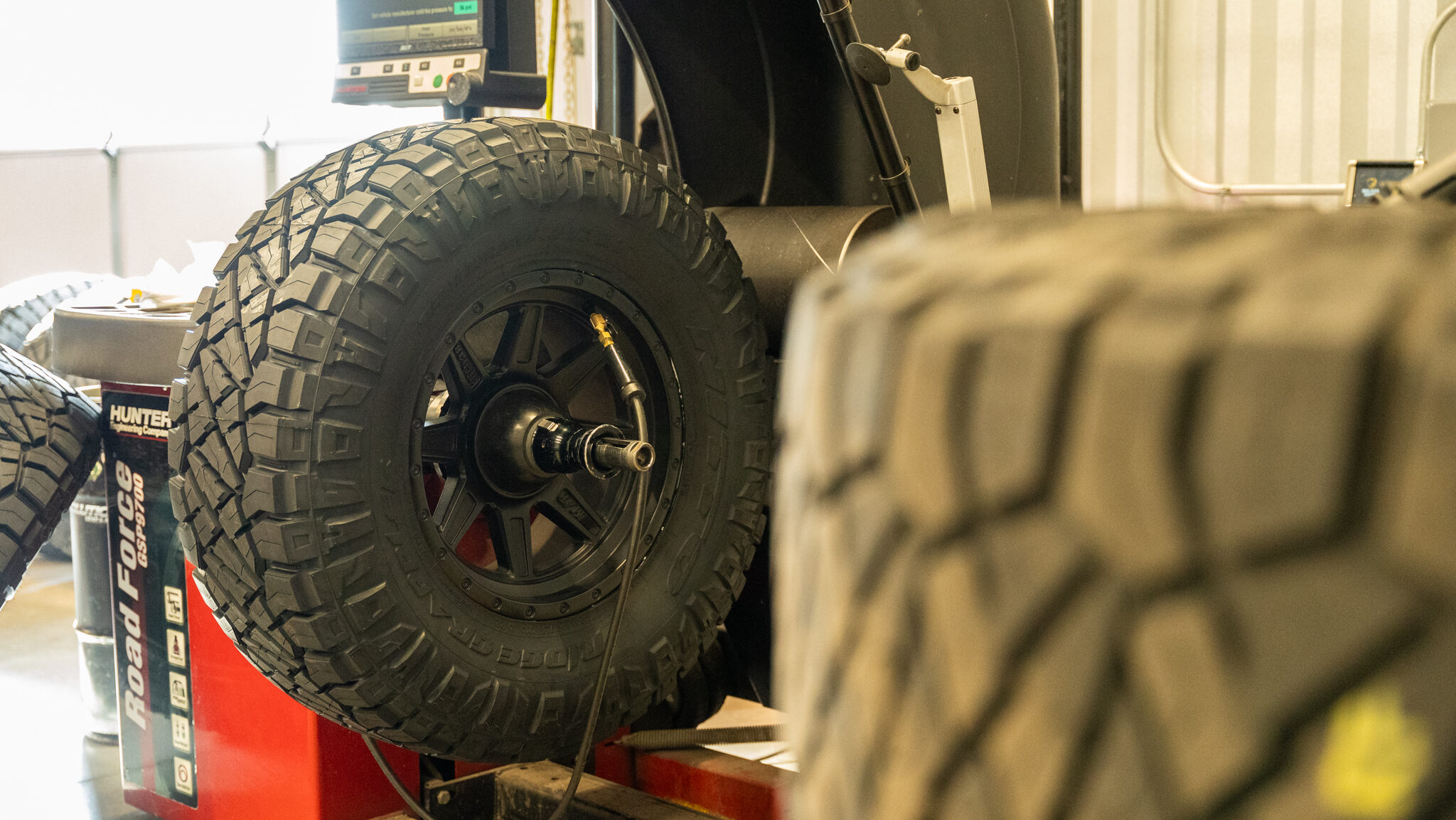
• Perform a road-force balance (not just spin balance) to detect tire stiffness variations.
• Replace front tires if they show cupping, feathering, or are over 5 years old.
One owner fixed recurring wobble only after replacing 42,000-mile tires, even though tread depth was acceptable.
Optimize Tire Pressure
Improper inflation affects contact patch stability.
| Axle | Recommended PSI | Notes |
|---|---|---|
| Front | 58 to 65 PSI | Lower if lightly loaded; increase for towing |
| Rear | 60 to 67 PSI | Adjust based on payload or trailer tongue weight |
One owner eliminated wobble by dropping front pressure from 65 to 58 PSI, improving ride compliance and reducing feedback. Never run max sidewall pressure unless fully loaded.
Install Steering Stabilizer After Fixing Real Issues

Choose the Right Damper
Once the real problems are fixed, a steering stabilizer helps dampen minor road shocks and reduce steering kickback.
• Single stabilizer: OEM-style replacement (e.g., Bilstein, Rancho RS9000)
• Dual stabilizer kit: Superior control (e.g., Icon Dual Stabilizer Kit #36511-65000)
The Icon dual system spreads damping force across two units, reducing stress on steering components and providing a tighter feel.
Don’t Rely on It as a Fix
Installing a new stabilizer before fixing track bar or alignment issues is a waste of money. It may quiet symptoms temporarily, but the next pothole will bring the wobble back.
Think of the stabilizer as the final polish, not the foundation.
Leverage Ford’s 10-Year Warranty Wisely
Understand the Recall Limitations
Ford issued a 10-year/150,000-mile warranty extension for “steering oscillation,” but it only covers one-time stabilizer replacement.
• If you’ve already had it replaced under this program, you’re not eligible again.
• The recall does not cover track bars, alignment, or other worn parts.
Many dealers push this stabilizer swap as a fix. Don’t fall for it unless you’ve already addressed the root causes.
Push for More at the Dealer
If your truck is under warranty:
• Ask if there’s an updated stabilizer part number (some supersede the original).
• Request a caster check and correction if out of ideal range.
• Some dealers may deny caster adjustments without a Ford TSB. Be persistent or go to an independent shop.
Independent alignment shops are often more willing to set +4° caster than dealers.
Prevent Future Wobble With Maintenance
Inspect After Hard Impacts
Every time you hit a deep pothole or off-road aggressively:
• Check for play in the track bar, drag link, and tie rods.
• Listen for clunks when turning or braking.
Early detection prevents small wear from turning into full-blown wobble.
Stick to a Service Schedule
| Task | Interval | Purpose |
|---|---|---|
| Tire rotation and balance | 5,000 to 10,000 miles | Prevent uneven wear |
| Front-end inspection | 20,000 miles | Catch play early |
| Shock replacement | 40,000 to 50,000 miles | Maintain damping control |
| Alignment check | After any lift or suspension work | Ensure +4° caster |
Worn shocks can’t absorb the initial bump that starts the wobble cycle.
Avoid Common DIY Mistakes
• Replacing only the stabilizer won’t fix the problem.
• Ignoring caster angle causes wobble even with new parts.
• Cheap replacement parts wear fast.
• Driving at high speeds with known play escalates damage quickly.
Final Fixes for Tremor and Lifted Models

Tune the Tremor Correctly
The F-250 Tremor comes with factory lift and tuned suspension. Most owners report no wobble. If issues arise, check:
• Tire pressure (often too high from dealership)
• Alignment settings (ensure +4° caster)
• Track bar condition (still wears over time)
Aftermarket suspension is usually unnecessary unless you’re modifying further.
Lift Kit Best Practices
If you’ve lifted your F-250:
• Always install caster correction hardware.
• Upgrade to a heavy-duty track bar.
• Realign to +4° caster. Don’t assume the kit does it automatically.
A 3-inch lift without correction can drop caster below +2.5°, making wobble almost inevitable.
Frequently Asked Questions About Ford F250 Death Wobble
What causes death wobble on a Ford F250?
Death wobble is caused by a combination of worn steering and suspension components, most commonly worn track bar bushings, loose tie rod ends or drag link joints, and insufficient caster angle in the alignment. When a road impact hits these worn parts, the front axle oscillates violently side-to-side, creating the terrifying shaking sensation.
Can a steering stabilizer alone fix death wobble?
No. A steering stabilizer is a damper, not a structural fix. It absorbs minor road shocks but does not address the underlying worn components or alignment geometry. Replacing only the stabilizer will mask the problem temporarily, but the wobble will return after the next significant road impact.
What is the correct caster angle to prevent death wobble?
The recommended caster angle is +4.0 degrees of positive caster. Factory alignment specs often allow as low as +2.5 to +3.0 degrees, which is insufficient for stability. Setting caster to +4 degrees helps the wheels self-center and resist the oscillation that triggers death wobble.
Does Ford’s warranty cover death wobble repairs?
Ford extended warranty coverage for “steering oscillation” to 10 years or 150,000 miles, but it only covers a one-time steering stabilizer replacement. The warranty does not cover track bars, alignment corrections, or other worn steering components. If you’ve already used this repair, subsequent fixes are out-of-pocket.
How do I check for worn track bar bushings?
With the truck safely lifted and wheels off the ground, grab the track bar where it mounts to the frame and axle and shake it firmly. Any movement, cracking, splitting, or compression in the rubber bushings indicates wear. Factory bushings can fail as early as 15,000 miles, especially under heavy loads or off-road use.
Will death wobble damage my truck?
Yes. Driving at highway speeds with known play in the steering system can escalate damage quickly. The violent oscillation stresses ball joints, tie rods, and the steering box. If you experience death wobble, slow down immediately and avoid high-speed driving until the underlying issues are repaired.
Key Takeaways for Permanently Fixing Ford F250 Death Wobble
Death wobble on a Ford F250 is fixable, but only when you address the real causes. Start with a full hands-on inspection of the track bar, drag link, tie rods, and ball joints. Replace any components showing play, prioritizing an upgraded track bar like the PMF unit. Then get an alignment that sets caster to +4 degrees, which is the single most important geometry fix. Balance your tires, optimize pressure, and only then install a quality steering stabilizer as the final touch.
Don’t let a dealer sell you a stabilizer swap as a complete solution. Use Ford’s 10-year warranty if you haven’t already, but pair it with real repairs. With the right approach, your F-250 can be rock-solid at any speed, and you can drive with confidence knowing the wobble won’t return.


