
Checking the oil in your Ford F-150 isn’t just routine maintenance, it’s a critical step in protecting one of the most expensive parts of your truck. Running low on oil can lead to engine wear, overheating, and even catastrophic failure. Even worse, overfilling can cause foaming, increased pressure, and damage to seals. The good news? Checking your oil is quick, easy, and something you can do in under five minutes. Whether your F-150 has a traditional dipstick or uses a digital oil monitoring system, this guide walks you through the correct, Ford-recommended method to get an accurate reading every time.
Park on Level Ground Before Checking Oil
Before checking your oil, park your F-150 on a flat, level surface. This ensures the oil settles evenly in the oil pan, giving you a true reading. Checking on a slope or incline can cause oil to pool to one side, leading to false low or high readings. Even a slight grade can throw off accuracy, especially in newer models with tighter tolerances. Engage the parking brake to keep the truck secure. If you’re on uneven ground like a driveway with a tilt, drive to a flat area such as a parking lot or garage. Accuracy starts here: no level surface, no reliable check.
Warm Engine Before Checking
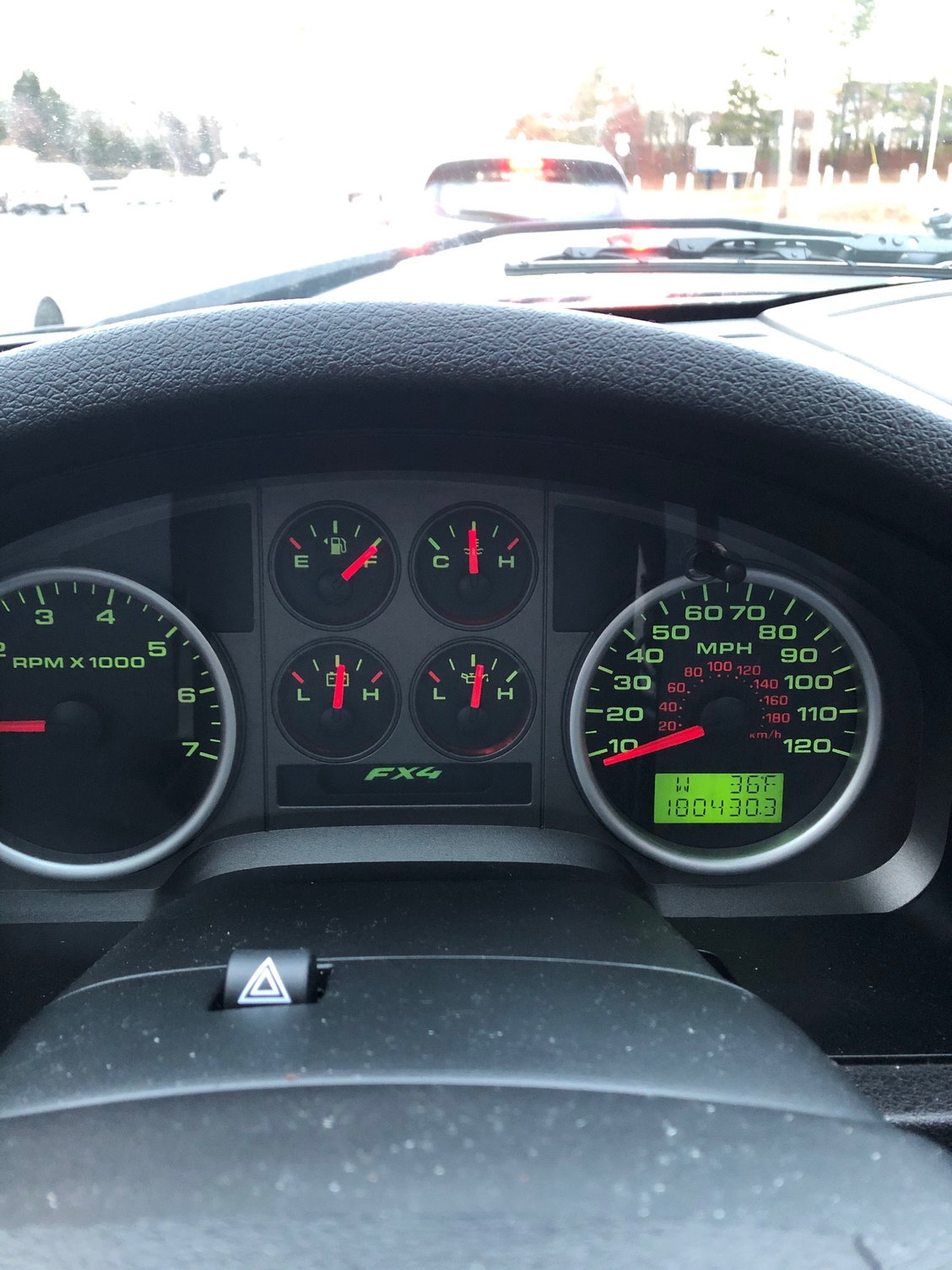
For the most accurate oil level reading, your engine must be at normal operating temperature. Start the truck and let it idle for 5 to 10 minutes, or better yet, take a short 5-mile drive. This warms up the oil, allowing it to flow freely through the engine, including into the valve train, turbochargers on EcoBoost models, and variable cam timing systems. Cold oil is thicker and may not drain fully back into the oil pan, resulting in a falsely low dipstick reading. Skipping this step, especially after an oil change, can lead you to add too much oil.
Why Cold Checks Are Unreliable
While some owners prefer checking oil first thing in the morning when the engine is cold, this method does not reflect real-world conditions. Cold oil contracts and settles, which might give a clearer mark, but it does not tell you where the level sits during operation. Ford explicitly recommends checking oil after the engine has been warmed and allowed to cool slightly. Cold checks can be misleading, particularly on high-mileage engines or after recent oil changes. Stick with the hot-check method for consistency and accuracy.
Wait 15 Minutes After Shutdown
After turning off the engine, wait at least 15 minutes before pulling the dipstick. This cooldown period lets oil drain from the upper engine components like the camshafts, valve covers, and turbochargers back into the oil pan. If you check too soon, oil still clinging to internal parts will not register on the dipstick, giving a false low reading. Some users, especially after oil changes or on EcoBoost engines, report needing 20 to 30 minutes for complete drainage. Patience pays off: waiting ensures you see the true oil level.
Locate the Bright Handle Dipstick
On F-150 models equipped with a dipstick, it is located on the driver’s side of the engine compartment. Look for a bright yellow or orange circular handle with a loop or pull-tab. It is often labeled “Engine Oil” or features an oil can symbol. The high-visibility color makes it easy to spot, even in low light. If you cannot find it, consult your owner’s manual. Some newer models like the 3.5L EcoBoost and PowerBoost do not have a dipstick at all and instead use a digital oil level monitor accessed through the infotainment system.
What If There Is No Dipstick
Starting in the mid-2010s, many F-150s, especially turbocharged and hybrid models, eliminated the physical dipstick. If your truck does not have one, do not worry. You can still check the oil level electronically. Park on level ground, turn off the engine, wait 10 minutes, then navigate to Menu, Vehicle, Oil Level on your SYNC screen. The system displays oil level as a percentage or bar graph. Always follow this method if your model lacks a dipstick.
Wipe and Reinsert Dipstick Twice
To get a reliable reading, use the double-wipe method. Pull the dipstick out completely and wipe it clean with a lint-free cloth or paper towel. Make sure no oil residue remains. Reinsert it fully into the tube, partial insertion causes false readings. Pull it out again and check the oil level. Ignore light streaks or droplets above the main oil mark. These are common, especially after oil changes. The true level is where the dipstick is fully saturated across its width.
Fixing Dipstick Streaking Issues
Many F-150 owners report false high marks caused by oil streaking. This happens when residual oil in the dipstick tube coats the stick on the way out. Causes include slow-draining oil from VCT systems, windage trays in 3.5L EcoBoost, or oil splashing during shutdown. To fix this, use the double-wipe method. Reinsert and pull the dipstick 3 to 4 times, known as flossing the tube. Wait longer after shutdown, 20 to 30 minutes. Avoid checking immediately after turning off the engine.
Read Between Min and Max Marks
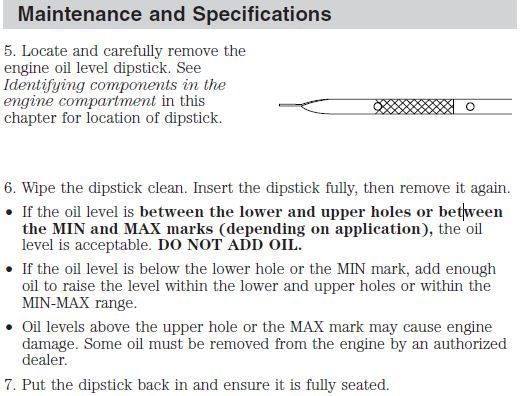
The correct oil level should be between the minimum and maximum marks on the dipstick, ideally at or near the Max line. On some models, the distance between these marks equals about one quart of oil. If the level is at or above Max, do not add more oil. Overfilling is more dangerous than being slightly under. Excess oil can foam, reduce lubrication, increase crankcase pressure, and damage seals or the PCV system. If oil is above Max, consider draining 0.25 to 0.5 quart to bring it into range.
Handling Perforated Hole Dipsticks
Some 5.0L V8 models use dipsticks with perforated holes instead of painted lines. To read these, hold the dipstick under bright light and check which hole shows oil saturation. If the lower hole is dry, oil is below minimum. If both holes are wet, oil is in the safe zone. If oil reaches above the upper hole, it may be overfilled. These can be harder to read, so take your time and use a flashlight if needed.
Add Oil in Half-Quart Increments
If your oil level is low, add oil slowly in half-quart increments. Use a funnel to avoid spills. After each addition, wait 5 to 10 minutes to let the oil settle before rechecking. This is especially important in dipstick-free models where the digital sensor needs time to update. Always use the correct oil type and viscosity for your engine, typically SAE 5W-20 for gas engines and 5W-40 for diesel. Overfilling is a common mistake, so err on the side of caution.
Know Your Engine’s Oil Capacity
Oil capacity varies by engine. Adding the wrong amount can lead to underfilling or overfilling. The 3.3L V6 holds about 5.4 quarts. The 2.7L EcoBoost holds 6.0 quarts. The 3.5L EcoBoost holds 7.0 to 7.5 quarts. The 5.0L V8 holds 7.75 quarts. The PowerBoost Hybrid holds 7.5 quarts. The 3.0L Power Stroke Diesel holds 9.5 quarts. Even if you add the factory-specified amount, always verify with the dipstick or digital monitor.
Use the Digital Oil Monitor Correctly
If your F-150 lacks a dipstick, use the digital oil level system. Park on level ground. Turn off the engine and wait at least 10 minutes. Press the Menu button on the steering wheel. Navigate to Vehicle, Oil Level. The display shows oil level as a percentage, bar, or text like “Low Oil, Add 1 Qt.”
Interpreting Digital Readings
An 80 to 100 percent reading or “OK” message means the oil level is good. A reading below 20 percent or “Low” warning means you should add oil in half-quart increments. A “CRITICALLY LOW” message or warning light means do not drive and add oil immediately. The system only checks oil level, not oil condition. You still need oil changes every 5,000 to 7,500 miles depending on driving conditions.
Avoid Common Oil Checking Mistakes
Even experienced drivers make oil-checking errors. Never check oil while the engine is running. Always turn off the engine first. Not waiting after shutdown is a major mistake. Waiting 15 minutes or longer is crucial. Ignoring streaking leads to false readings. Use the double-wipe method to eliminate false marks. Overfilling is dangerous. Add oil slowly and recheck every time. Using the wrong oil type causes engine damage. Stick to Ford’s specs, usually 5W-20 full synthetic. Trusting the oil life monitor for level is a error. It does not measure level, only change intervals.
Check Oil Every Fuel Fill-Up
Make oil checking a habit. Ford recommends checking at least monthly, but frequent drivers and truck owners should do it every other fuel fill-up. This takes less than five minutes and can catch issues early. It is especially important if you tow heavy loads, drive in extreme temperatures, have over 100,000 miles on the engine, or have noticed oil consumption or leaks.
Recognize Warning Signs of Oil Trouble
Do not wait for the oil light to act. Watch for these red flags. Oil level below Min means add oil immediately. An illuminated oil light means stop driving and check level and pressure. Dark, sludgy oil means schedule an oil change. Milky or foamy oil indicates coolant mixing, a possible blown head gasket. Engine ticking or knocking could mean low oil or poor lubrication. Needing to top off every 1,000 to 2,000 miles is normal for high-mileage EcoBoost or 5.0L engines, but inspect for leaks.
Follow Post-Change Verification Steps
After an oil change, do not assume the level is correct. Follow these steps. Add the correct amount of oil for your engine. Start the engine and let it run for 1 to 2 minutes to prime the filter. Shut off and wait 15 to 30 minutes for oil to settle. Check using the double-wipe method. Add more if needed, usually in half-quart increments. Take a photo of the dipstick after a fresh oil change to use as a baseline for future checks.
Frequently Asked Questions About Checking Oil in F150
How often should I check the oil in my Ford F-150?
Ford recommends checking your oil at least monthly. However, if you tow heavy loads, drive in extreme temperatures, or have a high-mileage engine over 100,000 miles, check every time you fill up with fuel. This takes less than five minutes and can prevent expensive engine damage.
Why does my dipstick show oil above the max mark?
Oil above the max mark usually means overfilling, which is more dangerous than being slightly under. Overfilled oil can foam, increase crankcase pressure, and damage seals. If your level is above max, drain 0.25 to 0.5 quart using a suction tool or by removing the drain plug temporarily.
Can I check my F-150 oil when the engine is cold?
While you can check oil when cold, Ford recommends checking after warming the engine to operating temperature then waiting 15 minutes. Cold checks may give false readings because the oil has not circulated through the entire engine system. The hot-check method reflects real-world operating conditions.
What causes false high readings on the F-150 dipstick?
False high readings, also called streaking, happen when residual oil in the dipstick tube coats the stick when you pull it out. This is common after oil changes or in engines with VCT systems and windage trays. Use the double-wipe method and wait 20 to 30 minutes after shutdown to get an accurate reading.
How do I check oil on an F-150 without a dipstick?
Models without a dipstick have a digital oil monitoring system. Park on level ground, turn off the engine, wait 10 minutes, then access the oil level through your infotainment system. Navigate to Menu, Vehicle, Oil Level using steering wheel controls or the touchscreen. The system displays oil level as a percentage or bar graph.
What happens if I run my F-150 with low oil?
Running with low oil can cause catastrophic engine damage. Without adequate lubrication, metal components rub against each other, creating heat and wear. This can lead to engine seizure, damaged bearings, and costly repairs. If the oil light comes on, stop driving immediately and check the oil level.
Key Takeaways for Checking Oil in Your F-150
Checking oil in your F-150 is simple, but doing it right matters. Whether you have a dipstick or digital monitor, follow Ford’s recommended steps: warm the engine, wait 15 minutes, use the double-wipe method, and read only the fully saturated portion. Avoid overfilling at all costs because it causes more damage than being slightly under. Use the correct oil type and viscosity for your specific engine, and check regularly, ideally every other fuel fill-up. A few minutes of your time can save thousands in engine repairs. Stay consistent, stay safe, and keep your F-150 running strong for years to come.


