

Seeing the “Exhaust Fluid Range 500mi” warning on your Ford F-350 dashboard creates immediate stress for any diesel owner. Ignoring this alert risks severe engine derating or a complete no-start condition that leaves you stranded. This guide explains exactly how to check DEF fluid level Ford F-350 trucks using your instrument cluster and refill the tank correctly.
You will learn specific navigation steps for 2016 through 2020 models to view real-time fluid data without special tools. We cover safe refilling procedures, tank capacity details, and critical mistakes to avoid for uninterrupted performance.
Locate the Blue-Capped DEF Fill Port

The first step in learning how to check DEF fluid level Ford F-350 owners must master is finding the correct fill point. Your truck has a dedicated port situated next to the diesel fuel filler door on the passenger side. Look specifically for a bright blue cap labeled with “DEF” or a blue fluid symbol to ensure you do not mix fluids.
Identify Cap Design Variations
Different model years feature slightly different cap mechanisms that require specific handling.
* Standard caps simply unscrew counter-clockwise for easy access.
* Some 2020 models have a latch design intended for box filling.
* You may need a flat tool like a pocket knife to gently pry open stubborn caps on newer trucks.
Prevent Misfueling Errors
The blue color coding serves as a universal safety warning against putting DEF into the diesel tank. Pouring this fluid into your fuel system causes catastrophic damage to injectors and requires an expensive full system flush. Always double-check the cap color before pouring any liquid.
Access DEF Level via Instrument Cluster
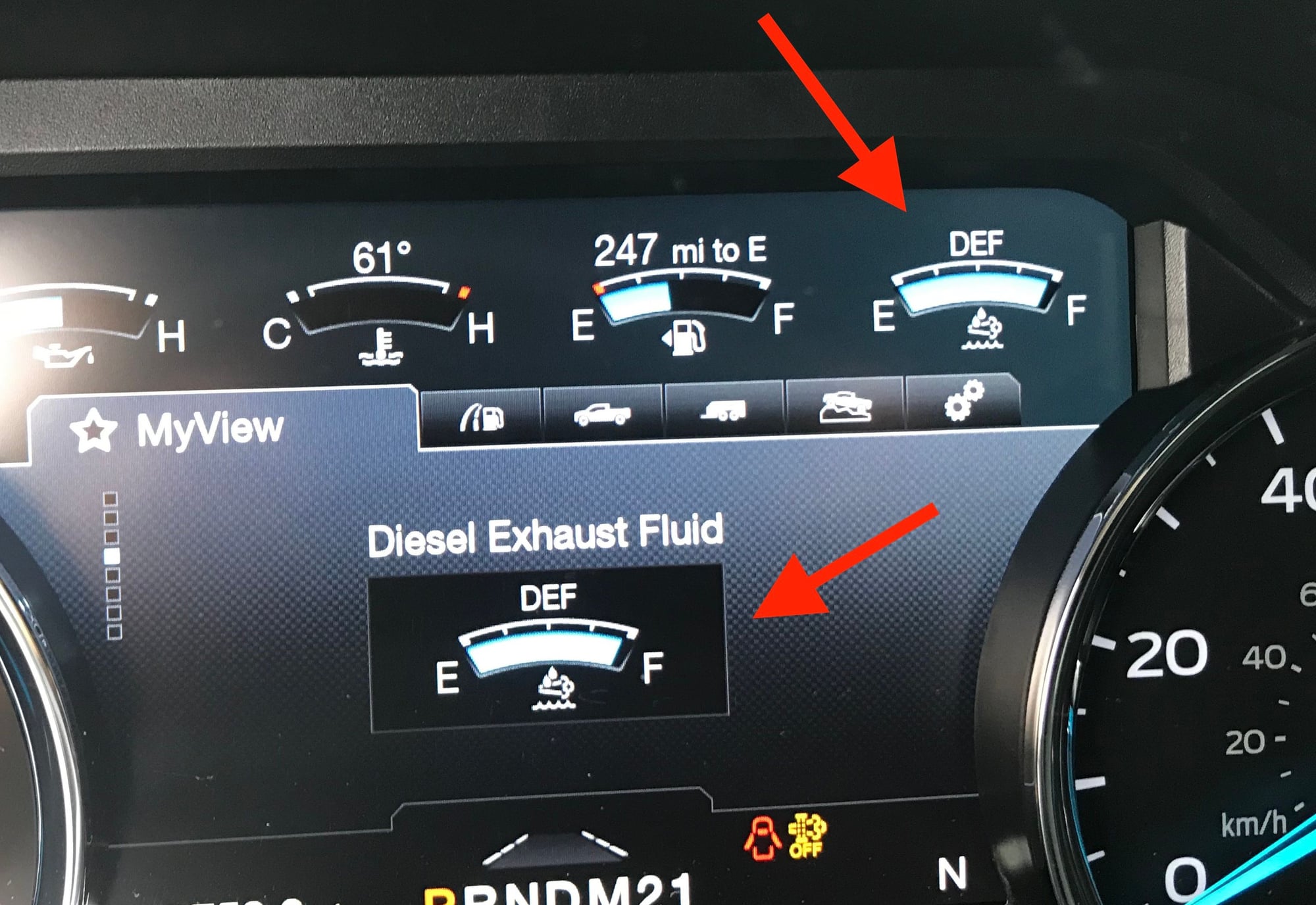
Viewing the exact fluid volume requires navigating the digital menu on your dashboard while the engine runs. This process varies slightly between model years but generally involves using the steering wheel controls to find the correct display setting.
Navigate Gauge Selection on 2019–2020 Models
Newer trucks allow you to customize which data appears on your main gauge cluster.
1. Start the engine and let it idle.
2. Press the arrow buttons on your steering wheel to enter Settings.
3. Scroll down and select Gauge Selection.
4. Choose an existing gauge slot like Turbo Boost to replace.
5. Select DEF Level from the list to display real-time volume.
Use Display Mode on 2019 Models
Some 2019 F-350 configurations use a different menu path to show fluid status.
1. Access the vehicle menu with the engine running.
2. Select Display Mode from the options.
3. Scroll through the readouts until DEF Level appears.
4. View the reading alongside metrics like Engine Hours or Distance to Empty.
Monitor Dashboard Warning Messages

Your truck actively monitors fluid levels and will alert you when action is required. Understanding these messages helps you avoid the dreaded engine derate mode that limits power output significantly.
Interpret the 500-Mile Countdown
The system triggers a specific warning when fluid drops to a critical reserve level.
* The dashboard displays “Exhaust Fluid Range 500mi”.
* This number acts as a strict countdown rather than an estimate.
* The range decreases by exactly one mile for every mile you drive.
* Reaching zero miles prevents the engine from restarting after shutdown.
Verify Automatic Warning Reset
Many owners worry they need a scan tool to clear the warning after refilling. The system resets automatically once you add sufficient fluid and start the engine. The message disappears within seconds if the tank now holds an adequate level.
Understand Tank Capacity and Usage Rates

Knowing your specific tank size helps you plan refills effectively during long trips or heavy towing seasons. Most Ford F-350 trucks built between 2016 and 2020 hold between 7 and 7.5 gallons of fluid.
Confirm Your Specific Tank Size
Variations exist depending on the specific configuration and model year of your truck.
* Standard tanks typically hold 7 to 7.5 gallons.
* Some 2019 configurations feature a larger 14-gallon capacity.
* Filling a standard tank usually requires two full 2.5-gallon jugs.
Estimate Refill Frequency
Consumption rates depend heavily on how you use your truck daily.
* Average usage is approximately 1 gallon every 4,000 miles.
* Heavy towing increases consumption significantly.
* Frequent stop-and-go driving uses more fluid than highway cruising.
* Plan to refill every 7,000 to 10,000 miles under normal conditions.
Refill the DEF Tank Properly
Adding fluid is a simple task you can complete in minutes with the right supplies. Following the correct procedure ensures you do not spill fluid or introduce contaminants into the system.
Gather Required Supplies
You need specific materials to refill your truck safely and effectively.
* ISO 22241-certified DEF fluid is mandatory for system health.
* Standard 2.5-gallon jugs are available at most auto parts stores.
* A funnel helps if your jug lacks a dedicated nozzle.
* A damp cloth is essential for immediate spill cleanup.
Follow Safe Refilling Steps
Execute these steps to fill your tank without issues.
1. Park the truck on level ground and turn off the engine.
2. Open the fuel door and remove the blue DEF cap.
3. Insert the jug nozzle slowly into the fill port.
4. Pour gradually to allow air to escape and prevent splashing.
5. Stop pouring when the flow stops automatically via the shutoff mechanism.
6. Drain the nozzle tip fully before removing it from the port.
7. Replace and tighten the blue cap securely.
Clean Spills Immediately to Prevent Damage
DEF fluid is non-toxic but creates hard white crystals when it dries. These crystals can clog sensors or damage paint if left unattended near the fill port.
Remove Crystallized Residue
Wipe any spilled fluid immediately with a damp cloth. Do not let the fluid pool around the fill neck or dry on nearby sensors. Keeping a microfiber towel in your glovebox ensures you can clean accidents instantly.
Avoid Costy Mistakes with DEF Fluid
Proper maintenance prevents expensive repairs and legal issues related to emissions compliance. Avoiding common errors keeps your F-350 running smoothly for years.
Never Mix Fluids or Delete Systems
Putting DEF in the diesel tank destroys fuel injectors instantly. Additionally, tampering with or deleting the SCR system violates federal EPA regulations and voids your warranty. Always use certified fluid and keep the emissions system intact.
Store Fluid Correctly
Extreme temperatures degrade DEF quality over time. Store jugs in a cool dry place away from direct sunlight. While DEF freezes at 12°F, your truck has a built-in heater to thaw it, so freezing does not damage the system.
Frequently Asked Questions About DEF Fluid
How often should I check my DEF level?
You should check the level monthly or before every long trip. Proactive monitoring prevents the 500-mile warning from appearing unexpectedly during travel.
What happens if I ignore the low DEF warning?
The truck will eventually derate engine power and refuse to restart after shutdown. This safety feature ensures emissions compliance but leaves you stranded until you refill.
Can I use tap water to top off the DEF tank?
No, never add water or any other liquid to the DEF tank. Only use ISO 22241-certified Diesel Exhaust Fluid to avoid destroying the SCR catalyst and sensors.
Does DEF freeze in the winter?
Yes, DEF freezes at 12°F (-11°C), but your F-350 has a heated tank. The system thaws the fluid automatically when you start the engine, so freezing causes no damage.
Where can I buy certified DEF fluid?
You can find certified DEF at auto parts stores, Walmart, Home Depot, and truck stops. Look for the ISO 22241 certification mark on the container to ensure quality.
Key Takeaways for Checking DEF Fluid Level Ford F-350
Maintaining proper fluid levels ensures your Ford F-350 remains compliant and ready for heavy work. Regular checks via the instrument cluster and prompt refilling prevent costly downtime.
Start by locating the blue cap and checking your gauge today. Keep a spare jug in your truck to handle low levels immediately and keep your diesel running strong.


