
You’re hooked up, ready to tow, and your 2017 Ford F-250 fires up, only to see a frustrating message: “Trailer Battery Not Charging.” Even worse, the trailer battery tests fine, the wiring looks intact, and you’ve towed this same trailer dozens of times. What’s going on?
The “trailer battery not charging” issue on 2017 F-250 and F-350 Super Duty trucks is surprisingly common and often misdiagnosed. It’s not always a dead battery or blown fuse. In fact, the root cause is usually a mix of smart charging logic, fuse confusion, and a counter-intuitive door-open power cutoff that trips up even experienced owners.
This guide cuts through the noise. You’ll learn how to diagnose the real problem in minutes, avoid common dealer mistakes, and get your trailer charging again without unnecessary parts or guesswork.
Confirm the Trailer Profile
Before diving into wiring, ensure the truck recognizes your trailer correctly.
Select the Right Trailer Type
The truck must detect the trailer and apply the correct brake profile. If it doesn’t, the charging circuit won’t activate.
- Go to the Trailer Tow Info menu on your instrument cluster.
- Select Add New Trailer or choose an existing profile.
- Save brake gain settings and confirm trailer type (e.g., “Braked Trailer”).
- Important: Always select the correct profile before towing, especially if you switch trailers.
Pro Tip: A mismatched or missing profile won’t always prevent lights or brakes, but it can block charging initiation.
Check Fuse 65: The Hidden Killer

Most owners overlook the real culprit: Fuse 65, labeled “Trailer Tow Lighting Module.”
Locate and Test Fuse 65
- Open the hood and find the power distribution box on the passenger side, rear of the engine bay.
- Remove the cover and locate Fuse 65 (a 15A or 20A fuse; verify your diagram).
- Use a fuse tester or multimeter to check for continuity.
- If blown, replace it with the correct amperage.
Why It Blows: A sudden disconnect (trailer popping off the hitch), water intrusion, or short in the trailer wiring can fry this fuse. It controls both lighting and charging logic.
Myth Alert: Many believe Fuse 27 (Trailer Tow Battery Charge Relay) is required. On 2017+ models with a factory brake controller, it’s not used, and the slot often lacks pins. Installing a relay here does nothing.
Never Open the Driver’s Door
Here’s the most baffling behavior: the charging circuit shuts off when the driver’s door opens.
Why Power Dies with Door Open
The 2017 F-250’s charging system uses a smart detection loop that disables the charge line during door-open states, likely a safety feature to prevent arcing during hitching.
- If you open the door to check voltage at the 7-pin connector, power cuts instantly.
- This leads to false diagnostics: “No voltage!” but only because the door broke the circuit.
How to Test Charging Safely
- Have a helper sit in the driver’s seat with the door closed.
- Apply the trailer brakes using the controller or press the brake pedal.
- Use a multimeter at the 7-pin connector (Pin 7, usually red).
- You should read 13.5–14.4V, confirming charging is active.
Expert Shortcut: Install a Victron BMV-712 or similar monitor on the trailer battery. View real-time voltage via Bluetooth without touching the truck.
Inspect Wiring and Connections
Even factory wiring can fail due to poor maintenance or aftermarket modifications.
Examine the Junction Box
- Find the junction box near the rear bumper (often behind a cover).
- Look for:
- Wire nuts or loose splices on the charge wire (common in DIY setups).
- Corrosion, moisture, or frayed insulation.
- Improper grounding (bare copper not making solid contact).
- Repair with butt connectors and heat-shrink tubing. Never rely on electrical tape alone.
Clean the 7-Pin Connector
- Disconnect the trailer.
- Spray both truck and trailer connectors with electrical contact cleaner.
- Use a small brush to remove corrosion from pins.
- Apply dielectric grease to prevent future moisture buildup.
Warning: A dirty or corroded Pin 7 (charge pin) can mimic a dead circuit, even if power is present upstream.
Remove Trailer Onboard Chargers

This is a silent killer of charging communication: stock or aftermarket trailer battery chargers.
Why Onboard Chargers Cause Errors
Older trailers often have built-in isolators or smart chargers in the battery box. These were designed for older trucks that delivered raw, unregulated power.
But the 2017 F-250 uses smart voltage sensing:
- It expects to see a battery that draws current when charging starts.
- If an onboard charger is active, it keeps the battery voltage high (e.g., 12.8V) and blocks direct feedback.
- The truck sees abnormal voltage (as low as 3V) or zero load and triggers “Not Charging.”
Fix: Eliminate the Middleman
- Locate the trailer’s battery box.
- Look for a black box or circuit board wired between the 7-pin input and battery.
- Disconnect and remove it.
- Wire the charge line (Pin 7) directly to the battery (+) with proper gauge wire and fuse.
Result: The truck now sees the battery directly, senses voltage drop, and starts charging normally.
Diagnose DC-DC Charger Conflicts
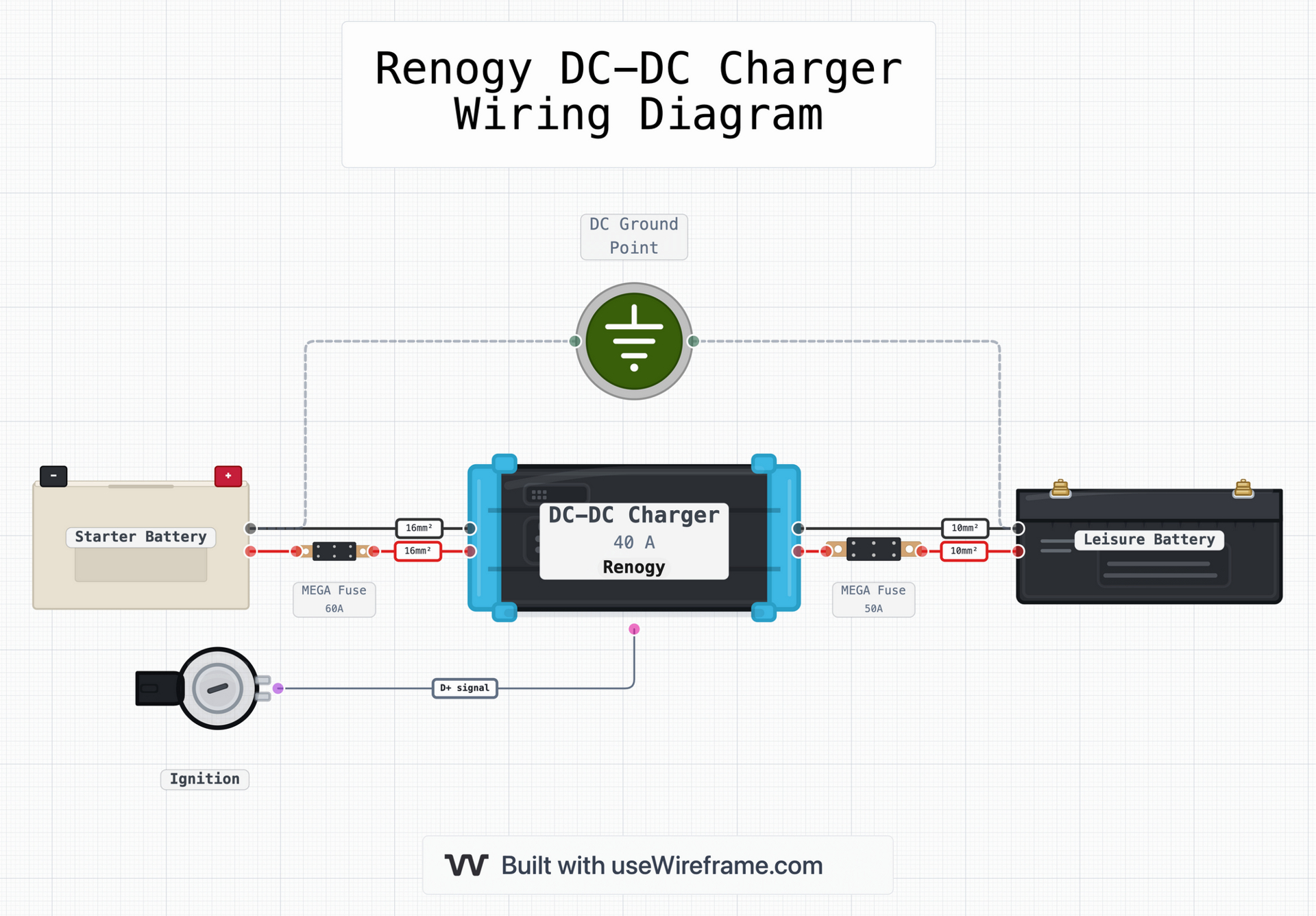
Aftermarket DC-DC chargers (like Renogy or Victron) on the trailer can also confuse the system.
How DC-DC Chargers Trigger Errors
- These units regulate input voltage and may block feedback to the truck.
- At startup, the truck doesn’t detect expected voltage changes.
- A temporary “Not Charging” message appears, often clearing after 10–30 seconds.
Test and Resolve
- Observe: Does the message disappear after driving a few minutes?
- Yes -> Likely a startup delay, not a fault.
- No -> The charger may be interfering.
- Solution: Install a voltage bypass relay or isolation monitor that signals the truck a load is present.
- Or, wire the DC-DC input through a switch and only enable it once charging is confirmed.
Test Battery Health Accurately
A trailer battery reading 12.8V at rest isn’t necessarily healthy.
Load Test vs. Static Voltage
- Static voltage only shows surface charge.
- An old or sulfated SLA (Sealed Lead Acid) battery may read 12.8V but collapse under load.
Perform a Real-World Test
- Disconnect the battery from any tender or charger.
- Let it sit 1–2 hours.
- Measure voltage: Below 12.4V? It’s partially discharged.
- Apply a 10A load (e.g., trailer light circuit) for 5 minutes.
- Recheck voltage: Drops below 11.5V? Replace the battery.
Upgrade Tip: Replace SLA with an AGM battery (Group 65). It lasts longer, handles deep cycles better, and performs well with electric jacks.
Replace the Trailer Battery
If all else checks out, replace the battery, especially if it’s over 3 years old.
Choose the Right Replacement
| Feature | SLA (Stock) | AGM (Recommended) |
|---|---|---|
| Cost | Under $25 | $80–$120 |
| Lifespan | 2–4 years | 4–6 years |
| CCA | ~600 | ~1000 |
| Vibration Resistance | Low | High |
| Charging Efficiency | Moderate | Excellent |
- Best Pick: Odyssey 34/78 AGM or Optima BlueTop for heavy-duty use.
- Install with a 30A inline fuse on the positive lead within 18 inches of the battery.
Time Estimate: Battery swap takes 15 minutes. No programming needed.
Prevent Future Charging Failures
Avoid repeat issues with these proactive steps.
Monthly Maintenance Checklist
- Clean 7-pin connectors.
- Inspect fuse 65.
- Check trailer wiring for chafing.
- Verify battery voltage (12.6V+ when stored).
- Remove battery tenders before towing.
Smart Towing Habits
- Never open the driver’s door while diagnosing charging.
- Always apply brakes before expecting charge activation.
- Skip Fuse 27; it’s not needed on 2017+ models.
- Use AGM batteries and eliminate onboard chargers.
Cycle Rule: If the trailer sits unused for over 30 days, disconnect from the truck and use a solar maintainer instead of a constant tender.
Frequently Asked Questions About 2017 F250 Trailer Battery Charging
Why does my 2017 F250 say “Trailer Battery Not Charging” when the battery is new?
The error usually points to a wiring or detection issue, not the battery itself. Check Fuse 65, inspect the 7-pin connector for corrosion, and ensure no onboard trailer charger is blocking voltage feedback to the truck.
Does Fuse 27 need to be installed for trailer charging to work?
No. On 2017+ Super Duty trucks with a factory brake controller, Fuse 27 and its relay are not required. The slot often lacks pins, and installing a relay there has no effect on charging.
Why does opening my driver’s door kill the trailer charging circuit?
The truck’s smart charging logic disables the charge line when the driver’s door opens, likely as a safety measure. To test voltage, keep the door closed and have a helper apply the brakes while you measure at the 7-pin connector.
Can an aftermarket DC-DC charger cause the “Not Charging” message?
Yes. DC-DC chargers can block voltage feedback to the truck, causing a temporary error at startup. If the message clears after 10–30 seconds, it’s likely a startup delay rather than a fault.
How do I test if my trailer battery is actually bad?
Perform a load test: disconnect the battery, let it sit 1–2 hours, then apply a 10A load for 5 minutes. If voltage drops below 11.5V, the battery needs replacement even if static voltage reads 12.8V.
What’s the best replacement battery for a trailer breakaway system?
An AGM Group 65 battery (such as Odyssey 34/78 or Optima BlueTop) offers longer lifespan, higher CCA, and better vibration resistance than standard SLA batteries.
Key Takeaways for Fixing Your 2017 F250 Trailer Charging
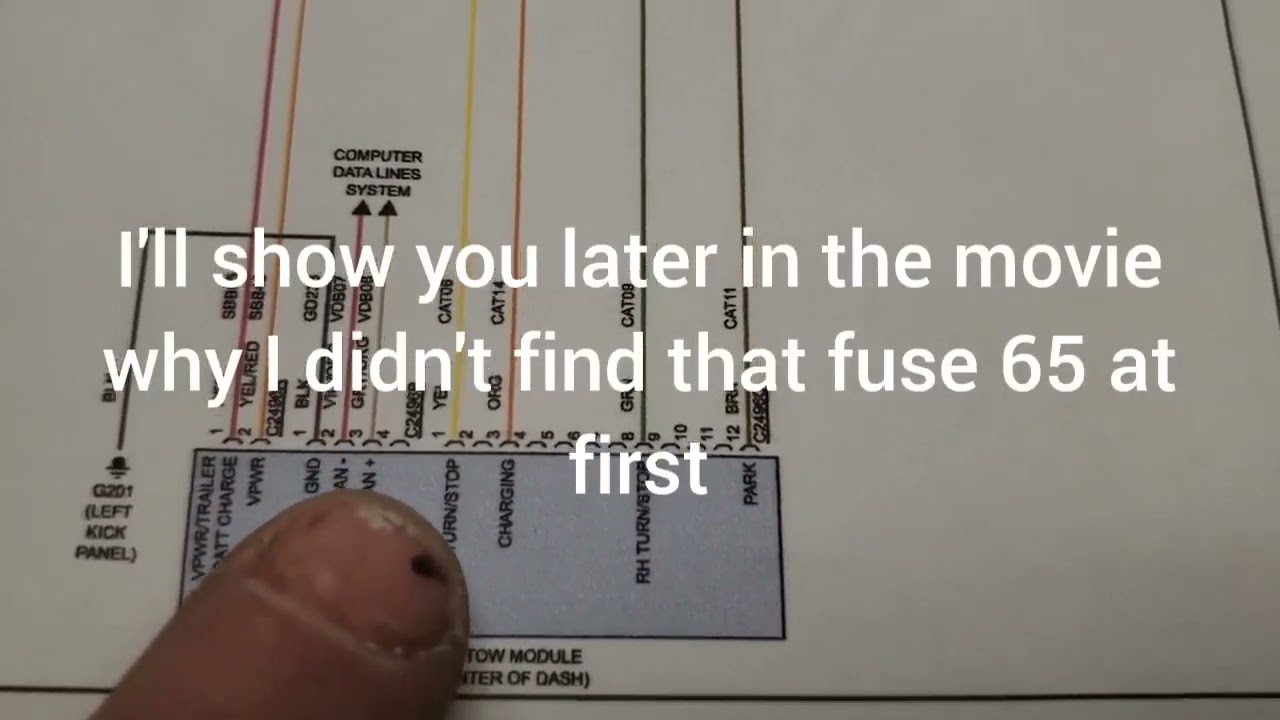
The 2017 F250 trailer battery not charging issue almost never starts with the battery itself. In most cases, the real culprit is a blown Fuse 65, the door-open power cutoff, or trailer-side electronics that block the truck’s voltage sensing.
Start by checking Fuse 65 and confirming the trailer profile. Then test the 7-pin connector with the door closed and brakes applied. If the circuit shows proper voltage, inspect trailer wiring and remove any onboard chargers or isolators that interfere with smart charging logic.
Your next step: grab a multimeter, keep the driver’s door shut, and verify voltage at Pin 7 before replacing any parts. This five-minute test will save you hours of guesswork and unnecessary trips to the dealer.


