
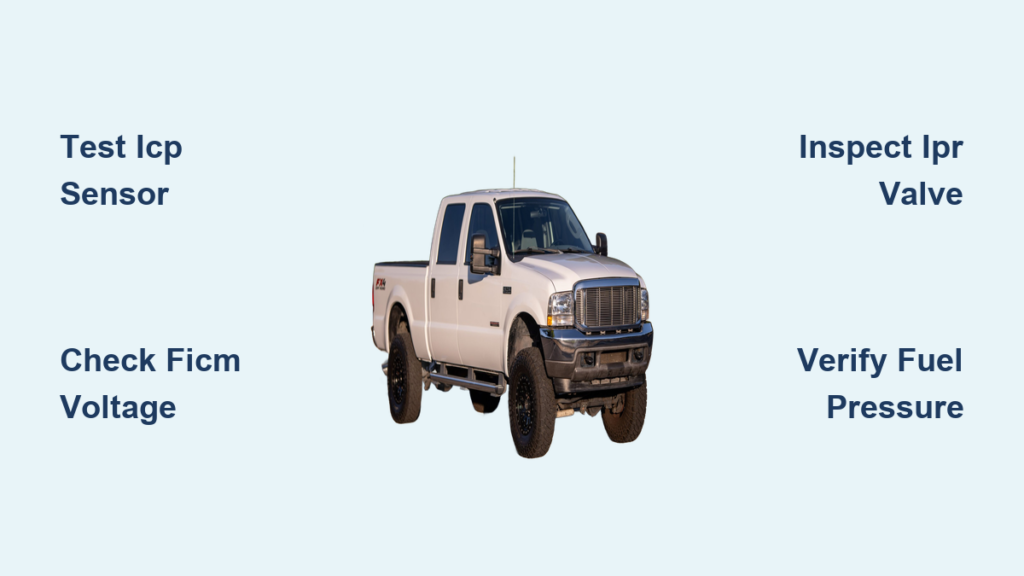
You turn the key, your 2004 Ford F-250 PowerStroke diesel fires up, then dies within seconds. You pump the throttle to keep it alive, but the moment you let off, it stalls again. This frustrating no-idle condition is one of the most reported problems with the 6.0L PowerStroke, especially in 2004.5 model years. The engine cranks, starts, and immediately quits unless you hold the accelerator. This guide walks you through the most likely causes, how to test each one, and the fixes that actually work. You’ll learn to identify whether the problem is oil pressure, electrical, or fuel related, and how to repair it without wasting money on guesswork.
Identify Your Specific No-Idle Symptom
Before replacing parts, confirm exactly how your truck behaves. The symptom pattern points directly to the root cause.
Immediate Stall After Start
The engine starts quickly but dies within 2–5 seconds. You must feather the throttle to keep it running. This behavior almost always points to low high-pressure oil pressure or a FICM voltage drop. The 6.0L PowerStroke requires 500+ psi of oil pressure to actuate the injectors at idle. If that pressure bleeds off or builds too slowly, combustion cannot be sustained.
Hard Restart After Short Shutdown
If your truck starts perfectly when cold but refuses to idle after a 5-minute hot shutdown (like running into a store), heat soak is the likely culprit. Components such as the ICP sensor or IPR valve degrade when hot, sending erratic signals or losing pressure. This is a classic 2004.5 model year issue, where revised HPOP systems are more sensitive to thermal expansion and oil thinning.
Rough Idle Before Stalling
The engine runs unevenly, shaking or misfiring, before dying. This suggests injector control issues or low fuel pressure. While high-pressure oil problems dominate these complaints, never overlook fuel delivery. A clogged filter or weak lift pump can starve injectors at low RPM.
Start With High-Pressure Oil System Testing

The 6.0L PowerStroke uses engine oil to fire its fuel injectors. If oil pressure drops too low, the engine can start but cannot idle. Always inspect this system first.
Test the ICP Sensor and Circuit
The Injection Control Pressure (ICP) sensor reports oil pressure to the PCM. A failing sensor sends false readings, causing the PCM to cut fuel or shut the engine down.
- Symptoms: Cranks, starts, then dies. Often sets P1211 or P1247 codes.
- Check: Use a scan tool to compare ICP actual vs. desired. At idle, actual should be within 200 psi of desired. If actual reads low or flatlines, suspect the sensor or low oil pressure.
- Test: Unplug the ICP sensor. If the engine idles better, the PCM has defaulted to safe mode and the sensor is likely bad.
- Fix: Replace with an OEM-grade sensor. Cheap aftermarket units fail quickly under heat.
Inspect the IPR Valve for Sticking
The Injection Pressure Regulator (IPR) valve controls oil flow into the high-pressure system. If it sticks open or leaks internally, pressure never builds high enough.
- Visual Check: Look for oil seepage around the IPR screen or valve body.
- Functional Test: Remove and inspect the IPR screen under the valve. Clean carbon buildup with brake cleaner.
- Swap Test: Replace with a known-good unit to confirm the diagnosis.
- Pro Tip: A failing IPR often worsens after hot restarts, which explains the classic 5-minute soak failure.
Verify HPOP and Stand Pipes
Internal wear in the high-pressure oil pump (HPOP) or cracked stand pipes can also cause pressure loss.
- Stand Pipe Check: Remove the valve cover and look for oil pooling in the valley. Cracked stand pipes or dummy plugs leak under pressure.
- HPOP Wear: If ICP pressure builds slowly or fluctuates erratically, the HPOP may be worn internally. This requires disassembly to inspect.
- Time Estimate: Valve cover removal takes 2–3 hours. Always use new gaskets and O-rings during reassembly.
Diagnose FICM Voltage Problems

The Fuel Injection Control Module (FICM) powers the injectors with 48 volts. Low voltage causes weak or missed injections, especially at idle.
Measure FICM Rail Voltages
Test FICM power with a multimeter:
- Locate the FICM on the passenger-side fender, behind the battery.
- Backprobe the connector pins for the 48V and 12V rails.
- Test with the key on, engine off, and again while cranking.
- Normal Reading: 46–48V when cranking, 11–14V on the logic rail.
- Low Voltage (below 46V): Points to weak batteries, bad relays, or failed FICM capacitors.
- Common Mistake: Assuming batteries are good because the lights work. The FICM needs clean, stable power to function.
Clean and Reseat FICM Connectors
Corrosion or loose pins disrupt voltage delivery to the module.
- Disconnect the battery before working on the FICM.
- Remove the FICM and inspect all pins for green corrosion.
- Clean with electrical contact cleaner and apply dielectric grease.
- Reinstall with a new foam seal to keep moisture out.
Decide Between FICM Repair or Replacement
- Rebuild Kits: Available for around $100. Replace failing capacitors.
- New Units: OEM FICMs cost $600 or more. Aftermarket quality varies widely.
- Flash Updates: Some FICMs require reprogramming after replacement. Check with a dealer or tuning shop.
Rule Out Fuel System Problems
Even with perfect oil pressure, poor fuel delivery will kill the idle. The 6.0L needs consistent fuel flow to maintain combustion.
Check Fuel Pressure at the Rail

Use a gauge to measure fuel pressure at the filter head outlet.
- Specification: 45–60 psi at idle.
- Low Pressure: Indicates a clogged filter, failing lift pump, or air in the lines.
- Quick Fix: Replace the fuel filter first. It is cheap and often overlooked.
Bleed Air from the Fuel System
Air pockets disrupt injector timing and fuel volume.
- Open the bleed screw on the fuel filter housing.
- Prime with the hand pump until fuel flows steadily without bubbles.
- Retighten the screw and restart the engine.
- Tip: If the truck runs briefly after bleeding then dies again, air is re-entering the system. Check the supply lines and tank pickup.
Inspect the Fuel Heater
On cold mornings, a stuck-open fuel heater can boil fuel and create vapor lock.
- Symptom: Hard start, runs briefly, then dies.
- Fix: Unplug the heater or replace it with an updated version.
Scan for Diagnostic Trouble Codes
Even without a check engine light, stored codes can guide your diagnosis.
Pull Stored and Pending Codes
Use a diesel-capable scan tool such as ForScan, AutoEnginuity, or a Snap-on scanner.
- Key Codes to Look For:
- P1211: ICP pressure above or below desired.
- P0088: Fuel rail pressure too high or too low.
- P0670: FICM malfunction.
- P0299: Turbo underboost, which can mimic idle issues.
- Live Data: Monitor ICP, IPR duty cycle, FICM voltage, and engine oil temperature.
Interpret Freeze Frame Data
Check the conditions recorded when the code was set:
– Engine temperature
– Vehicle speed
– Load percentage
This information helps determine if the issue is heat-related or occurs under load.
Address Idle Air Control and Sensor Issues
While less common on diesels, auxiliary sensors can contribute to idle problems.
Clean the EBP and MAP Sensors
The Exhaust Back Pressure (EBP) and Manifold Absolute Pressure (MAP) sensors help calculate engine load. Gummed up with soot, their readings drift and confuse the PCM.
- Clean: Remove and spray with MAF/MAP cleaner.
- Test: Compare MAP reading to barometric pressure with the key on, engine off.
Verify EGR Operation
A stuck-open EGR valve floods the cylinders with exhaust gas, killing idle quality.
- Inspection: Remove the EGR valve and check for heavy carbon buildup.
- Block Plate Option: Many owners disable the EGR with a block-off plate and tuner for long-term reliability.
Prevent Recurring No-Idle Failures
Once you fix the problem, take steps to avoid repeat issues.
Use High-Quality Oil and Filters
- Oil: OEM-spec 15W-40 or 5W-40 with high ZDDP for HPOP protection.
- Filter: Motorcraft or Wix only. Bargain brands have poor filtration and kill pumps over time.
Upgrade Weak Components Proactively
- IPR Screen: Install an updated screen that resists clogging.
- FICM Rebuild: If voltage is borderline, rebuild now before it strands you.
- Batteries and Cables: Test every 12 months. Replace any battery below 700 CCA.
Install a Scan Gauge
Monitor ICP, EOT, and fuel pressure in real time. Early warnings prevent roadside breakdowns.
Know When to Seek Professional Help
Some diagnostics require advanced tools beyond a basic scan tool.
- Injector Balance Test: Identifies weak or failing injectors.
- HPO Leak-Down Test: Measures pressure loss over time.
- FICM Oscilloscope Test: Checks signal integrity at the waveform level.
If you have checked oil pressure, fuel pressure, and FICM voltage without finding the cause, a diesel specialty shop can perform these tests.
Frequently Asked Questions About 2004 Ford F-250 PowerStroke Idle Problems
Why does my 6.0L PowerStroke start then die immediately?
This typically indicates low high-pressure oil pressure or a FICM voltage issue. The 6.0L needs 500+ psi of oil pressure to actuate injectors at idle. If pressure is too low or the FICM drops below 46V, the engine cannot sustain combustion.
What does a bad ICP sensor do to idle quality?
A faulty ICP sensor sends false pressure readings to the PCM. The PCM then limits fuel delivery or shuts the engine down. Unplugging the sensor forces the PCM into default mode, which often improves idle if the sensor is the culprit.
Can a clogged fuel filter cause no-idle conditions?
Yes. A restricted fuel filter reduces flow to the injectors, especially at low RPM. Always replace the fuel filter as a first step when diagnosing idle issues on a 6.0L PowerStroke.
Why does my truck idle fine cold but stall when hot?
Heat soak is the most common cause. Components like the ICP sensor and IPR valve degrade when hot, causing erratic signals or pressure loss. This is especially common in 2004.5 model year trucks.
How do I test FICM voltage on a 6.0L PowerStroke?
Backprobe the FICM connector with a multimeter while cranking. You should see 46–48V on the power rail and 11–14V on the logic rail. Readings below 46V indicate failing capacitors or weak batteries.
What scan tool works best for 6.0L PowerStroke diagnostics?
ForScan is a popular free option that reads Ford-specific PIDs. AutoEnginuity and Snap-on scanners offer deeper diagnostics. Any tool must display ICP, IPR duty cycle, and FICM voltage in live data.
Key Takeaways for Fixing Your 2004 F-250 PowerStroke No-Idle Issue

A 2004 Ford F-250 PowerStroke that will not idle is rarely a mystery. The cause is almost always found in the high-pressure oil system, FICM voltage, or fuel delivery. Start by testing the ICP sensor and IPR valve, especially if the problem worsens after hot restarts. Then verify FICM voltage is above 46V and check fuel pressure at the rail. Pull diagnostic trouble codes to guide your testing and confirm your findings.
With methodical troubleshooting, you can restore reliable idle without wasting money on unnecessary parts. Keep up with oil changes using quality filters, monitor critical parameters with a scan gauge, and address weak components before they fail completely. These trucks can run strong past 300,000 miles when properly maintained.


