
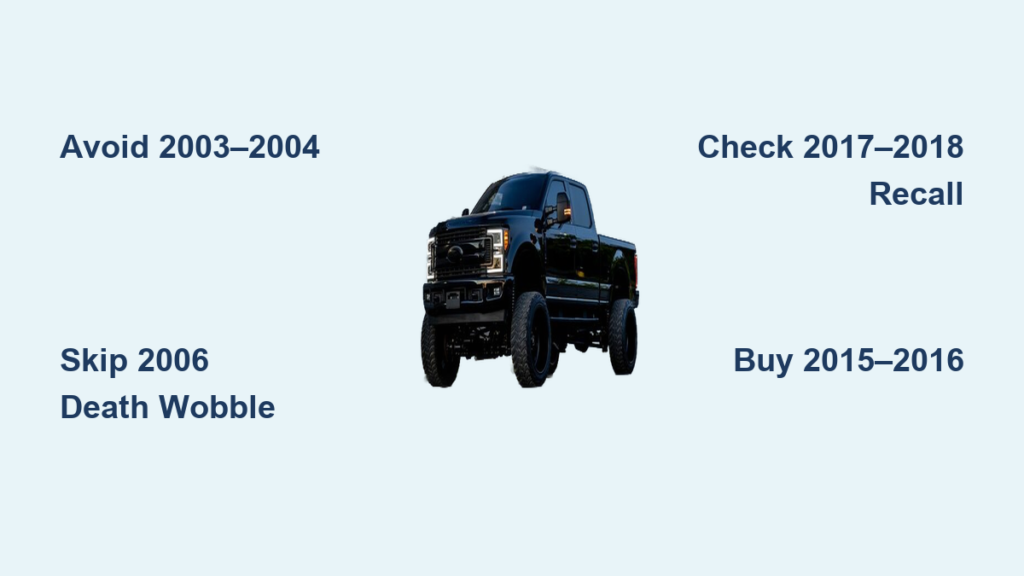
The Ford F-250 has earned its reputation as a heavy-duty legend, but choosing the wrong model year can turn your dream truck into a financial nightmare. From the infamous “Death Wobble” to engines that fail before 100,000 miles, certain F-250 years carry risks that every buyer should understand before signing paperwork.
Knowing the best and worst Ford F-250 years helps you avoid trucks with chronic defects and target models known to run strong past 500,000 miles. This guide breaks down which years deliver dependable performance, which ones to skip entirely, and the mechanical flaws behind every ranking.
Ford F-250 Years to Avoid at All Costs
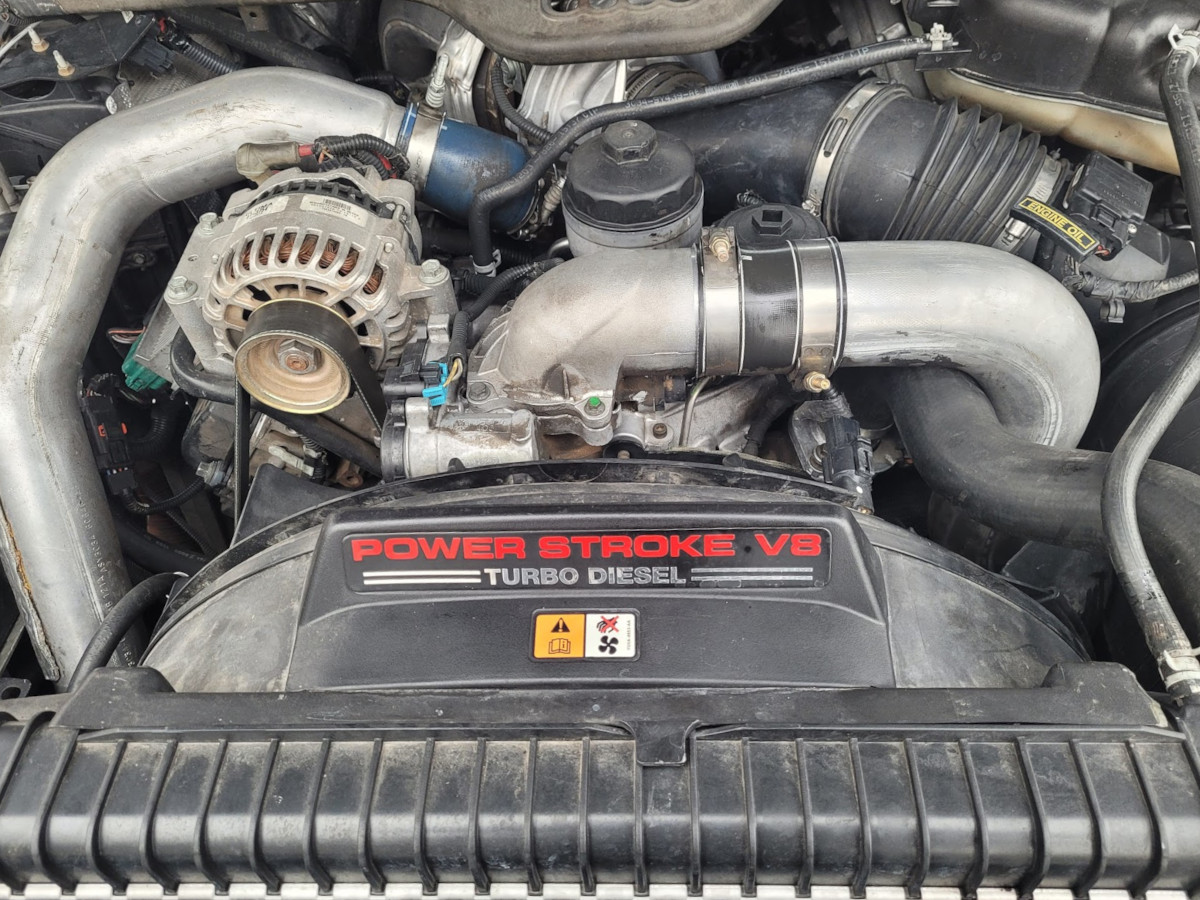
2002: The Spark Plug Ejection Hazard
The 2002 F-250 is a split personality. Diesel versions with the legendary 7.3L Power Stroke remain highly sought after, but gas models equipped with the Triton V8 or V10 suffer from a dangerous design flaw. The aluminum cylinder heads have shallow spark plug threads that can strip under combustion pressure, causing plugs to eject violently while driving.
When a spark plug blows out, you’ll hear a loud pop followed by an immediate misfire and potential fire risk. Repairs typically require full cylinder head replacement, costing $1,500 or more. Ford never issued a recall for this issue, which affects most 1999–2002 gas models.
Pro Tip: Only consider the 2002 F-250 if it’s a diesel. Gas versions are a financial trap waiting to happen.
2003–2004: The 6.0L Power Stroke Disaster
The 2003–2004 F-250 introduced the 6.0L Power Stroke diesel, an engine widely considered one of the worst diesels Ford ever produced. These trucks suffer from clogged oil coolers, EGR valve failures, blown head gaskets, and fuel injector breakdowns, often before reaching 100,000 miles.
The oil cooler clogs easily, triggering overheating and turbo damage. Head gaskets fail due to weak head bolt design, and injectors require frequent replacement. Many owners report repair bills exceeding the truck’s market value.
Expert Note: The 2003–2004 model years represent the darkest era for Ford diesel reliability. Avoid unless the engine has been fully rebuilt with upgraded components.
2006: Death Wobble and Sudden Stalling
The 2006 F-250 combines the problematic 6.0L diesel with new safety dangers. Over 400 complaints document violent front-end shaking at highway speeds, a phenomenon known as Death Wobble that makes the truck nearly uncontrollable.
Even more alarming are reports of the engine shutting down abruptly while driving, cutting power to steering and brakes. This stalling is linked to throttle body defects and electrical issues that can turn a routine drive into a life-threatening situation.
Red Flag: Sudden engine stalling at speed is life-threatening. Never buy this year without a complete diagnostic from a certified mechanic.
2008: Brake Failures and Engine Fires
The 2008 F-250 generated more consumer complaints than any other early model. Beyond the persistent Death Wobble, this year introduced reports of brake failure during deceleration and steering lock-ups. Some drivers experienced both systems freezing simultaneously, causing dangerous skids.
The 6.4L Power Stroke diesel launched this year suffers from radiator leaks, cracked pistons, and DPF issues that have led to documented exhaust fires. While later 6.4L models showed improvements, the 2008 version remains the riskiest of the batch.
Safety Alert: Simultaneous brake and steering failure is rare but documented. Inspect all systems thoroughly before purchase.
2011: Transmission Woes and Persistent Wobble
The 2011 F-250 launched the third generation with a redesigned 6.7L Power Stroke, but early versions were plagued by turbocharger glitches and fuel system clogs. The 6-speed TorqShift transmission developed a reputation for rough, jerky shifts and premature failure before 100,000 miles.
Even after transmission replacement, many owners report the same harsh shifting, indicating a calibration or design flaw rather than a repairable defect. Death Wobble also persists due to suspension geometry issues inherited from earlier generations.
Reality Check: The 2011 model is a transition year with unresolved bugs. Later 2015–2016 models fix most of these issues.
2017–2018: The Worst Generation Start in Decades
The 2017–2018 F-250 marks the riskiest beginning of any generation. Over 1,000 complaints cite violent Death Wobble, transmission jerking, and a critical driveshaft fracture recall affecting 247,445 trucks.
The aluminum-bodied redesign reduced weight but introduced new structural weaknesses. The driveshaft can break under load, causing sudden power loss and creating highway debris hazards. Ford issued recall NHTSA 19V-358 to install a radial damper and flex coupling, but many owners report the wobble returns within months.
Urgent Advice: If considering a 2017–2018 model, verify the driveshaft recall was completed and inspect thoroughly for prior damage.
Best Ford F-250 Years Worth Buying
2001–2002 Diesel: The Legendary 7.3L Power Stroke
The 2001–2002 F-250 with the 7.3L Power Stroke is often called the last great Ford diesel. These engines regularly surpass 500,000 miles with basic maintenance, earning a bulletproof reputation among truck enthusiasts.
Unlike later models, the 7.3L has no high-pressure oil system, no EGR valve, and no DPF, making it simpler, more reliable, and easier to repair. It delivers strong low-end torque and excellent fuel economy under load.
Pro Tip: These trucks are now collector’s items. Expect premium pricing, but they hold value exceptionally well.
2005: Refined Gas and Diesel Options
The 2005 F-250 marks a turning point in Super Duty history. Ford introduced the 3-valve 5.4L V8, which improved power output and significantly reduced spark plug ejection risk. The robust 5R110 automatic transmission handles heavy towing with ease.
Diesel buyers get a slightly updated 6.0L, though it still carries known flaws, so stick with the 7.3L if available. This year also introduced larger brakes, improving stopping power for heavy loads.
Value Play: A 2005 F-250 offers modern features without the worst early flaws, making it a smart balance of cost and reliability.
2007: Peak First-Generation Refinement
As the final year of the first generation, the 2007 F-250 benefits from all prior production fixes. While the 6.0L diesel still carries risks, manufacturing issues were largely resolved by this point. The cab is roomier, and towing capacity reaches new highs.
Gas models are notably more reliable thanks to updated cylinder heads. Rust remains a concern in northern climates, but well-maintained examples serve as solid workhorses.
Buyer’s Note: A clean 2007 with low miles is a smart used buy. Just avoid high-mileage diesel versions.
2009–2010: The Most Reliable Generation
The 2009–2010 F-250 belongs to the shortest but most reliable generation (2008–2010). With only three years of production, this generation avoided many systemic flaws that plagued other eras.
The 6.4L diesel still has known issues, but late models received factory improvements. These trucks deliver smooth power, strong towing capability, and fewer complaints than adjacent years. The 2010 models added SYNC infotainment and improved resale value.
Market Insight: 2010 models command higher prices due to better technology and stronger resale performance.
2015–2016: Third-Generation Peak Reliability
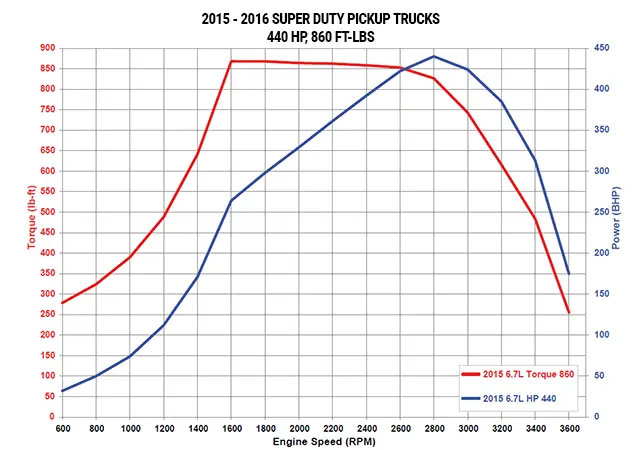
The 2015–2016 F-250 represents the peak of third-generation reliability. Ford resolved the early 6.7L Power Stroke’s turbocharger and fuel system problems. These diesels run smoothly, start easily in cold weather, and deliver consistent power output.
The 6-speed transmission is well-matched to the engine, and the suspension is more stable, making Death Wobble rare when components are properly maintained. These years work equally well as daily drivers and heavy haulers.
Ownership Perk: Low maintenance costs and strong resale values make these a top choice for serious truck buyers.
2021–2022: Modern Powertrains Without Diesel Complexity
The 2021–2022 F-250 brings major improvements over earlier fourth-generation models. The 7.3L “Godzilla” gas engine earns praise for its smoothness, power delivery, and reliability, making it perfect for buyers who want to avoid diesel maintenance.
The 10-speed automatic transmission eliminates the jerking issues of the older 6-speed unit. Driveshaft and wobble problems are less common, though not fully eradicated. Interior tech, towing aids, and ride comfort are best-in-class.
Best For: Buyers wanting modern features without diesel complexity.
Critical Safety Defects to Watch For
Death Wobble: The Front-End Shaking Hazard
Death Wobble causes violent front-end shaking at speeds above 50 mph after hitting a bump. The vibration makes the vehicle nearly impossible to control until speed drops dramatically. This issue most commonly affects 2006, 2008, 2011, and 2017–2019 models.
The root causes include weak frame mounting, worn track bars, failing ball joints, and defective steering dampers. Many mechanics consider this a design flaw rather than simple wear. Replacing tie rods, shocks, and steering boxes rarely provides a permanent fix.
Warning: This is a life-threatening issue. Always test drive on bumpy highways before purchasing any F-250 from affected years.
The 2017–2022 Driveshaft Recall
Recall NHTSA 19V-358 affects approximately 247,445 trucks. The driveshaft can fracture under load, causing sudden loss of power and creating dangerous debris on highways. Ford’s fix involves installing a radial damper and flex coupling.
Always verify this recall was completed before buying an affected model. Unrepaired trucks remain unsafe for highway use.
Brake and Steering System Failures
The 2008 model year generated reports of sudden brake failure during highway deceleration. Some drivers experienced brakes and steering locking simultaneously, causing perilous skids. Hydro-boost system failures are common and expensive to fix.
During test drives, check for spongy brake pedals or delayed response. These symptoms indicate serious system problems.
Generation Reliability Rankings
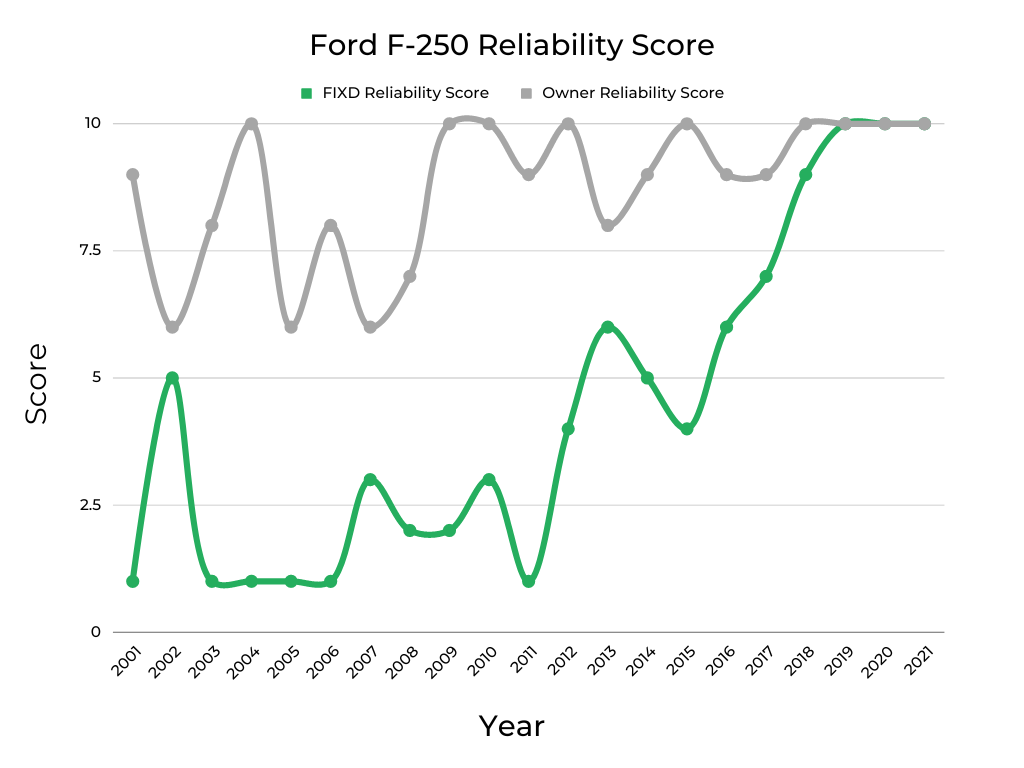
1st Generation (1999–2007): A Mixed Bag
The first generation offers a strong frame, leaf-spring durability, and the legendary 7.3L diesel. However, it also carries spark plug ejection risks on gas models and 6.0L diesel flaws. Rust is a significant concern requiring thorough frame inspection.
Best years include 2001–2002 (diesel only), 2005, and 2007. Worst years include 2003–2004 and 2006. Used pricing ranges from $12,300 to $15,000.
2nd Generation (2008–2010): The Most Reliable Overall
Despite 2008’s issues, this three-year run has fewer severe problems than other generations. Death Wobble is less common, and overall build quality improved significantly. The 2009–2010 models are the standout choices, while 2008 should be avoided.
Used pricing ranges from $14,700 (2008) to $17,400 (2010).
3rd Generation (2011–2016): Solid Mid-Pack Performance
This generation introduced the refined 6.7L diesel (improved by 2015) and a better interior. However, early transmission issues and some wobble problems persist. The 2015–2016 models are the best choices, while 2011 should be avoided.
Used pricing ranges from $19,400 (2011) to $26,300 (2016).
4th Generation (2017–2022): Risky Start, Better Later
The aluminum body reduced weight by 700 pounds, and the 10-speed automatic improved shifting. However, Death Wobble, driveshaft fractures, and transmission jerk plagued early models. The 2021–2022 models are the best choices, while 2017–2018 should be avoided.
Used pricing ranges from $34,300 (2017) to $51,500 (2022).
5th Generation (2023+): Too New to Judge
The current generation features a high-strength steel frame, 1,200 lb-ft of torque, and advanced towing aids. Early reports mention unintended acceleration and pulling to the left, but initial feedback is generally positive.
Pricing ranges from $60,200 (2023) to $69,400 (2025).
Essential Buying Tips and Maintenance Advice
Pre-Purchase Inspection Checklist
Before buying any used F-250, run the VIN through NHTSA.gov to check for open recalls. Confirm that driveshaft, fuel tank strap, and seatbelt fixes were completed. Take an aggressive test drive that includes hitting bumps at 55+ mph to check for wobble onset.
Scan for diagnostic trouble codes related to the EGR, turbo, or transmission. Inspect the undercarriage for rust (especially first-generation models), driveshaft damage, and steering component wear. Always verify the engine type and avoid the 6.0L (2003–2007) and 6.4L (2008–2010) unless fully rebuilt.
Maintenance for Maximum Longevity
Diesel owners should change oil every 5,000 miles and avoid short trips that cause DPF clogging. Gas engine owners with pre-2005 models should monitor spark plugs carefully and use thread sealant on replacements.
Inspect the track bar, ball joints, and steering damper every 20,000 miles on 2011+ models. Apply undercoating annually, especially in snowy climates where road salt accelerates frame rust.
Frequently Asked Questions About Ford F-250 Reliability
What is the most reliable Ford F-250 year overall?
The 2009–2010 F-250s are widely considered the most reliable generation due to their short production run and fewer systemic issues. For individual model years, the 2001–2002 with the 7.3L Power Stroke diesel and the 2015–2016 with the refined 6.7L diesel top the list.
Which Ford F-250 years have the Death Wobble problem?
Death Wobble most commonly affects the 2006, 2008, 2011, and 2017–2019 model years. The issue stems from suspension geometry flaws, weak frame mounting, and worn steering components. It remains a serious safety concern even after repairs.
Is the 6.0L Power Stroke diesel really that bad?
Yes. The 6.0L Power Stroke (2003–2007) is considered one of Ford’s worst diesel engines. It suffers from clogged oil coolers, blown head gaskets, EGR failures, and injector problems, often before 100,000 miles. Repair costs frequently exceed the truck’s value.
What should I check before buying a used F-250?
Verify all recalls were completed using the VIN on NHTSA.gov. Test drive aggressively over bumps at highway speeds to check for Death Wobble. Scan for diagnostic codes, inspect for rust and frame damage, and have a trusted mechanic perform a pre-purchase inspection.
Are 2021–2022 F-250s worth the higher price?
Yes, the 2021–2022 F-250s represent the best of the fourth generation. The 7.3L Godzilla gas engine and 10-speed automatic deliver smooth, reliable performance. These models have fewer complaints than earlier fourth-generation trucks and hold their value well.
Key Takeaways for Choosing the Right Ford F-250

The best and worst Ford F-250 years differ dramatically in reliability, safety, and long-term value. Target the 2001–2002 (7.3L diesel), 2005, 2007, 2009–2010, 2015–2016, or 2021–2022 models for proven dependability. Avoid the 2002 (gas), 2003–2004, 2006, 2008, 2011, and 2017–2018 model years due to critical safety defects and engine failures.
Your next step should be checking the VIN of any potential purchase on NHTSA.gov to verify recall completion, followed by an independent mechanical inspection before finalizing the deal.


