

You shift into reverse, the engine revs, but your 2007 Ford F-150 won’t move backward. No warning lights, no grinding, just silence. Forward gears work fine, but reverse is completely dead. This is a well-documented issue in 2007 F-150s, especially those with the 5.4L V8 and 4R75E automatic transmission. While frustrating, the problem is often traceable to one of two known internal failures: a broken sun shell or a failed reverse band.
Before tearing into the transmission, it is critical to rule out simple fixes like a loose shift linkage, blown fuse, or low fluid. But if those check out, prepare for internal repair. This guide walks you through step-by-step diagnostics, identifies the most common root causes, and outlines repair options so you can make an informed decision without wasting time or money.
Check Transmission Fluid First
Low or degraded fluid can mimic mechanical failure, so this is where you should start. Park on level ground, keep the engine running, and cycle the transmission through all gears before checking.
Inspect Level and Condition
Pull the dipstick and check the fluid level. It should be at the HOT mark. Fluid should be bright cherry-red and smell slightly oily, not burnt or acrid. If fluid is dark, smells burnt, or has metal flakes, internal wear is likely already occurring.
During a pan drop, inspect the magnet for metal shavings. Fine dust is normal, but chunks indicate serious damage. Look for clutch material in the sump, which indicates slipping components. Replace fluid and filter if dirty, but understand that clean fluid does not mean internal parts are not broken.
The 4R75E has no drain plug, so pan removal is required for a full fluid change.
Test the Shift Linkage
A stretched, loose, or broken shift cable can make the shifter show “R” while the transmission stays in neutral. This is a quick check that could save you hours of unnecessary work.
Confirm Mechanical Engagement
Raise the truck safely on jack stands. Have an assistant shift from Park to Reverse while you watch the manual lever on the transmission valve body. The lever must move fully into the reverse position.
If movement is incomplete or sloppy, adjust or replace the shift cable. The part number is 7L2Z-7332-A, and it costs $50 to $100 for the part or $100 to $150 with labor. This is often the cheapest and fastest fix, so do this before diving into transmission work.
Scan for Transmission Codes
Even without a check engine light, hidden transmission trouble codes may exist. You will need an OBD-II scanner that reads transmission-specific codes, such as Autel, Snap-On, or high-end aftermarket tools.
Common Diagnostic Codes
Look for codes like P0757, which indicates Shift Solenoid B Stuck On and controls reverse. P0762 points to Shift Solenoid C Performance, and P0734 shows Incorrect Gear Ratio in Reverse.
No code does not mean no problem. Mechanical failures like a broken sun shell will not trigger a DTC. If codes appear, replace faulty solenoids and check the wiring harness for damage. Consider a TCM software update, as some Ford TSBs improve shift timing and pressure control.
Check for Blown Fuses
A blown fuse can disable reverse function electronically. Open the power distribution box under the hood and inspect the TCM POWER fuse, which is usually 10A to 15A. Also check the TRANSMISSION and ECU/PCM fuses.
Replace any blown fuse. This is a $2 fix that takes 5 minutes. If the fuse blows again, suspect a short circuit in the solenoids, wiring, or TCM.
Perform the Engine Braking Test
This field test determines if the low/reverse band is functional, and it is one of the most reliable indicators without any tools.
Diagnose Low/Reverse Band Failure
Shift into manual 1st gear. Accelerate to 3,000 RPM at low speed, around 15 to 20 mph. Release the throttle suddenly and watch the tachometer while feeling for engine braking.
If the RPM drops slowly and the vehicle slows, the band is working. If the RPM drops fast with no deceleration, the band is broken or not engaging. One user from the Netherlands reported RPM dropping from 3,000 to 800 instantly with no braking, which is a clear sign of band failure.
Confirm Internal Failure
If fluid is good, linkage moves, fuses are intact, and no codes appear, the issue is almost certainly internal. Two components fail most often in the 4R75E transmission.
The first is the sun shell, which connects the reverse drum to the planetary gear set. The second is the reverse band or servo. Both require transmission removal for repair.
Diagnose Sun Shell Failure

The sun shell is the number one cause of no reverse in these trucks. In 2004 to 2008 5.4L F-150s, the weld joining the gear to the shell frequently fractures due to torque stress.
How It Fails
When the weld breaks, the gear spins freely on the shell. Reverse input is lost with no mechanical connection. Forward gears still work because they use different components.
Visual Signs After Disassembly
Look for cracked or separated weld at the base of the sun shell. You may find metal shavings in the pan or on the magnet. The lugs on the shell may be worn or gouged from dragging.
Part Information
The OEM replacement part number is 9L3Z-7A019-A, and it costs $100 to $120. Welding is not a fix. The metallurgy and alignment cannot be restored, so replacement is mandatory.
Diagnose Reverse Band Failure
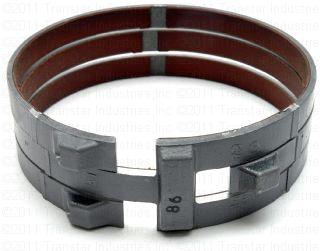
The reverse band clamps the reverse drum to hold it during reverse engagement. The servo applies hydraulic pressure to tighten it.
Failure Modes
The band can wear out or break. The servo seal may leak, preventing pressure buildup. The servo housing can crack. The retaining ring can dislodged, and this is a $2 part that kills reverse.
Symptoms
Reverse may slip, meaning the engine revs with no movement. It may work when cold but fail when hot, as fluid thinning worsens leaks. It may engage intermittently.
Repair requires full transmission disassembly. Replace the band, servo seals, and inspect the housing. Some owners opt for upgraded servo kits to prevent repeat failure.
Rule Out Other Causes
While less common, other components can cause reverse failure. The reverse clutch pack can have worn friction plates or blown seals, though this usually shows slippage rather than total loss. The servo retaining ring is a $2 part worth checking during disassembly. The valve body can have stuck valves or a cracked plate. The torque converter rarely causes reverse-only failure and usually affects drive performance too.
Transmission Removal Required
Accessing the sun shell or reverse band requires full transmission removal. This is not a job for the faint of heart.
Basic Steps
Disconnect the battery first. Drain the fluid and remove the pan. Remove the driveshafts and transfer case on 4×4 models. Disconnect the shift linkage, speed sensor, and wiring. Support the engine with a jack while the transmission supports the engine. Remove the crossmember and lower the transmission, then slide it back and separate it from the torque converter.
Pro Tips
Label every bolt, as many have different lengths and locations. Use a strap or tool to hold the torque converter in place. Work in a clean environment, because dirt kills rebuilt transmissions.
Repair Options Compared
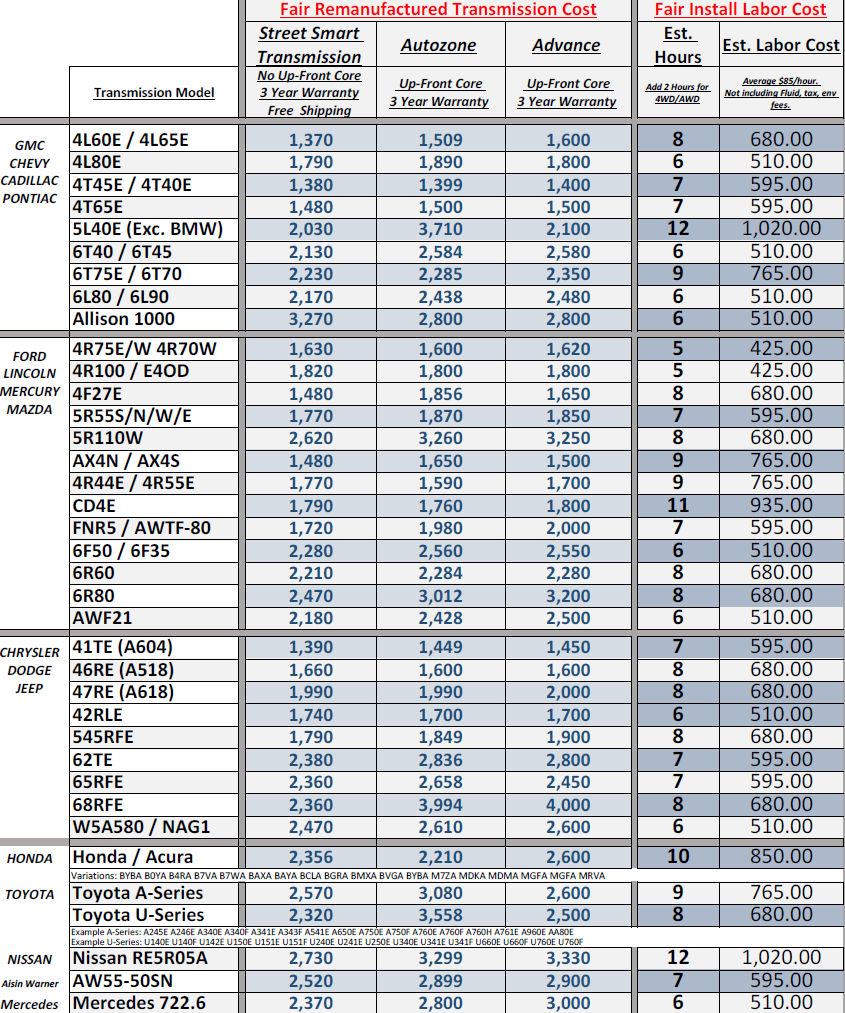
Choose your repair path based on your skill level, budget, and vehicle mileage.
DIY Reverse Band Replacement
This is best for mechanically inclined owners with a low-mileage transmission. Parts cost around $250, including the band, seals, and gaskets. Labor involves full transmission removal and partial disassembly. The risk is that one wrong step can cause failure.
DIY Sun Shell Replacement
The part 9L3Z-7A019-A costs $100 to $120. This requires the same labor as band repair. Do not attempt to weld the old shell. Only replace it.
Professional Rebuild
This is recommended for high-mileage vehicles over 177,000 miles or when fluid is contaminated. A full rebuild includes all clutches, bands, seals, valve body, and torque converter. Cost ranges from $1,800 to $3,500 with a 2 to 3 year warranty. The labor for a band-only fix is nearly the same as a full rebuild, which is why shops often recommend doing everything at once.
Remanufactured Transmission Swap
This option is faster and warranty-backed for 1 to 3 years. The risk is reman failure, as one user reported failure at 9 months. Cost ranges from $1,500 to $4,300. This is ideal if you lack tools or time.
Cost Breakdown
Here is what you can expect to pay for each repair type. Fuse replacement costs $2 to $10 and is the first thing to check. Linkage adjustment costs $50 to $150 and is a quick external fix. DIY band or sun shell replacement costs $200 to $300 for parts. Professional rebuild costs $1,800 to $3,500 and is the most common shop recommendation. Reman swap costs $1,500 to $4,300 with higher upfront cost. Diagnosis fee runs $100 to $150 and is worth it if you are unsure.
For high-mileage trucks, repair cost may exceed vehicle value.
Can You Drive Without Reverse
You can drive indefinitely in forward gears with no damage occurring. One owner drove three years without reverse by parking nose-in only.
The risks are being stranded in tight spots, not being able to back a trailer, and general inconvenience. It is not unsafe, just impractical.
Prevent Future Failures
Protect your transmission by changing fluid every 30,000 to 60,000 miles, especially if you tow. Use Mercon LV or Ford-specified fluid. Install an external transmission cooler. Avoid backing heavy loads uphill, which is a known stressor. Never shift into reverse while moving. Watch for clunks or delayed engagement as early warning signs.
Key Takeaways for Fixing Your 2007 F-150
The 2007 Ford F-150 reverse not working issue is mechanically predictable. Most cases stem from a broken sun shell or failed reverse band in the 4R75E transmission. Start with simple checks, including fluid level and condition, shift linkage movement, fuses, and diagnostic codes. The engine braking test is a reliable no-tools diagnostic that points to band failure.
If all basic checks pass, expect internal repair requiring transmission removal. The sun shell is the most common culprit, and replacement part 9L3Z-7A019-A is mandatory, not repairable. For DIYers, targeted repairs are possible. For most owners, a professional rebuild or reman swap offers the best long-term value. Avoid heavy reverse towing and maintain fluid religiously to extend transmission life.
Frequently Asked Questions About 2007 Ford F-150 Reverse Not Working
What causes a 2007 Ford F-150 to lose reverse gear?
The most common causes are a broken sun shell weld or failed reverse band in the 4R75E transmission. Both are internal mechanical failures that require transmission removal to repair.
Can I drive my 2007 F-150 if reverse is not working?
Yes, you can drive in forward gears indefinitely with no damage. However, you will need to park nose-in and avoid situations requiring reverse, such as backing trailers.
How much does it cost to fix reverse on a 2007 F-150?
Costs range from $2 for a fuse to $3,500 for a professional rebuild. DIY targeted repair costs $200 to $300 for parts. Full professional rebuild runs $1,800 to $3,500.
Is the sun shell problem common in 2007 F-150s?
Yes, the sun shell weld failure is a well-documented issue in 2004 to 2008 5.4L F-150s with the 4R75E transmission. The OEM replacement part number is 9L3Z-7A019-A.
Can I weld the sun shell instead of replacing it?
No. Welding cannot restore the proper metallurgy and alignment. Replacement with the OEM part is mandatory for a lasting fix.
How do I know if my reverse band is bad?
Perform the engine braking test. Shift to manual first, accelerate to 3,000 RPM, and release the throttle. If RPM drops fast with no engine braking, the reverse band is likely broken.


