You flip the switch and nothing happens. No low beams, no high beams, or maybe just one side goes dark. If your 2005 Ford F250 headlights are not working, you are not alone. This model year has well-documented electrical quirks that leave drivers stranded in the dark. The 2005 Ford F250 headlights not working issue affects countless trucks, often due to overlooked wiring faults, fuse misdiagnoses, or aftermarket interference.
This is rarely just a bulb problem. Many owners waste time and money replacing switches and fuses, only to find the real culprit hiding in the steering column or behind an aftermarket plow switch. The 2005 F250 lacks low-beam relays, meaning the multi-function switch handles full current load, making it a prime failure point. Add in tilt-steering stress and auxiliary lighting mods, and you have a perfect storm for headlight failure.
In this guide, you will learn how to diagnose, troubleshoot, and fix every common cause, from simple bulb checks to hidden wiring breaks. We will walk through fuse locations, test procedures, and real-world fixes proven on hundreds of trucks. By the end, you will know exactly where to look and how to get your lights back fast.
Check Both Bulbs First
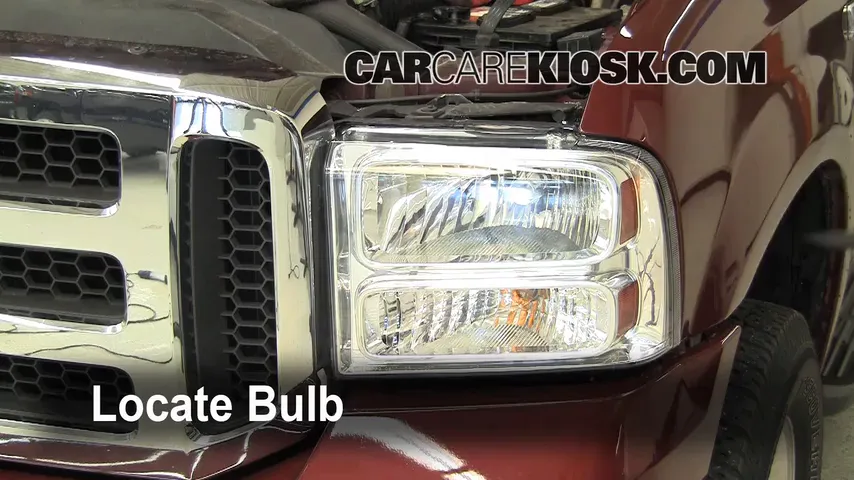
Before diving into complex wiring, confirm the simplest cause: burned-out bulbs. It is easy to assume both low beams failed at once, but one often goes unnoticed until the second fails.
Test for Simultaneous Burnout
Both low beams dying at once is rare, but it often seems that way. Many drivers do not realize one headlight is out, especially during daytime or well-lit driving. When the second fails, it feels sudden.
Pull both bulbs and inspect the filaments. Even if they look intact, use a digital voltmeter (DVM) to test continuity. Internal breaks can be invisible. Replace both bulbs with OEM-spec halogen units because aftermarket bulbs often have mismatched voltage ratings or thermal properties that shorten lifespan.
Pro Tip: Always replace headlight bulbs in pairs. A weak filament on the “good” side could fail soon.
Locate and Test Key Fuses
If bulbs are good, check the fuses. The 2005 F250 uses a split-fuse system where each low beam has its own fuse. Both must fail for total darkness, which is unlikely unless there is a short.
Under-Hood Fuse Box (Low Beams)
Open the hood and locate the power distribution box on the driver’s side. Check these:
- Fuse 9 (10A MINI): Left low beam
- Fuse 11 (10A MINI): Right low beam
These are small, blade-style fuses in the top left double row. Pull them and inspect for breaks. Use a fuse tester or DVM to confirm continuity. If either is blown, trace the circuit for shorts rather than just replacing it.
Warning: A blown fuse often means a deeper issue like damaged wiring or a faulty bulb base shorting.
Interior Fuse Panel (High Beams and DRLs)
Inside the cab, under the dash, check:
- Fuse 46 (10A): Left low beam (verify by build date)
- Fuse 47 (10A): Right low beam
- Fuse 7 (30A): High beams and flash-to-pass
- Fuse 30 (15A): High beam circuit
These protect secondary circuits. If high beams work but low beams do not, fuses 46 or 47 are suspect. If neither work, check fuse 7.
Inspect the Multi-Function Switch

The multi-function switch (MFS) on the steering column controls headlights, turn signals, and high beams. In the 2005 F250, it directly powers low beams with no relay. That means it handles full current, making it a common failure point.
Diagnose MFS Failure
If fuses and bulbs are good, the MFS is next. Here is how to test:
- Turn the key to ON.
- Set the MFS to low beams.
- Use a DVM to check for power at the headlight connector (remove bulb, probe socket).
- No power? The issue is upstream, likely the switch or its wiring.
Common Signs of MFS Failure:
– Lights flicker when adjusting the tilt wheel
– High beams work but not low beams
– Flash-to-pass works, but headlight switch does nothing
Replace the MFS if testing confirms no output. It is a common fix, but do not replace it until you rule out wiring issues.
Test for Tilt-Steering Wiring Damage

This is a critical and often missed cause. If your truck has a tilt steering wheel, the wiring harness to the MFS can fray from repeated adjustment.
Identify Tilt-Column Fault
Symptoms include:
- Headlights work until you tilt the wheel
- Lights go out after adjusting the steering column
- Intermittent operation when moving the wheel
To inspect:
- Turn the wheel to full up and down positions.
- Watch for flickering or loss of light.
- Remove the lower steering column cover.
- Examine the wiring bundle entering the MFS.
Look for broken strands, cracked insulation, or loose pins in the connector. Even slight damage can break the circuit.
Fix: Repair or replace the harness. Solder broken wires and seal with heat shrink. If the connector is damaged, replace the entire MFS assembly.
Rule Out Plow Switch Interference
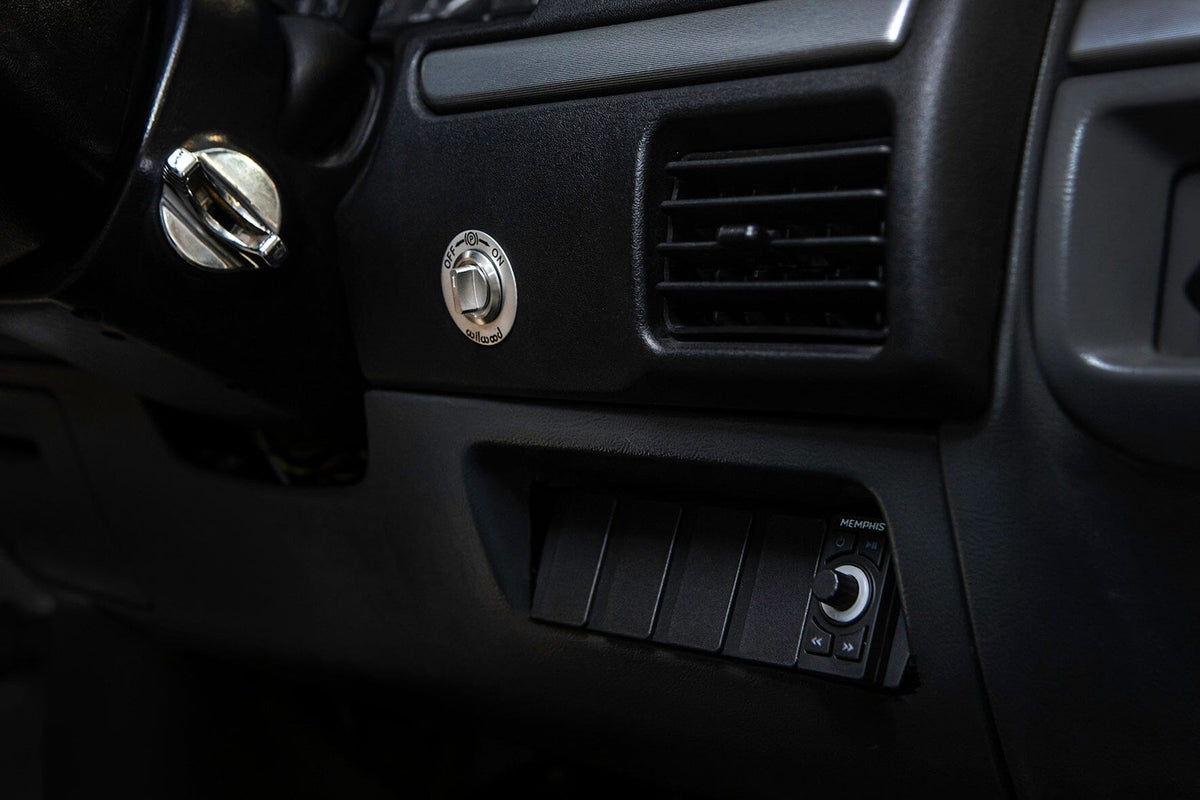
If your headlights work with the key off but go out when the key turns on, you likely have an active snow plow switch.
Find and Reset the Plow Switch
Many 2005 F250s were plow-equipped or retrofitted. These systems disable factory headlights when plow mode is active.
- Locate the plow switch, often on the dash, knee panel, or center console.
- It may look like a small toggle or button labeled “Plow” or “Aux.”
- Flip it to “Factory” or “Off.”
Even if you do not have a plow, the harness may still be installed. The switch can be accidentally bumped, triggering disable mode.
Test: With the key on, toggle the switch. If lights come on, you found the issue.
Check for Aftermarket Lighting Conflicts
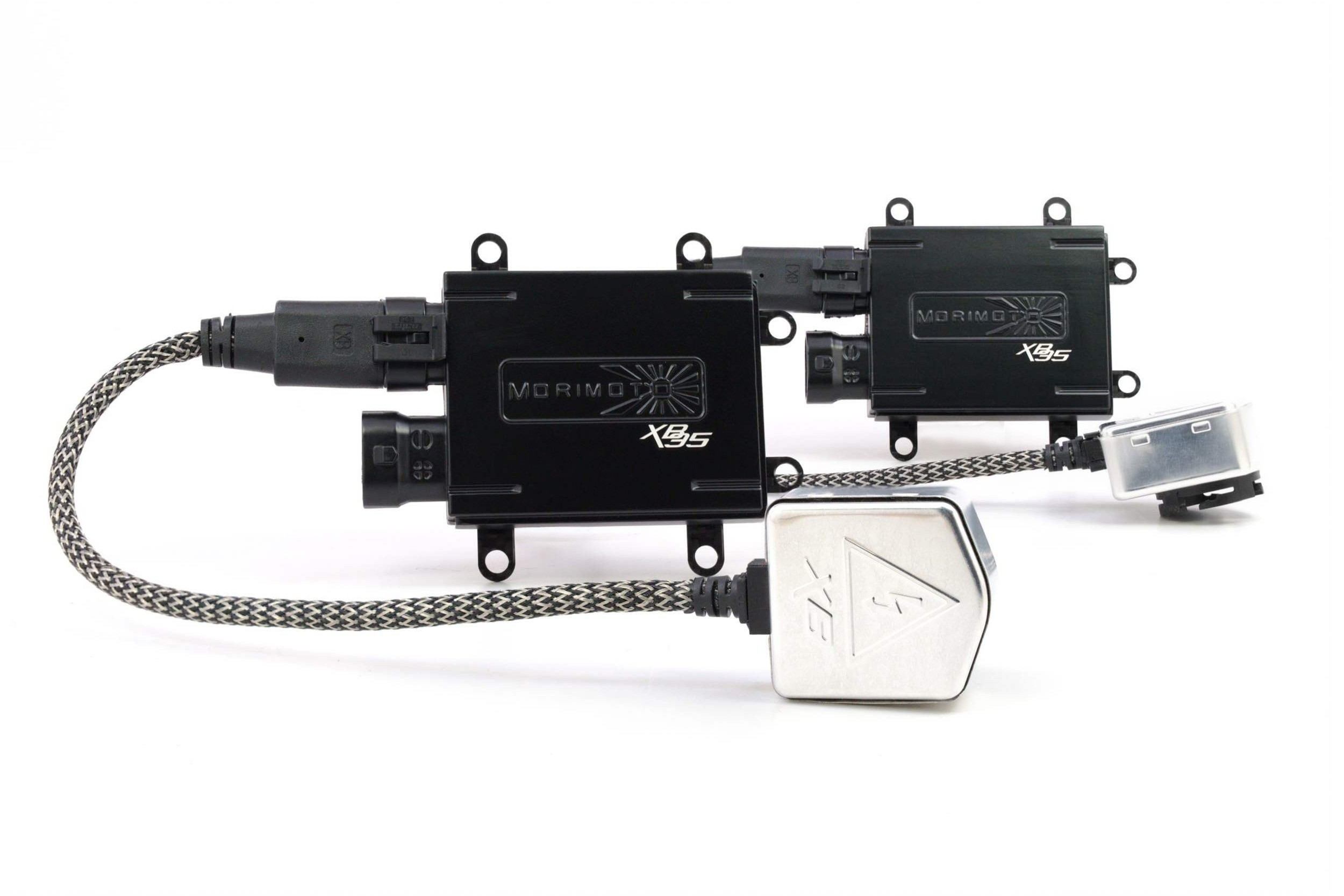
Aftermarket mods, especially HID kits or LED conversions, are a leading cause of headlight failure.
HID Conversion Risks
HID (High-Intensity Discharge) kits are not plug-and-play on the 2005 F250. Problems include:
- Electrical spikes that damage the MFS
- Incompatible ballasts causing flickering or no-start
- Overheating that loosens headlight connectors
If you have HIDs:
- Remove them.
- Reinstall stock halogen bulbs.
- Test the headlights.
If stock bulbs work, the HID system is the culprit. Replace ballasts or revert to halogens.
Safety Note: Factory housings are not designed for HID beams, causing glare and poor focus.
Diagnose High Beam Failures Separately
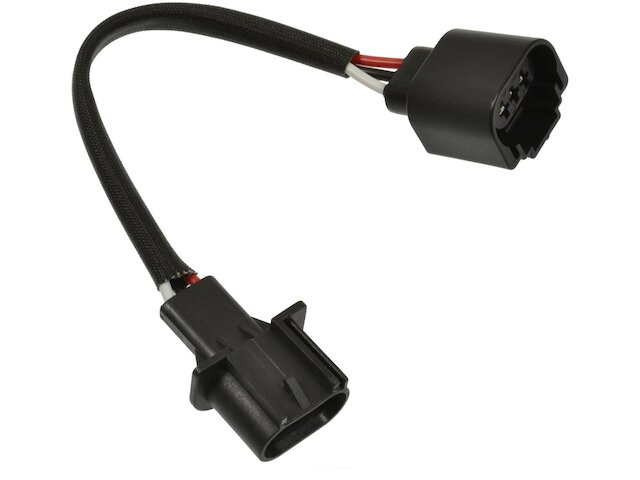
High beams failing while the dash indicator lights up points to a different circuit.
Test High Beam Wiring
- Check fuse 7 (30A) and fuse 30 (15A).
- Inspect wiring behind the headlight assembly and wiggle the harness while lights are on.
- If flickering occurs, look for loose pins or corrosion in the connector.
HID installations often fail here too, so check ballast connections and ground wires.
Pro Tip: Use dielectric grease on connectors to prevent corrosion.
Inspect Grounds and Corrosion
A bad ground can kill any light circuit. The 2005 F250 is prone to ground issues, especially in wet climates.
Locate Key Ground Points
- Headlight bucket grounds: Near each headlight assembly
- Main chassis ground: On the firewall or inner fender
Check for:
- Corrosion (white or green powder)
- Loose bolts
- Broken straps
Clean with a wire brush, tighten, and apply anti-corrosion spray.
Test: Use a DVM to check continuity between the ground point and battery negative.
Look for DRL and Relay Issues
Daytime Running Lights (DRLs) can interfere with normal headlight operation.
Check DRL Relays
In the under-hood box:
- Relay 205, 206, 301: DRL control
- Fuse 13 (15A): DRL power
If DRLs work but low beams do not, or vice versa, test these relays. Swap with a known-good relay (like horn or fan) to test.
Note: While 2005 models lack low-beam relays, DRL module issues can still disrupt voltage flow.
Prevent Future Failures
Once fixed, keep your lights working with these steps:
Maintain Bulb and Connector Health
- Replace bulbs every 2 to 3 years, even if not burned out.
- Clean connectors with electrical contact cleaner.
- Apply dielectric grease to prevent moisture and corrosion.
Avoid Aftermarket Overloads
- Stick to OEM-spec halogen bulbs.
- If upgrading, use DOT-compliant LED bulbs designed for reflector housings.
- Never install HID kits without a full housing retrofit.
Secure the Tilt-Steering Harness
- Avoid frequent steering wheel adjustments.
- Secure the MFS wiring with zip ties to reduce flex.
- Inspect annually for wear.
Final Fix Checklist
Use this step-by-step checklist to ensure no cause is missed:
- Test both headlight bulbs with a DVM
- Check under-hood fuses 9 and 11 (low beams)
- Inspect interior fuses 46, 47, 7, 30
- Wiggle tilt steering wheel and watch for flickering
- Inspect MFS wiring harness for breaks
- Locate and reset plow switch (if equipped)
- Remove aftermarket lights and test with stock bulbs
- Check headlight and chassis grounds for corrosion
- Test DRL relays and fuse 13
- Replace MFS only if all else checks out
Frequently Asked Questions About 2005 Ford F250 Headlight Problems
Why do both my low beams fail at the same time on a 2005 F250?
Both low beams rarely fail simultaneously. More often, one bulb burned out earlier without notice, and the second failure makes it seem like both went at once. Always test both bulbs with a digital voltmeter before assuming an electrical fault.
Where are the headlight fuses located on a 2005 Ford F250?
The primary low-beam fuses are in the under-hood power distribution box: Fuse 9 (left) and Fuse 11 (right), both 10A MINI fuses. High-beam and secondary fuses are in the interior passenger compartment panel, including fuses 7, 30, 46, and 47.
Can a tilt steering wheel cause headlights to stop working?
Yes. The wiring harness leading to the multi-function switch can fray from repeated tilt adjustments. If your headlights flicker or fail after moving the steering wheel, inspect the MFS wiring bundle for broken strands or loose pins.
What does it mean if headlights work with the key off but not on?
This usually indicates an active snow plow switch or aftermarket auxiliary light harness. These systems disable factory headlights when the key is on to route power to plow lights. Locate the plow switch and set it to “Factory” or “Off.”
Are HID conversion kits safe for a 2005 F250?
HID kits are not recommended for the 2005 F250. Factory housings are designed for halogen filaments, and HID ballasts can cause voltage spikes, loose connections, and MFS damage. Reverting to stock halogen bulbs is the safest fix.
How do I know if my multi-function switch is bad?
Common signs include low beams not working while high beams and flash-to-pass function normally, flickering when adjusting the tilt wheel, or no power at the headlight connector when tested with a voltmeter. Always rule out wiring and fuses first.
Key Takeaways for Fixing Your 2005 Ford F250 Headlights
The 2005 Ford F250 headlights not working issue is rarely about one part. It is about knowing where to look. The tilt-steering wiring fault and plow switch interference are the most commonly missed fixes, and both can mimic serious electrical failures.
Start with the simplest checks: bulbs and fuses. Move to the multi-function switch and tilt-column wiring before replacing expensive parts. If your truck has aftermarket lighting, revert to stock to isolate the problem. Ground connections and DRL relays round out the common culprits.
Keep bulbs, fuses, and dielectric grease on hand. This truck rewards proactive maintenance, and a 30-minute inspection now can save you from being stranded later. Follow the checklist, work systematically, and your lights will be back before you know it.