You press the cooled seat button, feel a faint click, but notice no breeze, no chill, just heat. If your F-150’s ventilated seats have stopped working, you are not alone. Thousands of Ford owners across model years 2013 through 2023 report the same frustrating issue: cooled seats that suddenly stop blowing air or gradually lose effectiveness over time. The problem is not just about comfort, it is about a complex system that relies on a precise balance of airflow, thermoelectric cooling technology, and sensitive electronics. When any single component in this chain fails, the entire system shuts down, leaving you with seats that look the same but perform nothing like they did when new.
This guide walks you through every diagnostic step and repair option for fixing your F-150 cooled seats not working, from the simplest fixes like checking fuse #28 to more involved repairs like replacing the Seat Climate Module Electronics. You will learn exactly what to test, what to look for, and which repairs you can tackle yourself to avoid costly dealer visits.
Start Here: Check Fuse #28 First
Before you tear into seats or spend money on parts, check the most common and easiest fix: the blown fuse. This takes under 10 minutes and could save you from unnecessary repairs.
Locate the Engine Bay Fuse Box
Open your F-150 hood and look near the battery for the black fuse box. Refer to the lid diagram or your owner’s manual to find fuse #28. This is a 30-amp fuse that provides power to the Seat Climate Module Electronics (SCME) controlling your cooled seats.
Test the Fuse for Continuity
Pull the fuse and inspect it visually. Look for a broken metal filament inside or dark discoloration. Then use a multimeter set to ohms (Ω) to test for continuity by touching both ends of the fuse. Any reading above 0 means the fuse is bad and needs replacement.
Replace and Verify
Install a new 30-amp fuse (blue in color). Turn your ignition to ON, press the cooled seat button, and listen for the blowers to kick in. If you hear airflow now, the fix was that simple. However, a blown fuse often indicates a deeper short, so do not skip inspecting the wiring if this was not your only issue.
Reset the Seat Climate Module
The SCME sometimes enters protective mode after detecting a fault like overheating or a voltage spike, even if the original problem has resolved. A reset often clears this lockout.
Disconnect the Battery
Turn off your truck, remove the key, and disconnect the negative battery terminal. Wait 15 to 30 minutes to fully drain residual power from the SCME. This clears any temporary faults or software glitches that may be disabling your seats.
Reconnect and Test
Reattach the negative cable, start your engine, and press the cooled seat button. Try both high and low settings. If airflow returns, the module had simply locked up. This reset works especially well after electrical work, battery replacements, or power fluctuations.
Test the Blower Motors Directly
If you have no airflow at all, the blowers may be dead. Testing them directly confirms whether they are the problem before you buy replacement parts.
Access the Under-Seat Blowers
Slide your seat forward and remove the plastic under-seat cover (usually held by clips or screws). Locate the two blower motors per seat: one under the seat cushion and one under the backrest. They are small, black units with wire connectors.
Apply 12V Power Directly
Unplug the blower connector. Take a 12V source (a spare battery works perfectly) and connect positive to the red wire and negative to the black wire using alligator clips. If the motor spins and you hear airflow, the blower is good. If it is silent, the blower is dead and needs replacement.
Warning: Only apply 12V briefly, about 5 seconds maximum, to avoid overheating the motor.
Replace the Blower/TED Assembly
Ford does not sell blowers separately. You must replace the combined blower and Thermoelectric Device (TED) assembly, which costs $100 to $150 per seat from suppliers like TascaParts or RockAuto. Installation takes 15 to 30 minutes with no programming required.
Inspect for Burnt or Melted Connectors

One of the top causes of F-150 cooled seat failure is melted or burnt pins in the electrical connectors, especially under the passenger seat where the SCME lives.
Find the SCME Connector
The SCME module mounts under the passenger front seat to the seat frame. Unplug the large electrical connector and inspect every single pin carefully.
Look for Damage Signs
Check each terminal for brown or black discoloration, melted plastic around the pins, or bent and loose terminals. These are all signs of high-resistance connections that overheat under load. Even if your fuse is good, power will not reach the blowers through damaged pins.
Test Pin Tension
Use a small safety pin to gently probe each terminal. It should grip the pin with slight drag. If it slides in easily, that connection is loose and needs repair.
Repair Burnt Pins with a Pigtail Kit
Replacing damaged terminals is far cheaper than buying a new SCME, and it restores both heated and cooled seat functions.
Gather Your Tools
You will need a pigtail connector kit (about $13 on Amazon), a small flathead screwdriver, wire cutters, heat-shrink tubing, and butt splice connectors. Have these ready before you start.
Replace Damaged Terminals
First, disconnect the battery. Unplug the SCME connector and use the screwdriver to lift the terminal lock tab and pull each bad pin out. Cut off the damaged section of wire, then crimp the pigtail wire to your original harness using a butt splice. Seal everything with heat-shrink tubing, then insert the new terminal into the connector until it clicks. Reconnect and test.
Expert Tip: Apply XG-12 conductive electrical grease to new pins before plugging in. This prevents future corrosion and improves conductivity.
Diagnose TED Failure and Air Duct Problems
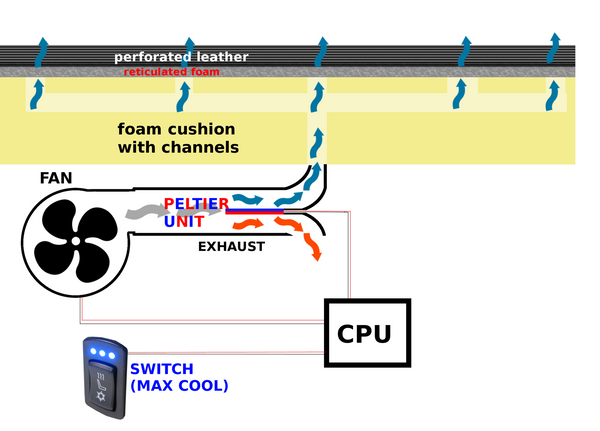
The Thermoelectric Device (TED) cools your seat using the Peltier effect, but only if air is flowing properly. When blowers fail or ducts crack, the TED overheats and burns out.
Understand TED Failure Mode
TEDs do not fail on their own. They overheat when blowers fail or ducts crack, then burn out from lack of cooling. If your blower runs but the seat does not cool, the TED is likely dead.
Inspect Air Ducting
Remove the seat if needed and look for the plastic air channels connecting the blower to the TED. If these are cracked or disconnected, air escapes instead of cooling the TED, causing immediate overheating and failure.
User Confession: “Turns out the duct from the blower to the TED cracked and the TED overheated due to lack of airflow.”
Replace the Assembly
No individual ducts or TEDs are sold separately. You must replace the entire blower/TED unit, which is the same part needed for blower failure.
Scan for Diagnostic Trouble Codes
If lights, sounds, and symptoms give you no clear direction, a scan tool can uncover hidden faults that point straight to the problem.
Use FORScan for Advanced Diagnostics
Download FORScan from forscan.org and use a compatible OBD2 adapter. This tool reads codes from the SCME module, which most generic scanners miss entirely.
Retrieve Common DTCs
Look for these specific codes:
- B2578 indicates Seat Climate Control Circuit Malfunction
- B2591 points to Blower Motor Circuit Failure
- B2565 confirms TED Overtemperature
- U0100 means Lost Communication with SCME
Even if no codes appear, intermittent faults may not trigger them. However, B2565 specifically confirms TED overheating caused by airflow problems.
Run Actuator Tests
FORScan lets you command the blowers on and off and test TEDs directly. If the system does not respond, you have confirmed a power or module issue.
Check Wiring for Chafing Damage
Years of seat movement can rub through wire insulation, causing shorts that disable your cooled seats.
Trace the Harness at Seat Tracks
Focus on pivot points where the seat slides forward and backward. Look for exposed copper, melted spots, or spliced wires that indicate past damage.
Repair with OEM Kit or DIY
Ford issued a service bulletin for 2013-2015 models with harness chafing. Use OEM repair kit 6L3Z-14S413-A, or cut out the damaged section, solder new wires, and seal with heat-shrink tubing protected by loom or conduit.
Visual Cue: Frayed wires near seat rails are a red flag that should not be ignored.
Clean or Replace the Air Filter
A clogged filter starves the blower motor, reducing airflow and causing the TED to overheat and fail.
Locate the Filter Under the Seat
Find the foam or mesh filter near the blower motor. It is small, rectangular, and often covered in dust after a few years of use.
Clean or Replace
Use compressed air to blow out debris. For heavy grime, wash with mild soap and water and let dry completely before reinstalling. Replace the filter every 2 to 3 years.
Prevention Tip: Dirty filters are silent killers. Clean them annually during routine checks to prevent cascading failures.
Replace the SCME Module as a Last Resort
When all else fails and nothing else fixes your F-150 cooled seats not working, the SCME itself may be dead.
Confirm Module Failure
If your fuse is good, connectors are clean, blowers test fine, and there is no response from seat controls, the SCME is likely faulty.
Buy and Install the New Module
Part numbers vary by year (such as 14A404-AB). Costs range from $200 to $500. Installation is straightforward: unplug the old module and plug in the new one. However, VIN programming may be required.
Program with FORScan or Your Dealer
Use FORScan to register the new module to your VIN, or visit a dealer for programming. Without this step, your seats will not function.
Warranty Check: Some owners with 8-year or 150,000-mile Extended Service Plans get this covered. Check your coverage before paying out of pocket.
Prevent Future Cooled Seat Failures
Protect your investment and avoid repeat repairs with these maintenance steps.
Apply Conductive Grease Annually
During inspections, unplug connectors and apply XG-12 grease to pins. This prevents corrosion and ensures solid electrical contact for years to come.
Avoid Long High-Heat Sessions
Running heated seats for hours without cabin airflow traps heat and stresses the TEDs. Use your cabin vents to balance temperature and extend component life.
Inspect Under-Seat Areas Twice a Year
Check for loose wires, dust buildup, burnt smells, and filter condition. Early detection saves hundreds of dollars in repairs.
Frequently Asked Questions About F-150 Cooled Seats Not Working
Why do my F-150 cooled seats suddenly stop working?
The most common causes are a blown fuse #28, failed blower motors, burnt electrical connectors, or a faulty SCME module. The system relies on multiple components working together, so any single failure can disable cooling.
Can I fix my F-150 cooled seats myself?
Yes. Most repairs are straightforward for DIYers, including fuse replacement, blower testing, connector repair with pigtail kits, and filter cleaning. Only module programming may require dealer assistance.
How much does it cost to repair F-150 cooled seats?
Costs range from $5 for a fuse to $500 for SCME replacement. The most common repair (connector/pigtail fix) costs about $13 in parts and takes under an hour.
Why does only one seat fail while the other works?
This indicates a localized fault rather than a system-wide problem. Check the blower, TED, and wiring specific to the failed side. Connector issues often affect just one seat.
Do F-150 cooled seats have a reset button?
No physical reset button exists, but disconnecting the negative battery terminal for 15 to 30 minutes resets the SCME software and clears fault codes.
Are F-150 cooled seats worth repairing?
Absolutely. Climate-controlled seats are a premium feature that significantly impacts comfort and truck value. Most repairs cost less than $150 and restore full functionality.
Key Takeaways for Fixing Your F-150 Cooled Seats
F-150 cooled seats not working is usually not a mysterious problem. It follows a predictable chain reaction: blower fails, TED overheats, connector burns, system shuts down. By starting with the simple fix (fuse #28), testing blowers directly with 12V, and inspecting connectors for damage, you can resolve most issues without a dealer visit. The key is acting fast because the longer you wait, the more components fail in sequence. With about $13 in parts and an hour of your time, you can restore full cooling and keep your F-150’s luxury features working like new. Start with the fuse, work through the diagnostic steps, and you will likely have your seats blowing cold air again before you need to order expensive parts.