
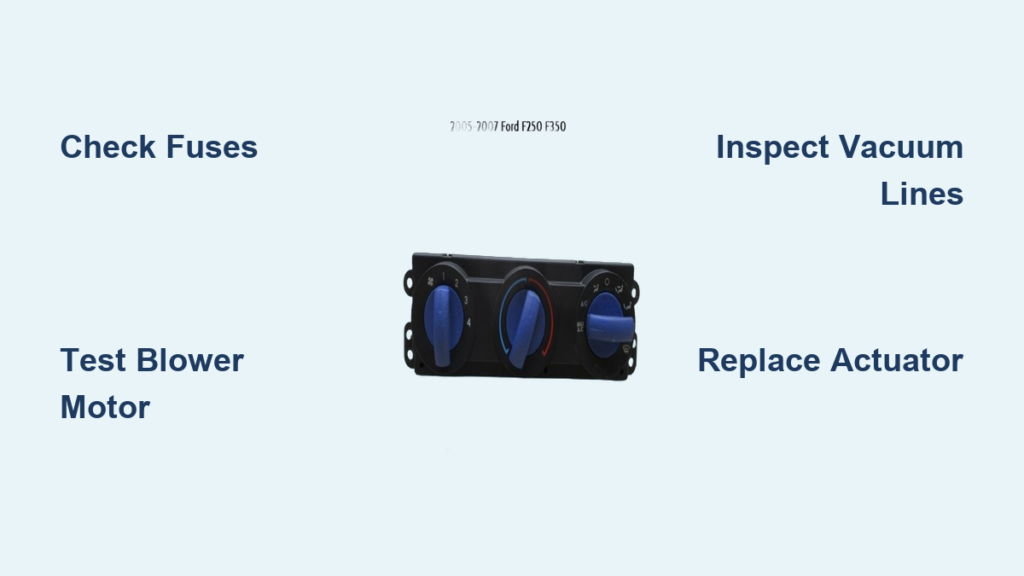
Is your Ford F350 climate control not working while you sit in a freezing or sweltering cabin? Many owners of 2005 Super Duty trucks report sudden heat loss or unresponsive panels. This issue often stems from electrical faults, vacuum leaks, or failed actuators within the HVAC system.
You will learn how to diagnose fuse failures, test blower motors, and replace broken blend door actuators. This guide provides specific steps to restore your heating and cooling without an expensive shop visit.
Verify Fuse Integrity and Power Supply
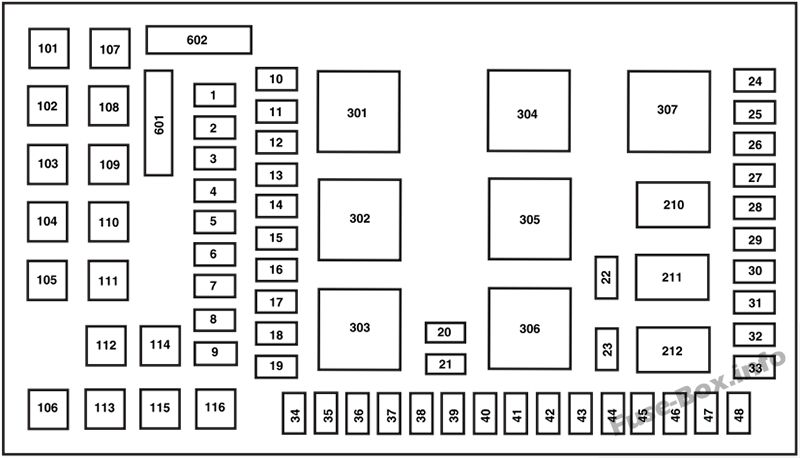
Always start your diagnosis by checking the power supply to the climate control system. A single blown fuse can disable the entire HVAC module, making it appear broken when it is not.
Locate and Inspect HVAC Fuses
Open the driver-side fuse box located on the lower left of your dashboard. Consult the diagram on the lid to find fuses labeled HVAC, Blower Motor, or Climate Control Module. Remove each suspect fuse and inspect the metal filament inside for breaks.
Pro Tip: Visual inspection is not always enough. Use a test light to confirm electricity flows through the fuse even if it looks intact.
Test Voltage at the Control Connector
Disconnect the climate control head unit from the center dash panel. Use a multimeter to check for 12 volts at the primary power pin, usually a red or light green wire. If you find no power here, trace the circuit back to the relay or check for broken wiring harnesses.
Troubleshoot Control Panel Display Issues
A blank or flickering display often indicates a problem with the control module itself or its physical connections. This is common in older Lariat models with premium trim features.
Diagnose a Blank or Dim Screen
A dead screen suggests a failed control module or a bad ground connection. Internal circuit board failure is also possible in units exposed to extreme heat. Try swapping your unit with a known-good part from a salvage yard to test functionality.
Fix Unresponsive Buttons
If the fan runs but buttons do nothing, power is reaching the blower but not the logic board. Check the connector at the back of the control head for corrosion or bent pins. Clean the contacts with electrical spray and reseat the connector firmly.
Test Blower Motor Functionality

The blower motor moves air through the vents, and its failure mimics a total climate control breakdown. You must determine if the motor receives power and responds to speed changes.
Address a Motor That Won’t Run
Check the blower motor resistor located near the HVAC case under the dash. Listen closely for a humming sound, which indicates power is present but the motor is mechanically jammed. Apply 12 volts directly to the motor terminals to confirm if it spins.
Resolve High-Speed Only Operation
If the fan only works on the highest setting, the blower motor resistor has likely failed. This is a classic wear item on 2005 F-350s that controls lower speed settings. Replace the resistor pack to restore variable fan speeds.
Inspect Vacuum Lines and Actuators
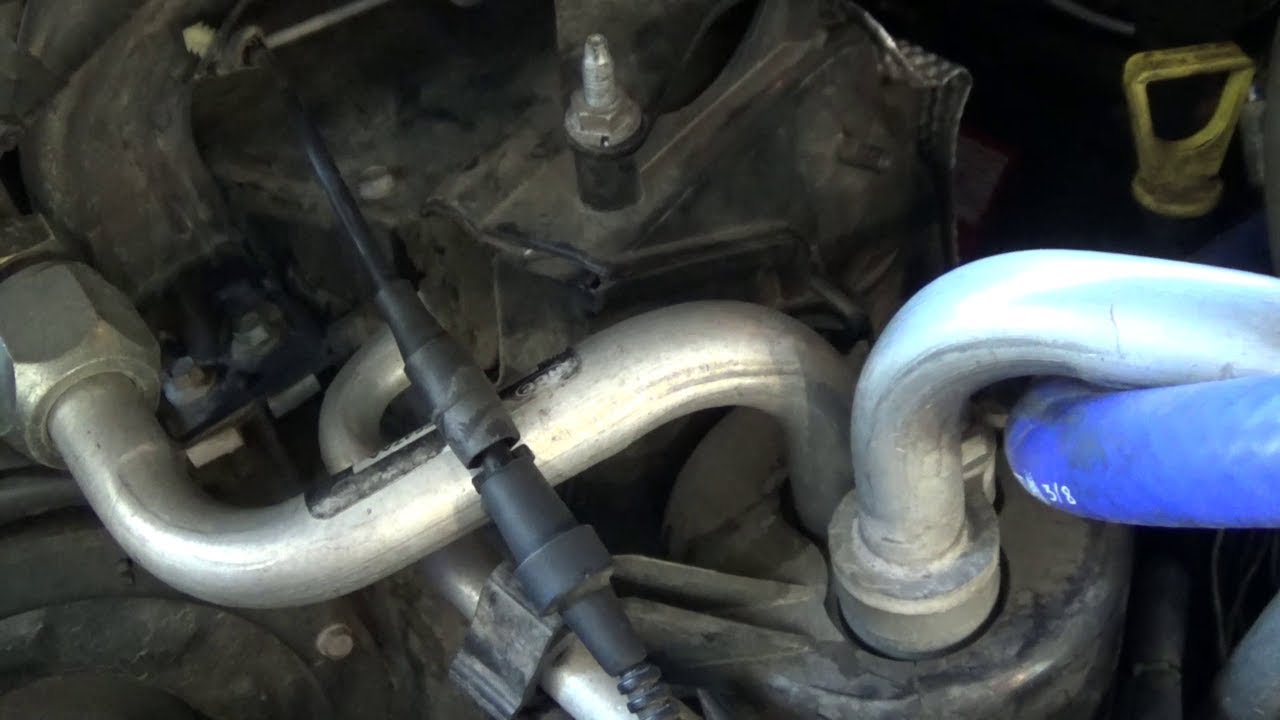
Gas-powered F-350 engines often use vacuum pressure to control air direction and temperature doors. A leak in this system causes immediate loss of climate control function.
Trace Vacuum Hoses Under the Hood
Follow the vacuum line from the intake manifold to the black reservoir canister near the firewall. Continue tracing the line to the vacuum solenoid located on the passenger side of the engine bay. Ensure every segment of the hose is secure.
Identify Leaks and Cracks
Inspect every inch of the vacuum line, especially near hot engine components that cause cracking. Watch for symptoms like air defaulting only to defrost or a hissing sound under the dash. Replace any cracked hoses with new 5/32-inch vacuum line available at auto parts stores.
Diagnose Blend Door Actuator Failure

A failed blend door actuator is the number one cause of temperature control issues in 2005 Ford F350 trucks. This component physically moves the door that mixes hot and cold air.
Recognize Actuator Failure Signs
Listen for a repetitive clicking noise from behind the dash when adjusting the temperature. You may also notice the air stays hot even when set to cold or that the system responds very slowly. These signs point directly to a stripped gear or dead motor.
Remove and Test the Component
- Locate the actuator on the passenger side behind the glove box.
- Remove the three screws holding it to the HVAC case.
- Disconnect the electrical connector from the unit.
- Apply 12 volts to test rotation in both directions.
Replace the unit if the gears are stripped or the motor fails to turn. OEM parts generally last longer than cheap aftermarket alternatives.
Check Mode Door and Airflow Direction
If air only blows from the defrost vents or the floor, the mode door actuator may be stuck or broken. This component directs airflow to your chosen location.
Test Mode Actuator Movement
Turn the ignition on and switch between floor, vent, and defrost modes. Listen carefully for the actuator moving behind the dashboard. If you hear no sound, check for power and ground at the connector.
Manually Operate the Door
Remove the actuator and use a small screwdriver to turn the shaft manually. The door should move smoothly without binding. If it sticks, debris may be blocking the door or the door itself could be broken.
Scan for Stored HVAC Diagnostic Codes
Some 2005 F-350 models store specific trouble codes that can pinpoint the exact failure. Using the built-in diagnostic mode saves time on guessing.
Execute the Self-Test Sequence
- Turn the ignition to the ON position without starting the engine.
- Press the OFF and FLOOR buttons simultaneously.
- Hold both buttons for two seconds then release them.
- Watch the climate panel for flashing LED patterns.
A pattern of two flashes, a pause, and three flashes indicates Code 23, which signals a blend door actuator fault. Consult your Ford service manual for a full list of code definitions.
Inspect Wiring and Ground Connections
Poor electrical grounding causes intermittent failures or total loss of climate control function. Corrosion or loose bolts often disrupt the signal path.
Locate Critical Ground Points
Check ground point G103 on the left kick panel, which serves many dash modules. Inspect G104 on the right kick panel and G105 in the center console area. These points anchor the electrical system for your HVAC controls.
Clean and Secure Grounds
Remove the ground bolt and clean the metal contact surface with sandpaper. Reattach the bolt tightly to ensure a solid connection. Loose grounds often mimic complex electrical failures and are easy to fix.
Evaluate the Climate Control Head Unit
If all other components test good, the climate control head unit itself may be defective. This is the main interface you use to set temperatures and fan speeds.
Perform a Swap Test
Pull a replacement unit from a salvage yard or online source matching your model year. Install it without extensive disassembly to see if the system begins working. This confirms if your original unit is the culprit.
Consider Repair Options
Some units can be opened to clean corrosion off the internal circuit board. Handle the internal chips with extreme care as static electricity can cause further damage.
Prevent Future Climate Control Failures
Regular maintenance keeps your Ford F350 climate control not working scenarios to a minimum. Proactive checks extend the life of your HVAC system.
Maintain the Vacuum System
Inspect vacuum hoses every six months for brittleness or cracks. Replace standard rubber lines with silicone vacuum line for increased durability against engine heat.
Keep Vents and Filters Clean
Remove and clean the cabin air filter if your truck is equipped with one. Clearing debris prevents strain on the blower motor and ensures actuators do not jam.
Protect Against Moisture Damage
Fix windshield leaks immediately to prevent water from damaging actuators and wiring inside the dash. Apply dielectric grease to electrical connectors to repel moisture and corrosion.
Frequently Asked Questions About Ford F350 Climate Control
Why does my Ford F350 only blow air on defrost?
This issue usually indicates a vacuum leak in the engine bay or under the dash. The system defaults to defrost when it loses the vacuum pressure needed to move the mode door.
How do I know if my blend door actuator is bad?
Listen for a clicking noise behind the dash when changing temperature settings. If the air temperature does not change despite button adjustments, the actuator is likely failed.
Can I drive my F350 with a broken climate control system?
Yes, the vehicle is safe to drive mechanically, but extreme temperatures can affect driver comfort and safety. Fixing the issue restores a safe driving environment.
Where is the blower motor resistor located?
The resistor is typically found near the HVAC case under the passenger side dashboard. It is a small component with an electrical connector and is relatively easy to access.
What causes the climate control screen to go blank?
A blank screen often results from a blown fuse, a bad ground connection, or internal circuit board failure. Testing power at the connector helps isolate the specific cause.
Key Takeaways for Fixing Your Ford F350 Climate Control
Restoring your heating and cooling system often starts with simple checks like fuses and vacuum lines. Most failures in 2005 models involve the blend door actuator or the blower motor resistor.
You can resolve many of these issues with basic tools and a systematic approach. Start your diagnosis today to ensure a comfortable ride in your Ford F350.


