

If your F150 AC blower not working, you’re dealing with one of the most common frustrations for Ford truck owners. This issue affects F-150s from 2000 to 2021, with symptoms ranging from complete airflow loss to losing only the lower fan speeds. The culprit is rarely the blower motor itself. More often, a failed relay, burned-out resistor, or faulty control module is to blame. This guide walks you through fast diagnostics and proven repairs that save time and money.
Decode Your Symptom First
Before grabbing tools, identify your exact failure pattern. The fix depends entirely on what your blower is or is not doing.
No Air at Any Speed
If the fan is completely dead with no sound or airflow on any setting, the issue lies in power delivery. Common culprits include a blown F51 fuse under the hood, a failed blower relay in position 3, or broken wiring. A quick test involves turning the ignition to RUN, setting the fan to high, and listening near the engine bay fuse box. A faint click means the relay is activating. No click points to relay or control circuit failure.
Only High Speed Works
If fan speed 4 works but speeds 1 through 3 do not, this indicates a classic blower motor resistor failure. This component controls lower speeds by regulating ground resistance. When it burns out, only high speed remains functional because it bypasses the resistor entirely. This applies to 2003 through 2011 models with manual climate control. The fix takes about 20 minutes and costs roughly $25 for an aftermarket part.
Blower Stops After Idling
Specifically reported on 2020 through 2021 PowerBoost F-150s, the blower shuts off after 5 to 10 minutes of idling such as in a drive-thru. Restarting the engine temporarily restores function. Dealers confirm this is a known issue. The fix requires replacing both the blower motor and control module, and it is warranty-covered.
Check Fuses Before Anything Else
Never skip fuse inspection. It is the fastest way to rule out simple causes and should be your first diagnostic step.
Locate Key Fuses
Several fuses relate to blower operation across different model years. The F51 fuse sits under the hood in the Battery Junction Box and is a 40-amp fuse that powers the blower motor on 2008 and newer models. The F45 fuse is located under the dash in the Central Junction Box and is a 5-amp fuse for the HVAC control circuit. Earlier 2000 through 2004 models use F105 for blower power and F22 for mode switch power.
Test Correctly
Do not rely on visual inspection alone. A fuse can look perfectly fine but be internally broken. Use a multimeter or test light with the key in RUN or ACC. Probe both sides of the fuse. You should read 12V on both terminals. If F51 has no power, check the blower relay output. If F45 is dead, the HVAC control module may not be signaling properly.
Test the Blower Relay (2008+ Models)

The blower relay in position 3 of the underhood fuse box is a frequent failure point and one of the easiest components to test.
Swap Test Method
Locate the Battery Junction Box near the battery and find relay position 3, which controls the blower motor. Swap it with the identical relay in position 4, which controls the heated rear window. Turn the ignition to RUN and set the fan to high. If the blower works now, the original relay was faulty. If the blower is still dead, the problem lies elsewhere such as the fuse, wiring, or motor. Replace with an OEM Ford relay priced at approximately $18. Aftermarket relays often fail prematurely.
Verify Power at the Motor
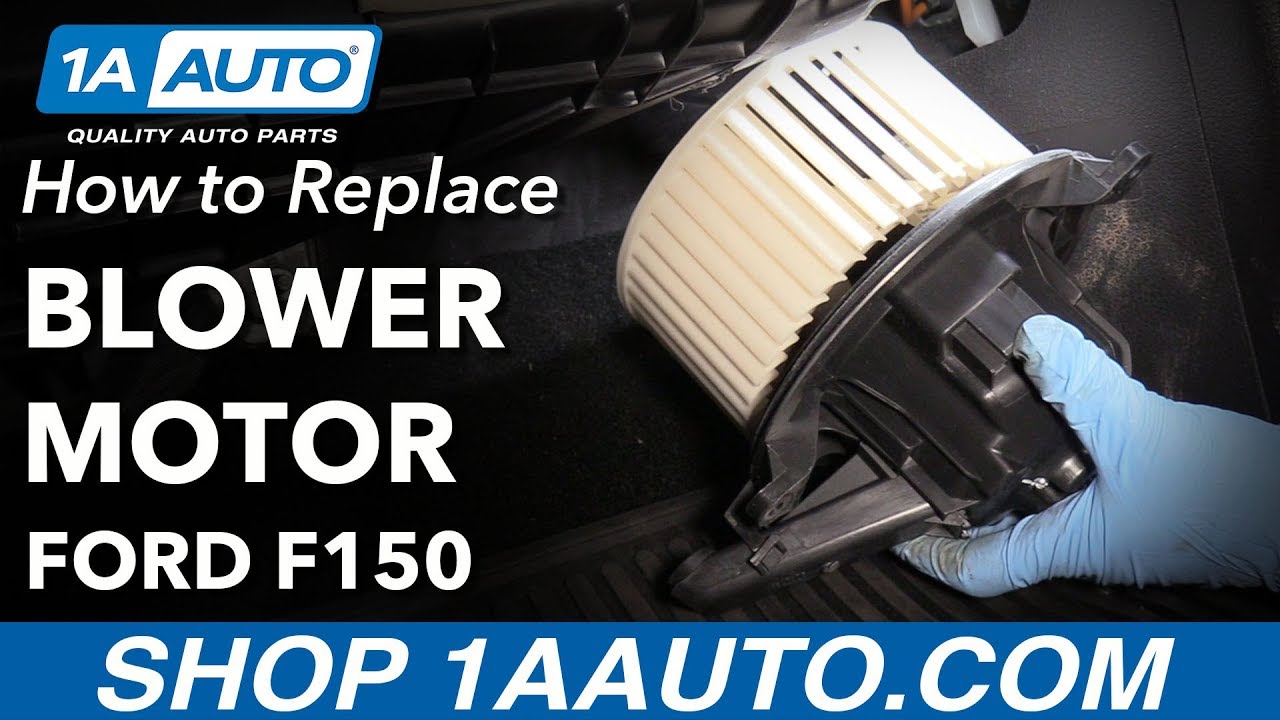
If fuses and the relay check out, test for power directly at the blower motor connector.
How to Access
Lower the glovebox by squeezing both sides inward and releasing the plastic tabs. Locate the blower motor behind the HVAC housing and disconnect the electrical connector.
Test the Yellow/Green Wire
Set your multimeter to DC voltage. Turn the ignition to RUN and set the fan to high. Probe the yellow/green wire in the connector. If 12V is present, power is reaching the motor. If there is no voltage, check the relay output and F51 fuse again. This wire carries constant 12V when the ignition is on, and no signal from the switch should interrupt it on high speed.
Diagnose the Ground Signal
Blower speed is controlled by modulating the ground path, not voltage. If power is present but the motor will not run, the issue is likely a missing or weak ground signal.
Test the Yellow/Orange Wire
This wire serves as the ground return, controlled by either a resistor on manual climate systems or a speed controller on automatic systems. Use a multimeter to measure voltage drop. On high fan speed, expect near 0V, which indicates full ground. On low speeds, expect 6 to 9V, which indicates partial ground. If there is no voltage drop at any speed, there is no ground signal. Suspect the resistor, speed controller, or HVAC module. Ohmmeter tests for ground continuity are unreliable. Always use voltage drop testing under load.
Bench Test the Blower Motor
Never replace the motor without testing it first. Many unnecessary motor swaps occur due to misdiagnosis.
How to Bench Test
Remove the blower motor by unplugging the electrical connector, removing 2 to 3 screws holding it in place, and gently pulling it out. Use jumper wires or alligator clips to connect the positive terminal to a 12V battery and the negative terminal to battery ground. Observe the results. If the motor spins freely, it is functional and the issue is upstream. If there is no spin, humming occurs, or wires overheat, the motor has internal failure.
Replace the Blower Motor Resistor (2003-2011)
If only high speed works, replace the blower motor resistor.
Step-by-Step
Lower the glovebox by squeezing the sides and releasing the tabs. Locate the resistor above the blower motor. Remove the two 8mm screws. Lift the small tab on the connector and unplug it. Pull out the old resistor and install the new unit, then reassemble. This repair takes 15 to 30 minutes, costs $25 to $40, and requires no programming.
Fix Speed Controller Issues (2010-2016+)
On trucks with automatic climate control, a blower motor control module controls speed via pulse-width modulation.
Why It Fails
Terminal fretting creates micro-gaps in pins, causing high resistance and heat that leads to failure. Heat damage shows as melted connectors or discolored housing. Replacing only the module often leads to repeat failure because burnt pins in old connectors destroy a new module.
Best Fix: Replace Full Assembly
Ford mechanics recommend replacing all three components together: the blower motor, the control module, and both electrical connectors. Apply dielectric grease to all pins and use heat-shrink tubing on soldered repairs to prevent recurrence.
Solve 2021 PowerBoost Idle Shutdown
Multiple 2021 PowerBoost owners report the AC blower stops after approximately 5 minutes of idling. Restarting the engine temporarily restores function. The dealer-confirmed fix involves replacing both the blower motor and control module. This is warranty-covered and passes the 30-minute idle test after repair.
Avoid These Common Mistakes
Several myths lead to wasted money and frustration. Replacing the motor when the relay, resistor, or ground signal is the actual problem is the most common error. Adding a chassis ground makes the fan run constantly at full speed, which bypasses all controls and creates new problems. Attempting to use a capacitor is ineffective because there is no capacitor in the F-150 blower circuit.
Repair Cost and Part Guide
OEM blower relays cost about $18 from Ford dealers. Aftermarket resistors run $25 from Amazon or RockAuto, while OEM-grade resistors cost $30 to $40 from AutoZone or O Reilly. Speed controllers for automatic climate systems range from $50 to $80. Blower motors cost $80 to $150 depending on source. DIY time ranges from 1.5 to 3 hours depending on model year, while shop labor runs $150 to $300.
Frequently Asked Questions About F150 AC Blower Not Working
Why does my F-150 blower only work on high speed?
This indicates a failed blower motor resistor. The resistor controls fan speeds 1 through 3 by varying ground resistance. When it burns out, only high speed remains functional because it bypasses the resistor entirely. Replace the resistor to restore all four fan speeds.
How do I test if my blower motor is bad?
Remove the motor from the vehicle and apply 12V directly from a battery using alligator clips. Connect positive to the motor’s power terminal and negative to ground. If the motor spins freely, it is functional. If there is no spin, humming, or excessive heat, the motor is faulty and needs replacement.
What fuse controls the F-150 AC blower?
For 2008 and newer models, the F51 fuse in the underhood Battery Junction Box is the main power fuse for the blower motor. It is a 40-amp fuse. For 2000 through 2004 models, F105 handles blower power. Always test both sides of the fuse with a multimeter because visual inspection is unreliable.
Can I drive my F-150 with a broken AC blower?
You can drive the vehicle, but comfort suffers significantly, especially in hot weather. The AC system relies on the blower to circulate cooled air. Additionally, the AC compressor may cycle more frequently without proper airflow, potentially causing premature wear.
Why does my blower work intermittently?
Intermittent operation often stems from loose connectors, failing control modules, or terminal fretting. On 2018 through 2020 models, unplugging and reconnecting the control module under the glovebox has temporarily restored function in some cases. The permanent fix involves replacing the motor, module, and connectors together.
Is the 2021 PowerBoost blower issue covered under warranty?
Yes. Ford dealers recognize the idle-related blower shutdown on 2021 PowerBoost models as a known issue. Replacement of both the blower motor and control module is covered under warranty. Contact your dealer to schedule the repair.
Key Takeaways for Fixing Your F150 AC Blower
The F150 AC blower not working issue is rarely the motor itself. Always start diagnostics with fuses and the relay, then test power and ground before buying parts. For 2003 through 2011 models with manual climate control, a failed resistor is the most common cause when only high speed works. For 2010 through 2016 models with automatic climate, replace the entire assembly including the motor, control module, and connectors to prevent repeat failures. If your vehicle is under warranty, especially with a 2021 PowerBoost, insist on a complete fix rather than individual component replacement. With the right diagnostic approach, you can restore full AC function in under an hour and avoid hundreds of dollars in unnecessary repairs.


