
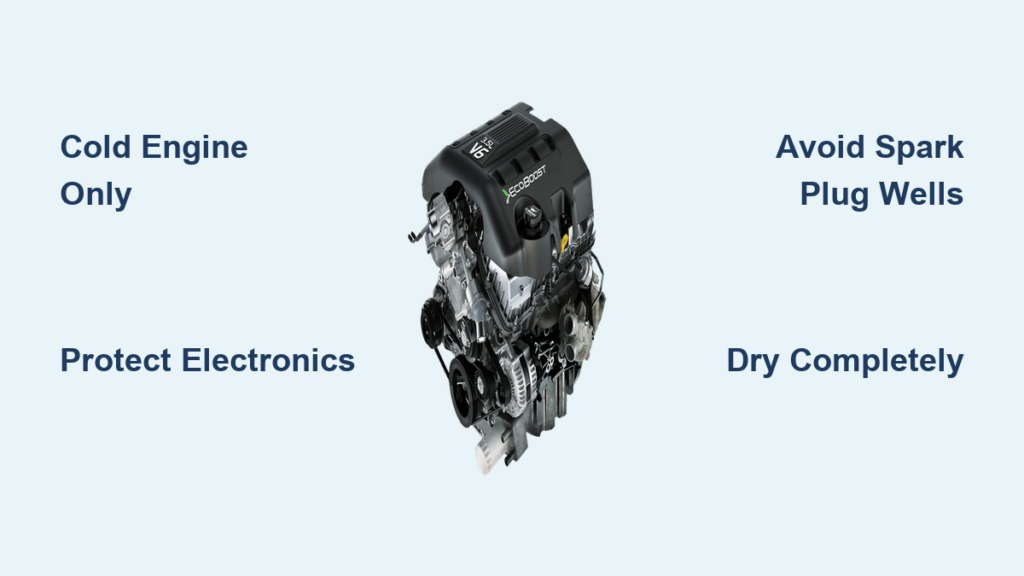
A clean engine bay isn’t essential for spotting leaks, preventing overheating, and maintaining your F150 EcoBoost’s long-term performance. Whether you drive a 2.7L or 3.5L turbocharged model, knowing how to safely clean the engine is critical. Water intrusion, electrical damage, and misfires are real risks if done incorrectly, especially on the 3.5L with its deep spark plug wells. But with the right tools, products, and method, you can safely remove grease, grime, and road buildup without risking damage.
This guide walks you through every step from prep to dry-off using proven techniques from experienced owners and professionals. You’ll learn exactly which areas to protect, which products work best, and how to avoid the common mistakes that lead to expensive repairs.
Prepare the Engine Bay for Cleaning
Ensure the Engine Is Cold
Never clean a hot engine. Wait at least 1 to 2 hours after driving to let all components cool completely. Washing a warm engine may speed drying, but it increases the risk of thermal shock to plastics and sensors. A cold engine ensures safety for both you and the vehicle’s electronics.
Protect Electrical Components
Cover sensitive areas before applying any moisture. Use these protection methods:
• Battery: Drape a dry microfiber towel over the top
• Alternator and fuse box: Use loose-fitting plastic bags or rags (do not seal)
• Main harness near firewall: Shield with a folded towel
• Electric distribution block: Avoid direct spray; cover if possible
Keep all covers in place until the drying phase is complete.
Block the Air Intake
Stuff a clean, large towel into the air intake snorkel to prevent water from entering the throttle body or air filter box. Never use small objects that could fall in and cause damage. This simple step protects your turbo and intercooler from contamination.
Rinse and Loosen Grime

Pre-Rinse with Wide Spray
Use a garden hose with a wide-angle spray nozzle (40 degrees or wider). Start from the top and work downward to avoid re-soiling cleaned areas. Lightly rinse off loose dirt, dust, and mud. For trucks used off-road or in construction, pre-rinse thoroughly before applying degreaser.
Avoid high-pressure jets. If using a pressure washer, keep it at low PSI and use only a 40-degree tip. Never aim at wiring, sensors, or connectors.
Apply the Right Cleaner

Choose a Safe Degreaser
Use one of these proven options:
• Simple Green (full strength or 50% diluted)
• Gunk Original or Foamy Degreaser
• Chemical Guys Nonsense Invisible Super Cleaner
• Dawn dish soap (diluted in spray bottle)
• APC (All Purpose Cleaner) at 5:1 or 10:1 dilution
Spray evenly across greasy areas, especially around the valve cover, oil cap, and under the intake manifold. Let dwell for 5 to 15 minutes, but do not let it dry completely.
Avoid Sensitive Zones
Keep cleaner away from spark plug wells (especially on 3.5L), electrical connectors, and rubber hoses and belts. Foaming sprays help cling to vertical surfaces without dripping into sensitive areas.
Scrub Without Damage
Use Soft, Non-Metal Brushes
Gently agitate grime with appropriate tools:
• Paintbrush (ideal for tight spots)
• Parts washing brush
• Fender brush or detail brush
• Towel-wrapped fingers for delicate zones
Avoid stiff or metal bristles that could scratch plastic or dislodge wiring. Focus on oily buildup near the oil filler cap, power steering reservoir, and exhaust manifold heat shields.
Clean Around Turbo and Intercooler
Wipe down the turbo housing and intercooler fins with a damp cloth. Do not pressure wash these components directly because water can damage seals or enter intake piping.
Rinse Safely and Thoroughly
Use Low-Pressure Water Only
Rinse using a garden hose with wide spray, a battery-powered pressure washer (like Worx), or a standard pressure washer if throttled down. Keep the nozzle at least 6 inches from components. Never hold the spray in one spot; move constantly to prevent damage.
Stick to 40-Degree Nozzle or Wider
Narrow tips like 15 degrees or 25 degrees generate too much force and can strip insulation from wires. A 40-degree tip provides enough power to rinse without risk when used correctly.
Dry Completely Before Starting
Blow Off Standing Water
Use a leaf blower or car air blower to remove moisture. Hold the blower 3 feet away to prevent forcing water into harnesses. Focus on the air intake, fuse box area, and under engine covers. Blow into spark plug well openings if accessible to clear trapped water.
Wipe and Air Dry
Wipe remaining moisture with clean microfiber towels. Then leave the hood open in direct sunlight or a warm garage for 1 to 2 hours. For faster drying, start the engine and let it idle for 5 minutes, then take a 20-minute drive to evaporate internal moisture.
Reassemble and Inspect
Remove All Towels and Covers
Double-check that the air intake is clear of towels or debris, no rags were left near belts or pulleys, and battery terminals are dry and secure.
Check Air Filter and Drain
Remove the air filter and inspect for moisture. If wet, let it dry completely or replace it. Clear the bottom drain hole in the airbox to prevent future water buildup.
Verify System Function
After startup, listen for misfires or rough idling (signs of water in plug wells). Check for warning lights (Check Engine, Battery, or Oil). Confirm all accessories (A/C, power steering) operate normally.
Choose the Right Products
Top-Rated Degreasers
Different cleaners work better for different situations:
• Simple Green: Best for general cleaning, non-toxic and biodegradable
• Gunk Degreaser: Best for heavy oil buildup, foaming version clings better
• Dawn Dish Soap: Best for light grime, cheap and effective
• APC (5:1): Best for multi-surface cleaning, works on plastic, metal, and rubber
Use Water-Based Dressings Only
After cleaning, apply a water-based dressing like McGuire’s Hyper Dressing (4:1 or 5:1 dilution) or a generic water-based protectant. Avoid oil-based or gel dressings because they attract dust and undo your work. Spray lightly and wipe off excess.
Know Your Engine’s Risks

2.7L EcoBoost: Safer to Clean
The 2.7L has an open-bottom design that drains well. Many users pressure wash every 3 months with no issues. Just follow standard precautions and dry thoroughly.
3.5L EcoBoost: High Risk of Misfires
The 3.5L has deep spark plug wells that trap water. If moisture reaches the coils, it can cause engine misfires, hydrolock, and permanent coil damage. Water WILL cause misfires on the 3.5L, so do not wash like a 2.7L.
If cleaning a 3.5L, use minimal water, avoid spraying near valve covers, dry plug wells with compressed air, and run the engine only after full drying.
Try Alternative Cleaning Methods
Steam Cleaning: Proceed With Caution
Steam can dissolve grease without flooding the bay, but it poses thermal shock risks to sensors and plastic. If used, use a handheld unit at low pressure, keep steam moving (do not linger), and follow with thorough drying.
Dry or Low-Water Cleaning
For conservative maintenance, spray brake cleaner on oily spots and wipe, use WD-40 to displace moisture and shine surfaces, or wipe with degreaser-soaked rags instead of rinsing. This method eliminates water risk entirely, which is ideal for 3.5L owners.
Follow Pro Tips for Best Results
Work Top to Bottom
Always clean from the highest point down. This prevents dirty runoff from recontaminating areas you have already cleaned.
Use a Paintbrush for Crevices
A cheap paintbrush reaches under wiring looms, around brackets, and along frame rails where grime builds up.
Leave Engine Cover Off (Optional)
Some owners remove the engine cover permanently for easier access and better cooling. If you do, clean the area underneath regularly.
Schedule Regular Cleanings
Clean every 1 to 2 years for normal driving, every 3 months for off-road, construction, or dusty environments, and after oil changes or repairs to clean up spills immediately.
Frequently Asked Questions About Cleaning F150 EcoBoost Engine
Can I pressure wash my F150 EcoBoost engine?
Yes, you can pressure wash a 2.7L EcoBoost safely if you use a 40-degree nozzle, keep the pressure low, and maintain at least 6 inches distance from electrical components. However, the 3.5L requires extreme caution due to deep spark plug wells that trap water and cause misfires.
How do I protect the 3.5L EcoBoost spark plug wells when washing?
Cover the valve cover area with a towel before rinsing, avoid spraying directly at the engine valley, use minimal water, and dry the plug wells with compressed air after cleaning. Never pressure wash a 3.5L aggressively.
What happens if water gets into the spark plug wells?
Water in the spark plug wells can cause engine misfires, hydrolock, and permanent damage to ignition coils. If you suspect water intrusion, remove the coils, dry the wells with compressed air, and let the engine dry completely before starting.
How long should I wait to start the engine after washing?
Wait at least 1 to 2 hours with the hood open in a warm area, or take a 20-minute drive after cleaning to ensure all internal moisture evaporates. Start the engine and let it idle for 5 minutes to help dry any residual moisture.
What is the best degreaser for F150 EcoBoost engines?
Simple Green (50% diluted), Gunk Degreaser (foamy version), and Dawn dish soap (diluted) are the most recommended options. APC at 5:1 dilution works well for heavy-duty cleaning on multiple surfaces.
Can I use oil-based dressings on the engine bay?
No, avoid oil-based or gel dressings because they attract dust and dirt, defeating the purpose of cleaning. Use water-based dressings like McGuire’s Hyper Dressing diluted at 4:1 or 5:1 instead.
Key Takeaways for Cleaning Your F150 EcoBoost Engine
Cleaning your F150 EcoBoost engine is safe when done right, but the 3.5L demands extra caution. Always start with a cold engine, protect electronics with microfiber towels, use gentle degreasers like Simple Green or Gunk, and dry completely with a leaf blower before starting. The 2.7L tolerates pressure washing well, while the 3.5L requires minimal water and special attention to spark plug wells to prevent misfires.
Whether you prefer a full rinse or a wipe-down method, the goal is a clean, inspectable engine bay that helps you catch problems early. Regular cleaning improves airflow, reduces debris entering the turbo, and makes it easier to spot oil leaks or worn belts. With proper technique and the right products, your F150 EcoBoost will run strong for years to come.


