
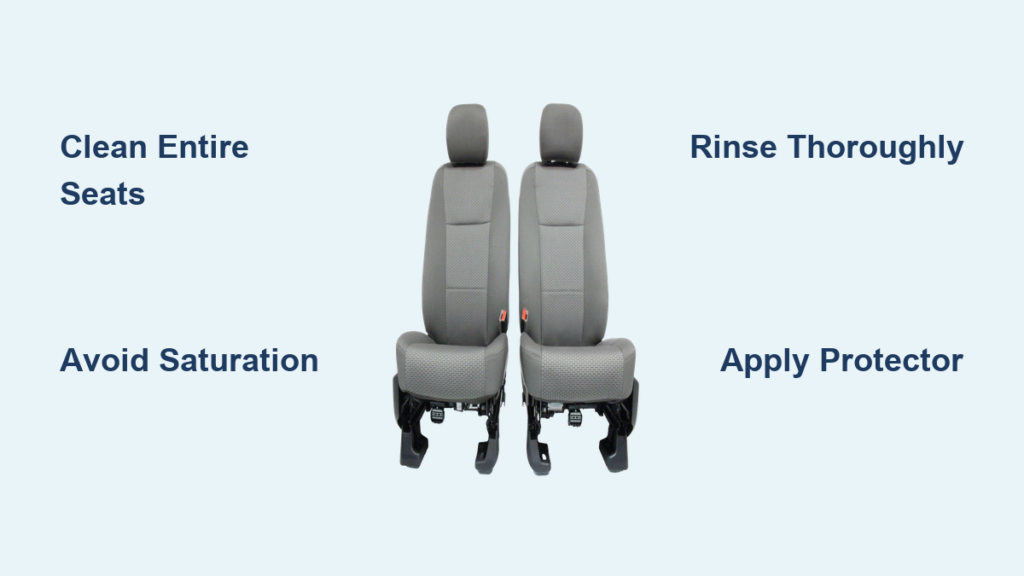
If you drive a Ford F-150 with cloth seats, you know how quickly they can get dirty. Coffee spills, muddy boots, pet accidents, and kids’ snacks all take a toll. Left untreated, these stains lead to odors, fabric damage, and even mold. But knowing how to clean F-150 cloth seats the right way isn’t always obvious. Many owners oversaturate the fabric, use wrong cleaners, or spot-clean only, which creates uneven results and lingering residue.
The truth is, effective cleaning requires more than a quick wipe-down. F-150 cloth seats have no moisture barrier, so excess liquid soaks into the foam padding beneath. This creates a breeding ground for mold and mildew. Plus, dried spills like coffee or milk permanently stain the tightly woven fabric. This guide delivers proven methods used by dealership detailers and Ford owners. You’ll learn how to deep clean without damage, prevent water spots, remove stubborn stains safely, and protect your seats for years.
Avoid Fabric Saturation to Prevent Foam Damage
F-150 cloth seats lack a factory-installed moisture barrier. When you drench the fabric, liquid seeps directly into the foam cushioning underneath. This trapped moisture leads to mold, odors, and foam breakdown over time. Even when the surface looks dry, the padding can stay wet for days, especially in cool or humid conditions.
Signs of Over-Wetting
• Lingering musty smell after cleaning
• Spongy or damp feel when sitting
• Visible dark patches that won’t dry
Fix: Always extract moisture immediately using a shop vac or carpet extractor. Never walk away and let seats air-dry without active water removal.
Act Fast on Spills for Stain-Free Seats
Acting quickly on spills prevents permanent staining. Protein-based liquids like coffee, soda, and shakes bond to fabric fibers when dried. The longer you wait, the harder the removal.
Immediate Response Steps
- Blot the spill with a clean microfiber cloth—don’t rub
- Pre-vacuum to remove any crumbs or debris sitting on top
- Clean the area within minutes while the spill is still fresh
Coffee will stain if it dries, according to multiple verified F-150 owners. Speed matters.
Clean Entire Seats to Prevent Ring Marks
Spot cleaning creates visible differences in texture and color across your seats. The surrounding dry fabric absorbs moisture differently, leading to water rings or ghost marks. This proves especially problematic on light gray or tan seats.
Best Practice for Even Results
• Treat the full seat surface, including bolsters and sides
• Use even pressure and consistent moisture across the entire area
• Dry uniformly using fans or with doors open
Pro tip: Even if only one area is stained, clean both front seats to maintain a matching appearance.
Use Hot Water and Detergent Like Dealerships Do

This technique comes from Ford dealership detailers and uses simple ingredients. Heat lifts grime while detergent breaks down oils without damaging fabric.
Supplies Needed
• Steaming hot water
• Liquid laundry detergent without bleach
• Microfiber cloths
• Soft-bristled brush or toothbrush
• Shop vac or Bissell Little Green Machine
• White vinegar
Step-by-Step Process
- Pre-vacuum thoroughly with crevice tool
- Mix a small amount of detergent into hot water
- Dip a microfiber cloth into suds, wring until damp
- Scrub the entire seat in circular motions
- Let sit for 1-2 minutes without letting it dry
- Rinse with 1:3 vinegar-water mix to remove soap residue
- Extract moisture with shop vac or extractor
- Repeat rinse and extraction until runoff is clear
- Dry completely—2-4 hours in warm weather, 12+ in cold
Vinegar neutralizes soap, deodorizes, and reduces mildew risk.
Remove Tough Stains with Folex Carpet Cleaner
Folex Carpet & Upholstery Cleaner excels on chocolate, milkshakes, mud, and pet stains. It’s non-toxic, requires no rinsing in light use, and works on most cloth types.
Application Steps
- Pre-vacuum the seat
- Lightly mist fabric with warm water to dampen
- Spray Folex directly without soaking
- Agitate with a soft brush
- Let dwell for 3-5 minutes without allowing it to dry
- Extract with clean water using a Bissell machine
- Blot with dry microfiber
- Air dry fully before use
One owner removed a dried chocolate milkshake from a 2006 Ram 1500 with identical fabric using this method.
Fix Water Spots on 2004-2005 F-150 Models
Some 2004-2005 F-150s have a non-uniform fabric weave that absorbs moisture unevenly. This creates dark blotches or rings when wet clothing or snow touches the seat.
Simple Repair Method
- Spray the entire seat evenly with plain water using a misting bottle
- Let dry completely in warm, dry air at 80°F or higher
- In most cases, the stain disappears as the fabric dries uniformly
Many apparent stains are moisture absorption issues, not actual dirt.
Prevent Future Water Spots
• Apply fabric protector like Scotchgard or 303 to repel moisture
• Wipe seats with a dry microfiber after rainy days
Deep Clean with Steam or Extraction

Choose hot water extraction when seats have brown-edged stains from deep soil, when surface cleaning leaves water spots, or when you want sanitized, streak-free results.
DIY Option: Bissell Little Green Machine
This portable extractor comes highly recommended by F-150 owners for home use.
Extraction Steps
- Pre-vacuum seats
- Fill solution tank with Folex or 1:10 detergent mix
- Fill clean water tank for rinsing
- Apply solution, then immediately extract
- Rinse with clean water and extract again
- Blot and dry
The only way to get it all out is by a professional with extractors. But a Bissell machine delivers 90% of the results at home.
Avoid Tough Stuff Ghost Marks
Tough Stuff Upholstery Cleaner works well on coffee, milk, and protein stains. However, it leaves dark or cloudy rings if not wiped in time.
Safe Application Method
- Shake can well
- Spray liberally on stain
- Wait only 30-40 seconds
- Wipe immediately with a damp microfiber cloth
- Never let it dry on the fabric
If a ring appears, apply car polish or powder cleaner to the spot and buff with a clean microfiber cloth. This product may be the same as Tuff Stuff Instant Carpet Cleaner.
Rinse Thoroughly to Prevent Re-Soiling
Leftover soap acts like a magnet for dust, oil, and debris. Seats cleaned with detergent but not rinsed get dirty faster than before.
Rinse Protocol
- After cleaning, spray 1:3 vinegar-water mix over the entire seat
- Agitate lightly with a brush
- Extract all liquid
- Repeat until runoff is clear
Vinegar removes residue, deodorizes, and inhibits microbial growth.
Dry Seats Completely to Prevent Mold
Drying time varies significantly based on conditions.
| Condition | Drying Time |
|---|---|
| 80°F+, sunny, doors open | 2-4 hours |
| 60-70°F, moderate humidity | 6-8 hours |
| Cold or humid | 12+ hours |
Speed Up Drying
• Leave all doors open
• Use portable fans or HVAC on high heat
• Blot with dry microfiber towels
• Use an air compressor to blow out crevices
Never drive with wet seats. Moisture accelerates wear and odor.
Apply Fabric Protection for Long-Term Defense
Top-rated products include 3M Scotchgard Fabric & Upholstery Protector, 303 Fabric Guard, Teflon Fabric Protector, and Fabsil for heavy-duty needs.
Application Steps
- Ensure seats are clean and fully dry
- Shake can well
- Hold 6-8 inches from fabric
- Spray evenly over entire seat including seams
- Let dry 1-2 hours before use
- Reapply every 6-12 months
I poured water on my Scotchguarded seat and it beaded up and ran right off, reports one F-150 owner.
Use the Right Tools for the Job
Must-Have Equipment
• Microfiber cloths for safe wiping and blotting
• Soft-bristle toothbrush for tight stitching
• Upholstery brush for scrubbing without fiber damage
• Spray bottle for applying solutions evenly
• Shop vac for extracting moisture
• Bissell Little Green Machine for DIY deep cleaning
Optional Helpers
• Lint roller for pet hair
• Air compressor for drying crevices
• Portable fan for faster drying
Install Seat Covers for Maximum Protection
Neoprene covers offer the best defense against everyday wear. They’re waterproof, machine-washable, and extremely durable. These work ideal for families, pets, or outdoor work. Brands like F150 Store and Covercraft offer custom-fit options.
Once I installed neoprene covers, no more food or drink in the truck, reports one owner. Some owners also add camouflage or color-matched covers for style while protecting their investment.
Follow a Professional Cleaning Protocol
For Light Soiling
- Vacuum seat surface
- Mix 1 cap detergent with 2 cups warm water
- Mist lightly on fabric
- Scrub with toothbrush on seams
- Wipe with damp microfiber
- Blot dry
- Run HVAC on high heat for 30 minutes
For Set-In Stains
- Spray Tough Stuff or Folex
- Wait 30-40 seconds for Tough Stuff or 3-5 minutes for Folex
- Scrub gently
- Wipe immediately with damp cloth
- Blot and dry
- Buff out ghost marks with car polish if needed
For Deep Cleaning
- Pre-vacuum
- Apply hot water plus detergent
- Scrub entire seat
- Extract soapy water
- Rinse with clean water
- Extract again
- Dry completely
- Apply 3 coats of fabric protector
Choose the Right Cleaning Solution
| Product | Best For | Notes |
|---|---|---|
| Laundry Detergent + Hot Water | General cleaning | Must rinse well |
| Folex | Organic stains | Non-toxic, easy extraction |
| Tough Stuff Aerosol | Protein stains | Wipe within 40 seconds |
| 303 Fabric Cleaner | Light maintenance | Pair with 303 Guard |
| Hydrogen Peroxide 3% | Odors, disinfecting | Spot test first—can bleach |
Never mix vinegar and hydrogen peroxide.
Maintain Seats Year-Round
Seasonal Tips
Summer provides ideal conditions for deep cleaning since seats dry fast in heat. Winter cleaning should only happen in a heated garage with forced-air drying. After rain or snow, wipe seats with dry microfiber to prevent water spots.
Prevention Habits
• Apply fabric protector at purchase
• Keep microfiber cloth in console for quick cleanup
• Use seat covers when transporting kids or pets
• Vacuum monthly to prevent debris buildup
Frequently Asked Questions About Cleaning F-150 Cloth Seats
Can I use carpet cleaner on my F-150 cloth seats?
Yes, but choose carefully. Folex works well for organic stains. For general cleaning, a mixture of laundry detergent and hot water matches what dealership detailers use. Avoid harsh chemicals or bleach, as these damage fabric fibers.
How do I remove old stains from cloth seats?
Old stains respond best to Folex with a 3-5 minute dwell time or Tough Stuff with a 40-second wipe-off. For deeply set stains, use a Bissell Little Green Machine for extraction cleaning. Repeat applications may be necessary for stubborn spots.
Why do my seats smell musty after cleaning?
Musty smells indicate trapped moisture in the foam padding. This happens when you oversaturate the fabric or skip extraction. Always extract all liquid immediately and dry completely with fans. The vinegar rinse helps prevent mildew growth.
Should I Scotchgard my seats after cleaning?
Absolutely. Applying Scotchgard or 303 Fabric Guard after cleaning creates a protective barrier. Liquids bead up and roll off rather than soaking in. Reapply every 6-12 months for continued protection.
What’s the fastest way to dry seats after cleaning?
Open all doors, use portable fans, run HVAC on high heat, and blot with dry microfiber towels. In warm weather above 80°F with sunny conditions, seats dry in 2-4 hours. Never drive with wet seats.
Can I spot clean just the stained area?
Spot cleaning creates visible ring marks and texture differences. Always clean the entire seat surface, not just the stained area. This prevents uneven color and water rings, especially on light gray or tan seats.
Key Takeaways for Keeping F-150 Cloth Seats Clean
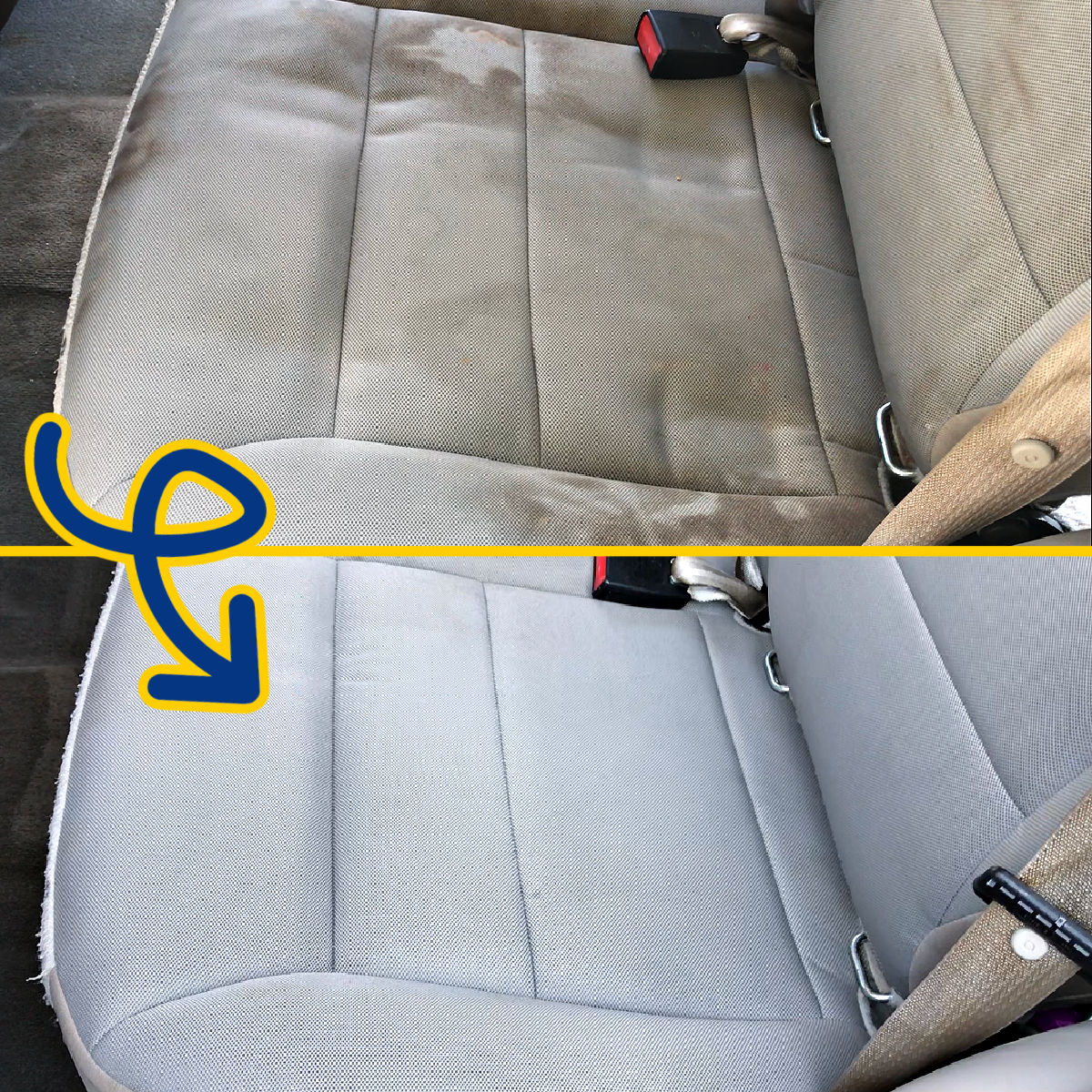
The best way to clean F-150 cloth seats involves cleaning the entire surface rather than just spots, avoiding saturation to protect the foam underneath, rinsing thoroughly to prevent re-soiling, and applying fabric protection after drying. Use Folex or the dealership’s hot water method for tough stains. A Bissell Little Green Machine delivers professional-quality extraction results at home. Scotchgard or 303 Fabric Guard keeps seats looking new by repelling liquids and preventing future stains.
With the right routine, your F-150’s cloth seats stay fresh, stain-free, and comfortable for years. The investment in proper cleaning and protection pays off by avoiding expensive seat replacements and maintaining your truck’s value.


