You’re driving your Ford F-150 Platinum after a long day, ready to enjoy the luxury of massaging seats, but nothing happens. No vibration, no air bladder inflation, no response from the controls. The massage function is completely dead or intermittently cutting out while heated and cooled seats still work fine. You’re not alone. Thousands of F-150 owners with Multi-Contour Seats face this exact issue, and the fix isn’t replacing the expensive seat module.
This problem affects F-150s from 2015 to 2024, especially Platinum, Limited, and Lariat trims. In this guide, you’ll learn how to diagnose the true cause, perform the permanent repair, avoid costly mistakes, and get your F-150 massage seat working again whether you do it yourself or take it to a shop.
Check Fuse #19 First
The easiest and fastest step is checking fuse #19 in the engine compartment fuse box on the passenger side near the radiator overflow. This 10-amp fuse powers the entire multi-contour seat system.
Locate and Test the Multi-Contour Seat Fuse
Pull the fuse and inspect for a blown element. Use a multimeter to test continuity or swap in a known-good 10-amp fuse if needed.
Pro Tip: If both seats lose massage, a blown fuse is likely. If only one side fails, the issue is downstream, usually wiring or connector damage. Even if the fuse looks fine, replace it temporarily to rule it out. It takes 60 seconds and costs less than $5.
Perform a Full Power Reset
Sometimes a software glitch or CAN bus communication lockup disables the massage function. A complete power reset can restore functionality, at least temporarily.
Disconnect Main and Auxiliary Batteries
Open the hood and disconnect the main 12V battery. Remove the rear passenger seat cushion to access the auxiliary battery under the seat. Disconnect both batteries and wait 10 to 15 minutes to fully drain residual power. Reconnect both batteries in reverse order, then start the truck and test the massage function.
Why this works: Some modules stay powered via the auxiliary battery. A full reset clears error states and re-establishes communication with the seat control module. If the massage works after this but fails again later, you likely have intermittent electrical contact pointing to terminal fretting.
Understand Terminal Fretting: The Real Problem
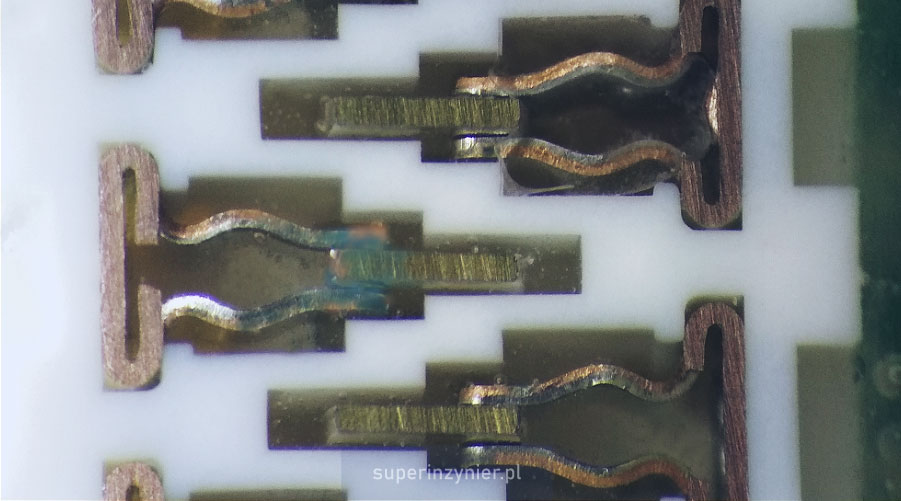
The root cause in over 90% of cases is terminal fretting, not a bad motor, air pump, or control module.
What Causes Massage Seat Failure
Terminal fretting refers to micro-vibrations between metal pins in the seat module connector that cause wear and oxidation. This leads to intermittent electrical contact, breaks communication between the seat module and the vehicle CAN network, and triggers U024B or U024C diagnostic codes indicating Lost Communication with Seat Module. Even if the module itself is fine, the factory connector fails over time due to poor strain relief and lack of anti-fretting design.
Ford admits this: TSB 19-2390 officially identifies terminal fretting as the cause and mandates a pigtail harness replacement with soldering, not crimp connectors.
Scan for Diagnostic Trouble Codes
To confirm terminal fretting, scan for error codes using a compatible OBD2 tool like FORScan or a dealer-grade scanner.
Use FORScan or OBD2 Scanner
Look for U024B, which indicates Lost Communication with Seat Control Module Driver, or U024C for the passenger side. These codes mean the vehicle cannot talk to the seat module, a clear sign of connector failure, not module death.
Note: If no codes appear but massage is dead, still suspect terminal fretting. Intermittent issues may not log persistent codes. FORScan users can access the SCMG or SCMH to check live data and communication status.
Inspect Under-Seat Wiring
Before removing the seat, peek under both front seats to compare working versus non-working side.
Compare Working vs. Non-Working Side
Check harness routing for sharp bends, pinched wires, or chafing. Inspect connectors to ensure they are fully seated with no corrosion or bent pins. Verify that modules are not loose, as some owners report modules shifting and disconnecting.
Key Insight: If the passenger seat works but driver’s does not, compare wiring layouts. Differences often reveal strain points. On Platinum and Lightning models, space is tight, so you may need to raise the seat to see clearly. Even if wiring looks fine, intermittent contact may only show under vibration, making visual inspection insufficient.
Access the Seat Control Module
Ford’s TSB recommends removing the seat for safe access. While some users repair without removal, it is risky and limits visibility.
Remove Seat and Open Seatback
Disconnect the battery first. Unplug all seat connectors under the seat, then remove the four bolts securing the seat to the floor. Lift the seat out with help since it is heavy. Unzip the rear seat cover on the top of the backrest and remove plastic trim to expose the seat control module inside the upper seatback.
The module is a small black box with a multi-pin connector, usually labeled SCMG for driver or SCMH for passenger.
Inspect Connector for Fretting Damage

Once exposed, unplug the connector and inspect closely for signs of terminal fretting.
Look for Oxidation and Loose Pins
Signs of terminal fretting include discoloration showing white or green corrosion on pins, loose or wiggly terminals, blackened insulation around wires, and intermittent function when wiggling the connector. Use a flashlight and magnifier if needed.
Test: Reconnect and gently wiggle the harness. If massage flickers on and off, fretting is confirmed. Do not just clean and reseat the connector as it is a temporary fix. The only permanent solution is connector replacement.
Perform the TSB 19-2390 Pigtail Repair
Ford’s official fix is KU2Z-14S411-FA, a pre-terminated pigtail harness kit designed to replace the faulty factory connector.
Solder the New Harness
The kit includes a new connector with high-quality terminals, heat-shrink tubing, and wiring instructions. Cut off the old factory connector from the seat harness, then strip and tin each wire. Solder each wire from the pigtail to the harness with no crimps allowed. Seal every connection with heat-shrink tubing and reroute the harness with a service loop to reduce strain. Reassemble and reinstall the seat.
Critical Rule: Ford’s TSB requires soldering. Crimp connectors will fail again. This repair eliminates the fretting point and prevents future failures.
When to Replace the Seat Module
Do not replace the module first. Most dealers do and charge $600 to $900 only for the problem to return.
Only If Wiring Repair Fails
Replace the seat control module only if the pigtail repair is complete and clean, there are no power or ground issues at the module, the module shows no response to commands, and you have confirmed failure via multimeter or known-good swap. OEM module part numbers include DU5Z-14F548-F for the latest revision and FU5Z-14F548-A. Always match your original module’s number.
Model-Specific Fixes: 2021–2024 and Lightning
On 2021 to 2024 F-150 Platinum and Limited models, the passenger massage may not activate due to a weight sensor requiring minimum occupant weight, typically over 80 pounds.
Passenger Seat Pressure Sensor Issue
Children or light adults may not trigger activation. Workaround: Press down firmly on the seat cushion to simulate weight. This is not a fault but a safety feature to prevent airbag misfires.
Lumbar Mechanism Noise and Failure
Some 2021 plus models report crunching or popping from the seatback over bumps. The cause is a loose or broken lumbar adjustment mechanism mounting. The fix requires dealer disassembly of the seatback to re-secure the mechanism, which may contribute to intermittent electrical issues if wires are tugged.
Prevent Future Failures
Once fixed, extend the repair’s life with these best practices.
Best Practices After Repair
Apply dielectric grease to the new connector optionally but it is helpful. Avoid rapid on and off cycling of the massage function. Check fuse #19 during routine maintenance. Raise the seat periodically to inspect under-seat wiring. Save seat profiles correctly using driver memory, not Guest mode.
Warning: Remote start without loading a driver profile may prevent settings from applying.
Cost: Repair vs. Replacement
Save hundreds with the right fix by understanding your options.
Price Comparison Table
DIY pigtail repair using KU2Z-14S411-FA costs $40 to $70 and provides a permanent fix with soldering required. Dealership pigtail repair costs $400 to $600 and includes labor. Used seat module costs $100 to $250 but is risky and may fail again if the connector is not fixed. New seat module costs $590 to $900 plus and is overkill, rarely needed. Shop labor for module swap costs $100 to $200 but does not fix the root cause.
Bottom Line: The pigtail repair is 90% cheaper and actually fixes the problem.
Final Fixes: Try These If Nothing Works
Sometimes the issue is not hardware but SYNC settings or controls.
Verify SYNC Settings and Controls
Check the SYNC 4 menu by going to Settings, then Multi-Contour Seats. If the massage option is grayed out, try using the physical button on the seat side. Reset SYNC by holding Seek Up plus Climate Sync for 10 seconds.
Some users report the physical button works when SYNC does not, indicating a software or interface glitch.
Safety Recall: 2016 F-150 Massage and Airbag Risk
In 2016 F-150s, a critical safety recall exists that requires a free software update.
Get Free Software Update
When passenger massage is active, the Occupant Classification System may misclassify an adult as a child, causing the passenger airbag to turn off, which is dangerous in a crash. Visit any Ford dealership for a free software update. No appointment is needed in most cases.
Note: This does not cause massage failure but is vital for safety.
Key Takeaways for Fixing Your F-150 Massage Seat
The F-150 massage seat not working issue is not random. It is a known design flaw with a documented fix. The problem is almost always terminal fretting in the seat module connector, not a failed motor or control unit. By following TSB 19-2390 and replacing the connector with the KU2Z-14S411-FA pigtail while soldering it, you will restore full function permanently and avoid thousands in unnecessary repairs. Whether you DIY or take it to a knowledgeable technician, insist on the pigtail repair. It is the only solution that lasts.
Frequently Asked Questions About F-150 Massage Seat Issues
Do I need to replace the seat control module?
In over 90% of cases, no. The issue is the connector, not the module. Perform the TSB 19-2390 pigtail repair first.
Is the fuse the most common cause?
No. While fuse #19 should be checked first, terminal fretting is the dominant failure mode in 2015 to 2020 models.
Can I just clean or reseat the connector?
This may provide temporary relief, but the problem will return. The only permanent fix is the pigtail harness replacement with soldering.
Is it safe to drive with failed massage seats?
Yes. The failure does not affect vehicle safety, drivability, or other seat functions.
Are other Ford and Lincoln models affected?
Yes. Identical issues are reported on Ford Explorer 2016 to 2018, Ford Super Duty 2017 to 2020, and Lincoln MKX, MKT, and Navigator 2013 to 2020.