You turn the key, the engine cranks, but nothing happens. No start. You have checked the battery, there is spark, and still your F-150 will not fire up. The most common assumption is a failed fuel pump. But here is the truth: in most Ford F-150s, the fuel pump itself is not the problem. More often, it is the Fuel Pump Driver Module (FPDM), a blown Fuse 27, or a wiring fault causing the no-start nightmare.
Replacing the fuel pump without testing first can cost you $400 or more and 6 hours of labor for a part that was not broken. This guide gives you a step-by-step diagnostic path proven across thousands of real-world cases. You will learn how to diagnose the real cause, avoid costly misdiagnoses, and get your truck running fast.
Decode Common No-Start Symptoms
Engine Cranks But Will Not Start
This is the classic sign of fuel delivery failure. If your F-150 turns over but never fires, fuel, spark, or air is missing. Since modern engines almost always have spark and air, fuel is the prime suspect.
But do not jump to pump replacement. A dead FPDM, blown Fuse 27, or open circuit can mimic a failed pump. The key is verification. Listen, test, and measure before disassembling anything.
No Fuel Pump Prime Sound
When you turn the key to ON (not start), you should hear a brief high-pitched hum for 1 to 2 seconds from the rear of the truck. This is the fuel pump priming the system.
No sound? Possible causes include:
• Dead FPDM
• Blown fuse or relay
• Wiring break
• Failed fuel pump
Pro Tip: Remove the gas cap and listen at the filler neck. It amplifies the sound so you can hear it better.
Intermittent Stalling or Hot-Start Failures
If your truck dies while driving or refuses to restart when hot, it is likely a thermal failure in the FPDM or wiring. These components work when cold but fail as they heat up.
This is common in 2005 to 2008 models with corroded FPDMs and 2011 to 2014 EcoBoosts with melted harnesses. Do not ignore it. These issues often progress to complete failure.
Check Critical DTCs First
P025A: Open Circuit in Fuel Pump Control
This code is the smoking gun. It means the PCM detected an open circuit in the fuel pump control path with no electrons flowing.
Causes include:
• Broken wire
• Failed FPDM
• Loose connector
Expert Insight: Electrons do not jump an open circuit. If you have P025A, the failure is electrical, not mechanical.
P00C6: FPDM Performance Failure
This code indicates the FPDM is not responding or cannot maintain fuel pressure. It could be:
• Internal module failure
• Power or ground loss
• CAN Bus communication error
Do not assume the pump is bad. This code often points to the driver module, not the pump.
U0109: Lost Communication with FPDM
If the PCM cannot talk to the FPDM, it cannot command fuel delivery. Causes include:
• FPDM power loss
• Ground fault
• Damaged CAN Bus wiring (CAN H or CAN L)
Note: These codes may not trigger a Check Engine Light immediately, but they are stored in memory. Always scan with a Ford-compatible OBD2 tool.
Locate the Fuel Pump Driver Module

Under Spare Tire: Hidden Fix Spot
The Fuel Pump Driver Module is mounted on the left frame rail, under the spare tire. It is a small aluminum box about 3 inches by 2.5 inches with a single connector.
Why it fails:
• Moisture in spare tire well
• Corrosion on circuit board
• Rust jacking cracks the casing
• Poor factory sealing
Access steps:
- Lower the spare tire completely
- Shine a flashlight on the frame rail
- Look for corrosion, cracks, or rust
Warning: The mounting bolt often shears off due to rust. Soak it with PB Blaster before removing.
Test Power at FPDM

Verify 12V on Violet/Green Wire
Use a multimeter to test the violet/green wire at the FPDM connector with the key ON.
Expected: approximately 12V. No voltage? Check:
• Fuse 27 (20A) in Battery Junction Box
• Wiring from fuse box to FPDM
• Relay or BCM output if integrated
If voltage is missing, the FPDM cannot activate the pump even if the module is good.
Check Black Wire Ground
The black wire must have a solid ground.
Set multimeter to ohms. Test between black wire and chassis. Expected: 0Ω or very low resistance.
Poor ground? Clean the ground point or run a new ground strap.
Inspect Fuse 27: The Weak Link
20A Fuse in Battery Junction Box
Fuse 27 powers the entire fuel pump circuit on 2011 and newer F-150s. It is notorious for overheating and melting due to high current draw.
Failure signs:
• Discolored housing
• Blown strip inside
• Melted plastic around fuse slot
Real-World Case: A 2013 F-150 owner replaced the fuel pump with no fix. The issue was melted Fuse 27.
Install Ford OEM Relocation Kit
Ford issued an official upgrade to move Fuse 27 to a larger, cooler relay base. This prevents repeat failures and is easy to install. It is recommended even after one failure.
Cost: Fuse is about $5. Kit is $30 to $50 from dealer or online.
Pro Tip: Keep a spare fuse in your glovebox for emergencies.
Bypass FPDM to Test Fuel Pump
Apply 12V Directly to Yellow/Gray Wire
If power and ground are good but the pump does not run, test the FPDM output.
Backprobe the yellow/gray wire at FPDM. Have an assistant crank the engine. Expected: Pulsing voltage or 12V during prime.
No output? FPDM is likely dead.
Jump the Pump Directly
To confirm the fuel pump works:
- Access the pump connector via tank drop or access panel
- Apply 12V and ground directly to pump leads
- If it runs, the pump is good. Replace FPDM or fix wiring
Warning: Do not run the pump dry. Keep it connected to fuel.
Listen Before You Drop the Bed
Fuel Pump Hum Test
Before removing the bed or tank:
- Turn key to ON
- Listen at filler neck or rear axle
- Expected: 1 to 2 second high-pitched whine
No sound? Do not assume the pump is dead. Check FPDM and fuse first.
User Tip: Tap the bottom of the fuel tank with a rubber mallet. If the pump starts, it may have a dead spot, but this is rare.
Verify Fuel Pressure
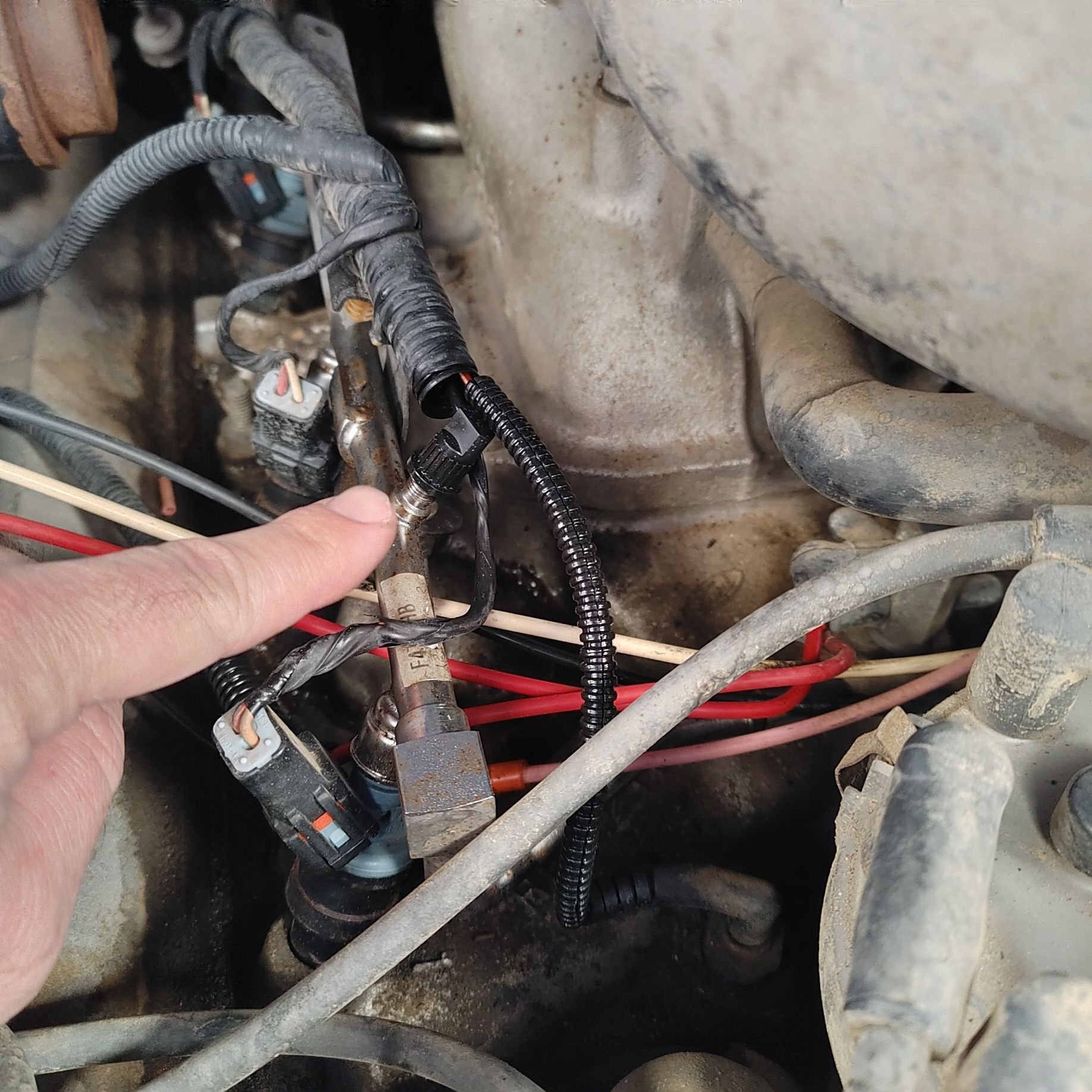
Use a Mechanical Gauge
Guessing is not diagnosing. Measure fuel pressure at the Schrader valve on the fuel rail.
Normal readings:
• Key ON, Engine OFF: 35 to 45 PSI
• Idle: 25 to 45 PSI
• Under load: Stable, no drops
Pressure good? Pump is working. Issue is upstream (FPDM, fuse, wiring).
No pressure? Still not proof the pump is bad. Test power at the pump first.
OBD2 Live Data Alternative
Use a Ford-compatible scanner to read:
• Fuel Pump % Command
• Fuel Pressure if available
• FPDM Status
If the PCM commands 100% but pressure is zero, the FPDM or pump has failed.
Replace FPDM: 15-Minute Fix
OEM vs Aftermarket Options
Best choice: OEM Ford FPDM. It is reliable and designed for moisture resistance.
Aftermarket: Dorman 601-225 fits 2011 to 2014 models, but has mixed long-term reports.
Installation tips:
• Disconnect battery
• Remove two screws
• Swap connector
• Reinstall with rubber standoffs included in OEM kit
Time: 10 to 15 minutes. Cost: $65 to $110.
Avoid Relay Bypass Traps
Never Run Pump at Full Speed
Some fixes involve bypassing the FPDM with a mechanical relay. This forces the pump to run at 100% speed constantly.
Consequences:
• Premature pump wear
• Increased noise
• Higher fuel temperature
• Reduced lifespan
The system is designed to use PWM control. Do not defeat it.
Prevent Future Failures
Annual FPDM Inspection
If you drive in wet, salty, or humid conditions:
• Drop the spare tire yearly
• Check FPDM for cracks, corrosion, moisture
• Reapply dielectric grease to connector
Keep Spare Tire Well Drained
Water in the spare tire well traps moisture against the FPDM.
Fix: Drill a 1/4-inch weep hole in the well or install a drain tube.
Use Dielectric Grease on All Connectors
Apply dielectric grease to:
• FPDM connector
• Fuel pump harness
• Fuse box terminals
This prevents corrosion and ensures solid contact.
Final Diagnostic Checklist
Step-by-Step No-Start Flow
Start: Crank-No-Start
- Battery Voltage greater than 12.4V KOEO, greater than 10V crank
- Listen for Fuel Pump Hum (1 to 2 sec at filler neck)
- Check Fuse 27. Blown? Replace or install OEM kit
- Test Power at FPDM (Violet/Green equals 12V)
- Check Ground (Black wire equals 0Ω)
- Test Output (Yellow/Gray equals pulsing voltage)
- Apply 12V Direct to Pump. Runs? Pump is good
- Replace FPDM and re-test
- System Fixed
Remember: Before you remove the bed or buy a new fuel pump, drop the spare tire and look at the Fuel Pump Driver Module. It might save you hundreds and days of downtime.
Frequently Asked Questions About F-150 Fuel Pump Not Working
Why does my F-150 crank but not start even though the fuel pump sounds normal?
The fuel pump may be running, but the FPDM could still be failing to deliver the correct pressure or the fuel pump may be priming but not maintaining pressure under load. Test fuel pressure at the rail to verify delivery.
Can a bad fuse cause no-start even if the fuel pump sounds okay?
Yes. Fuse 27 supplies power to the entire fuel pump control circuit. A partially melted or intermittent fuse can allow the pump to prime briefly but fail under engine load conditions.
How do I know if my FPDM is bad instead of the fuel pump?
Test power and ground at the FPDM first. If 12V is present on the violet/green wire and ground is good, check the yellow/gray output wire while cranking. No output means the FPDM is likely failed.
Is it worth replacing the fuel pump myself or should I go to a shop?
If you have basic tools and can access the FPDM under the spare tire, the repair takes 15 minutes and costs $65 to $110. A shop will charge labor on top of diagnostics, so DIY saves significant money.
What is the most common cause of F-150 fuel pump failure symptoms?
The Fuel Pump Driver Module is the number one cause. It fails far more often than the actual fuel pump, especially on 2005 to 2008 models and 2011 to 2014 EcoBoosts.
Can I drive my F-150 with a failing fuel pump driver module?
You can, but it will likely leave you stranded. Intermittent failures often progress to complete failure, so diagnose and repair it as soon as possible.
Key Takeaways for Fixing F-150 Fuel Pump Issues
FPDM failure is the number one cause of dead fuel pump symptoms, not the pump itself. Always test the module before replacing the fuel pump.
Fuse 27 melts on 2011 and newer models. Replace it with Ford OEM relocation kit to prevent repeat failures.
Never replace the fuel pump without testing pressure, power, and FPDM output first. A $100 FPDM can save $400 and 6 hours of labor.
Diagnose in order: battery, fuse, relay, FPDM, then pump. Trust the DTCs and verify with a multimeter before buying parts.