If your 2004 F150 shifter is not working, you’re facing one of the most common problems with this model year. The symptoms range from a shifter stuck firmly in Park to a loose, floppy lever that moves without actually changing gears. Most of these issues stem from just a handful of components: the brake interlock solenoid, shifter cable bushings, or cable misalignment at the transmission. The good news is that the transmission itself is rarely the culprit, meaning you can likely fix this without a costly rebuild.
This guide walks you through every diagnostic step, repair procedure, and emergency workaround you need to get your truck moving again. Whether you’re troubleshooting a stuck shifter or dealing with a cable that’s popped off, you’ll find clear instructions to follow.
Identifying Your Specific Shifter Problem
Before buying parts or grabbing tools, you need to understand exactly what’s happening with your shifter. The symptoms you experience point directly to the failing component, saving you time and money.
Stuck in Park With No Movement
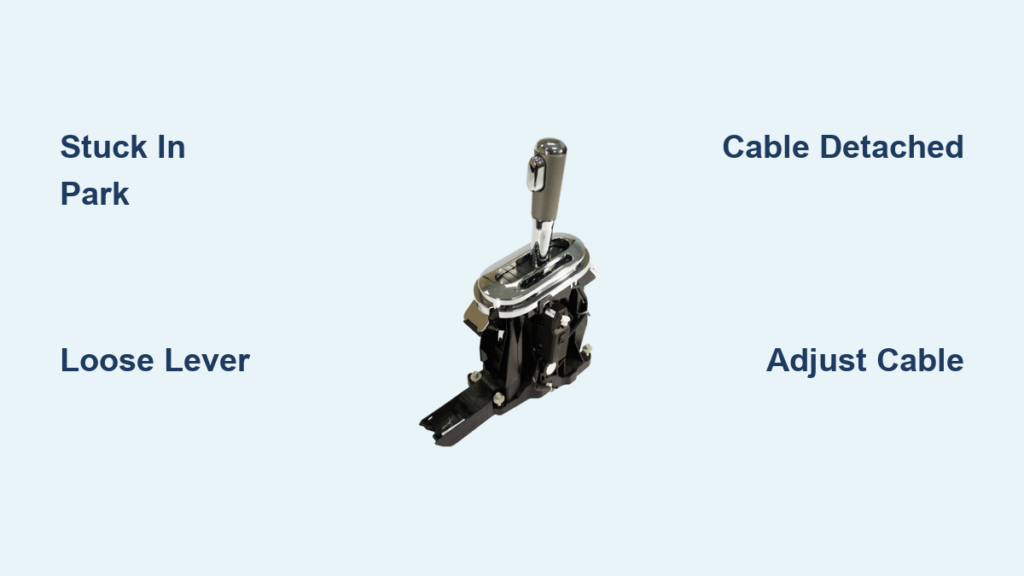
If your 2004 F150 shifter won’t leave Park at all, the brake interlock solenoid is almost certainly to blame. This component locks the shifter until you press the brake pedal, and when it fails, the lock stays engaged regardless of your foot position.
Loose or Floppy Shifter Lever
When the lever moves easily with no resistance and gears don’t change, the shifter cable has detached or the bushing has failed at the transmission end. You’ll often feel like you’re shifting into nothing.
Shifter Moves But Transmission Doesn’t Respond
This classic symptom means the cable is connected but not transmitting movement. The bushing that secures the cable to the transmission lever has worn out or popped loose.
Vehicle Rolls in Park or Wrong Gear Indication
If your truck rolls backward when parked or the dashboard shows a different gear than what you’re actually in, the shifter cable is misaligned by one or more detents. This is a calibration issue, not a failed part.
Testing the Brake Interlock Solenoid
The interlock solenoid is the most common reason for a 2004 F150 shifter stuck in Park. This electric component prevents shifting out of Park unless the brake pedal is pressed, and it fails frequently in these trucks.
How to Check If the Solenoid Is Working
Press the brake pedal firmly and listen carefully near the shifter area. You should hear a faint click as the solenoid releases the lock mechanism. No click means the solenoid isn’t receiving power or has failed internally.
One key detail: your brake lights may work perfectly even with a failed solenoid. The interlock uses a separate circuit, so don’t assume the brake switch is fine just because your lights illuminate.
Replacing the Interlock Solenoid
The solenoid is part number Motorcraft YB-296, available for $50 to $180 depending on whether you choose OEM or aftermarket. Plan for 60 to 90 minutes of work.
First, remove the center console by taking out the 4 to 6 screws hidden under trim panels. Gently pry the clipped sections free without forcing them. Once you expose the solenoid, unplug the electrical connector and remove the mounting bolts. Install the new unit in reverse order, reconnect the wiring, and reassemble the console.
You’ll know it worked when you hear that soft click again when pressing the brake.
Fixing Shifter Cable Bushing Failure

When your 2004 F150 shifter moves freely but the truck stays in gear, the cable bushing has failed. This is the second most common problem and occurs most often in trucks with over 150,000 miles.
Understanding the Failure Point
The shifter cable connects to your transmission through a ball-and-socket joint secured by a plastic bushing and steel clip. Years of vibration cause this bushing to crack, deform, or pop loose entirely. The result is exactly what you’re experiencing: you move the shifter, but the transmission lever doesn’t follow.
Two Repair Options Explained
You can replace just the bushing with a repair kit costing $25 to $40, or replace the entire shifter cable for $80 to $150. The full cable replacement includes a reinforced bushing and is the better choice for high-mileage trucks. The bushing kit works if the cable itself is otherwise intact.
Technicians have confirmed that the aftermarket bushing kits match what dealerships use for this repair.
Reconnecting or Replacing the Shifter Cable
Finding the Connection Point
Locate the transmission shift lever on the driver-side of your transmission, roughly 12 inches from the firewall. The cable end plugs into this lever and is held by a steel retainer clip.
Reattaching a Detached Cable
If the cable has simply popped off, you can reconnect it without removing anything. Compress the cable housing slightly, lift the steel clip upward, press the ball end firmly into the socket until it clicks, then re-engage the steel clip. Don’t assume it’s secure until you’ve tested it by shifting through all gears.
Full Cable Replacement Steps
Start by removing the driver-side dashboard access panel. Disconnect the cable from the firewall grommet near the air intake. Under the truck, remove the steel clip and disconnect from the transmission. Pull the old cable out from inside the cabin, then feed the new cable through the firewall, reconnect at the transmission with a confirmed click, and reattach the bracket.
Removing the air intake box first makes routing the new cable much easier.
Adjusting the Shifter Cable Properly

A new or reconnected cable won’t work correctly if it’s misaligned. This step is essential after any cable work or if you can’t reach Park or Reverse.
The Adjustment Procedure
Disconnect the cable from the transmission lever. Move the interior shifter to Drive. Manually set the transmission lever to Neutral. Reconnect the cable, then use the white plastic locking tab on the bracket to fine-tune alignment. Pull the tab up to release the adjuster, slide the cable housing until aligned, then push the tab back down to lock.
This adjustment ensures your Transmission Range Sensor reads the correct gear. Without it, your dash may show the wrong position or the truck may only start in Neutral.
Transmission Range Sensor Problems
The TRS tells your dashboard which gear you’re in and allows starting only in Park or Neutral. When the cable is misaligned, the TRS reports incorrect information.
Symptoms of TRS Misalignment
Your truck rolls backward in Park despite the dash showing it’s parked. The engine only starts when the shifter is in Neutral. The dashboard indicates one gear while the truck behaves as if it’s in another.
Verifying and Recalibrating
After completing the cable adjustment, start your engine and shift through all gears slowly. Compare what the dashboard shows to what the truck actually does. If they still don’t match, the TRS itself may need replacement, but this is rare. Always confirm cable alignment first.
Emergency Workarounds When Stranded
Using the Manual Override to Get Out of Park
Your 2004 F150 has a built-in mechanical bypass for failed interlock solenoids. Open the center console lid, remove the cup holder by pulling straight up, and look for a white plastic tab near the shifter base on the passenger side. Press and hold this tab down, then press the brake and move the shifter to Drive. Release the tab once you’re in gear.
This override bypasses the electronic safety system, so don’t use it as a permanent solution.
Shifting Into Neutral for Towing
If you can’t move the shifter at all and need to tow the vehicle, disconnect the shifter cable from the transmission lever under the truck. Move the lever two detents forward from Park to reach Neutral. The truck can now be pushed or towed with the engine off.
Electrical Issues: SJB and Fuses
Some 2004 F150 shifter problems come with unusual electrical symptoms. If you hear rapid clicking and see interior and exterior lights flashing even after removing the key, the Smart Junction Box may be failing.
Diagnosing the SJB
Open the SJB panel on the driver-side kick panel. Pull Fuse F2.19, which is the 10-amp fuse for the shift lock actuator. If the clicking stops, the problem is in the interlock circuit. Inspect the wiring near the console for chafing or moisture, and look for burn marks or corrosion on the SJB itself.
In some cases, users have resolved this only by replacing the SJB entirely.
Confirming the Transmission Is Actually Fine
Before accepting that your transmission has failed, verify that all external components are working. This saves you from an unnecessary and expensive repair.
Manual Transmission Test
Disconnect the shifter cable. Use pliers to manually move the transmission lever through all positions: Park is fully rearward, Reverse is one detent forward, Neutral is two forward, and Drive is three forward. If the transmission responds to manual shifting, the problem is external, not internal.
Internal transmission failure is rare with this symptom pattern. The vast majority of 2004 F150 shifter not working issues are external.
How Much Each Repair Costs
| Repair | DIY Cost | Shop Cost | Time |
|---|---|---|---|
| Shifter Cable Bushing Kit | $25–$40 | N/A | 1–2 hours |
| Full Shifter Cable | $80–$150 | $250–$400 | 2–3 hours |
| Interlock Solenoid | $50–$180 | $150–$300 | 1–2 hours |
| Cable Adjustment | $0–$10 | $75–$150 | 1 hour |
| SJB Replacement | $200–$500 | $400–$800 | 1–2 hours |
| Transmission Rebuild | $1,800+ | $3,000+ | 8–12 hours |
The best-case scenario is a failed bushing or solenoid, costing you under $200 and a few hours of work.
Preventing Future Shifter Problems
Protect your shifter system from future failure with regular maintenance. Inspect the shifter cable and bushings every 30,000 miles once your truck passes 150,000 miles. Lubricate the console mechanism with silicone spray, never WD-40. Keep the console dry to prevent moisture corrosion. Use reinforced bushing kits when replacing cables to extend their life.
Replacing the cable before it fails entirely is cheaper than being stranded.
Final Thoughts on Fixing Your 2004 F150 Shifter
The 2004 F150 shifter not working issue is almost always caused by external components, not transmission failure. Start by identifying your specific symptom, then work through the solenoid, cable, and adjustment steps in order. Most repairs cost under $200 and take 1 to 3 hours with basic tools.
Use the manual override only as a temporary measure, and always verify actual gear position before driving. With systematic diagnosis and the right parts, you’ll have your truck back on the road without a transmission rebuild.
Frequently Asked Questions About 2004 F150 Shifter Issues
Why won’t my 2004 F150 shifter move out of Park?
The brake interlock solenoid has likely failed. This component locks the shifter until you press the brake pedal. When it fails, the lock stays engaged even with a working brake. Replace the solenoid (part YB-296) or use the white tab override as a temporary fix.
Can I drive with the manual override engaged?
No. The manual override disables a critical safety feature that prevents shifting out of Park without brake application. Use it only to get to a repair shop, then address the underlying problem immediately.
How do I know if my shifter cable is broken or just detached?
Have someone shift while you watch the transmission lever under the truck. If the lever doesn’t move when you shift, the cable is detached or the bushing has failed. If it moves but gears don’t change, the connection point is worn.
Will low transmission fluid cause shifter problems?
Low fluid won’t cause a stuck shifter, but it can prevent the transmission from engaging gears properly. Check your fluid level and condition first as part of diagnosis, but don’t expect low fluid to explain a shifter stuck in Park.
How much does it cost to fix a 2004 F150 shifter not working?
Most repairs cost between $25 and $180 for parts if doing it yourself. The most common fixes are the interlock solenoid ($50-$180) or shifter cable replacement ($80-$150). Professional shop costs range from $150 to $400 for these repairs.